AirTags: what are they good for?

white beats by dr dre headphones
Photo by Daniel Romero on Unsplash

I recently read a story about an airline worker being arrested for stealing thousands of dollars worth of goods from luggage at the airport. He got nabbed, thanks to Apple’s low-key tracker devices, AirTags. The very same AirTags have been the subject of stories (and inquiries) into “stalking” cases and other similar heinous maleficence. Of course, we have all found lost items and tracked our luggage across the planet to finally show up at our homes. 

Henry Harteveldt, an online and travel industry analyst at Atmosphere Research, said he would use an AirTag if he had no choice other than to check a suitcase. “The end result is knowledge, and knowledge can increase peace of mind,” he says, adding: “2022 is not a year where you want to take chances with your checked bags no matter where you are traveling.” 

Bloomberg Business

AirTags, like every


The Perils of Data Categorization

Nothing is more frustrating to me than YouTube, which decides my front page based on my likes. It seems I can’t have multiple interests — variables — and thus, I must watch certain kinds of videos. In its infinite wisdom, Twitter believes that only the people whose content I like or share are the ones whose content I want to consume. And don’t get me started on online dating services — they could learn a thing or two from Sima Taparia

And that is because the post-social world of today is starting to coalesce around variables that are less humanistic and more biased towards corporate goals. “We live in a world that demands categorization,” I recently read in a newsletter, Tiny Revolutions. “We have to do some self-definition so the world knows what to do with us, and so that we can bond with others who share our interests, values, and concerns.”


40 kilometers later

Seven years ago, when traveling to Italy, I experienced the vagaries of data and its weird, unimaginative influence on our lives. Since then, the absurdity of what data-driven intelligence throws at us on a daily basis has increased exponentially. I wrote about it in an essay, 40 kilometers. It was part of a series of essays I wrote about data, its implications, and the emergence of limited-intelligence algorithms. If you are interested, here are some links to those articles in my archives.

Somehow that article, 40 kilometers, from seven years, ended up in the email inbox of my good friend Steve Crandall, who wrote a wonderful email reply in response. I thought it would be worth sharing and asked for his permission. Here it is:


The ‘data-driven world that we


A Buffett of Snowflake

gold snow flakes decor
Photo by Tomas Yates on Unsplash

The Oracle of Omaha, Warren Buffett, known for occasionally partaking in ice cream from Dairy Queen, is going in for a Snowflake scoop. Snowflake is a red hot data warehousing company viewed as one of the best next-generation enterprise companies to tap the public markets in 2020. 

In an amended S-1 filing, Salesforce Ventures and Berkshire Hathaway are buying 3.125 million shares each at $80 a share. That is $250 million each. Berkshire Hathaway will also purchase just over 4 million shares of common stock from one of the stockholders — bringing Buffett’s total to about $500 million into the new company. The company is going to be selling 28 million shares for between $75 to $85 a share, which will value the company well north of $20 billion.

Benoit Dageville, Thierry Cruanes, and Marcin Zukowski (all formerly with Oracle) cofounded Snowflake in 2012. They were betting


Zimmerman’s Law: Data & its corrupting influence

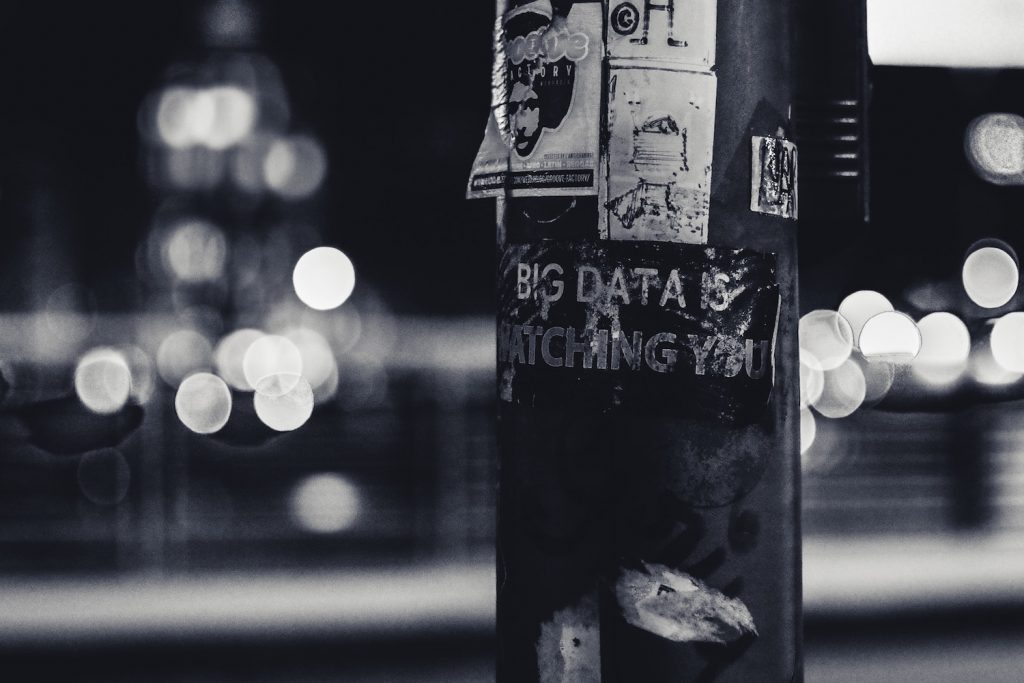
Big data intentionally creates a concentration of data and has a corrupting influence. It really concentrates the power in the hands of whoever holds that data — governments, companies. The PC revolution of the late 1970s and 1980s and the later early Internet (of the 1990s) seemed to hold so much promise and empowered the individual. Now with big data there is a shift of power in the other direction as it concentrates power in fewer hands.

Phil Zimmermann, creator of PGP


Why Hadoop’s time has come and gone

My former colleague, Derrick Harris, wrote more about Hadoop than any other reporter, and today, he wrote a wonderful obituary of Hadoop. He goes step by step, through what has made Hadoop quite irrelevant.

Hadoop’s path to ubiquity intersected a host of other technology shifts that as a whole would prove to be more impactful in the long run, in part by peeling off the most valuable promises of big data and making them more consumable…..The story of Hadoop can help us understand why the world of data looks how it does today. It also should be a valuable lesson for anybody trying to make sense of the next big thing in enterprise IT, and the next one after that…….Hadoop opened people’s eyes to what was possible with big data, but it’s also a reminder that no single technology is going to remake the world of enterprise IT— at least


We are all trapped in the “Feed”

Every afternoon, during lunch, I open up YouTube, and I find myself marveling at the sheer dumbness of its recommendations. Despite having all this viewing data of mine, world’s second most popular search engine is dumb as a brick. It shows me propaganda channels from two ends of the political spectrum. It surfaces some inane celebrity videos. It dredges up the worst material for me — considering I usually like watch science videos, long conversations and interviews, and photography-focused educational videos.


Has music lost that loving feeling?

Over past few months, I have become strangely obsessed with reconnecting to music, listening, curating and most importantly experiencing it, much like I used to about a decade ago. In the years that intervened, like many, I too succumbed to the charms of streaming music…. the sheer ease of accessing music, anytime, anywhere on any device made perfect sense.

The downside of streaming was that the music was optimized to meet the vagaries of the broadband networks, and as such, we moved away from the idea of music from say a compact disc. But the end of our love affair with music began even before shitty headphones and low-resolution audio streams. Formats and devices have nothing to do with music, art, and creativity — what matters is the human relationship to creativity. 


Worth Reading: Stan Smith, Algorithms, and John Oliver

We had a beautiful and sunny weekend in San Francisco — a much-needed break between endless days of drizzle. And that meant a chance to walk around and clock in my 10,000 steps. It also meant less reading and even less writing. Nevertheless, I am kicking off the week by sending you some good stuff to read, perhaps on your lunch break or when you’re commuting back from work.