
Routine, Reset, Restore

My brief summer break has helped me establish a new routine: a proper night’s sleep. I am eating early, have reduced my carb intake and am essentially not using any devices after 7:30 p.m. Sure, I don’t answer emails for a whole 12 hours, but I think it is a small price to pay, as it allows me to focus on reading. There is still nothing better than falling asleep with a book.

Recently (before 7:30 p.m., I might add) I read a great piece called “Why we can’t read anymore.” The author argues that being constantly connected on the social web takes away our ability to focus, and I think there is an element of truth to it. I don’t have Twitter and Facebook on my iPhone, and most of the apps I use are actually for either photography or reading. Instagram, however, is still on my phone and isn’t going anytime

#winning

Recently I had lunch with Chris Michel, an entrepreneur, investor and Silicon Valley’s one true renaissance man, at one of his favorite San Francisco restaurants, the Cavalier. The food is British-inspired. The conversation, however, was inspired by a friendship that spans over a decade. I was introduced to him by Abigail Johnson, one of the finest people in the “communications” business. She is a connector who eschews attention, and she is the polar opposite of today’s fly-by-night public relations carpetbaggers. “You and Chris will love each other,” she said.

She was right. Chris founded Military.com and had a lot of stories to share when I started Gigaom. We got to know each other better a few years later through my ex-Forbes colleague Carleen Hawn. She was editing one of my new ideas at that time, WriteRead, a founder community that was a mishmash of Medium, Quora and Hacker News. It was


Vincent Laforet

Photographer and film director Vincent Laforet has worked for The New York Times, Vanity Fair, National Geographic and more, and in 2002 he won a Pulitzer Prize for Feature Photography for his coverage of post-9/11 events in Afghanistan and Pakistan. Vincent lives in New York and Los Angeles, where he directs commercials for brands like Nike as well as short films. Born in 1975, he got his B.S. from the Medill School of Journalism at Northwestern University in 1997.


Introduction


You can’t be in the news business for as long as I have been without hearing about the “great ones,” the writers and photographers who shape the world we live in. Vincent Laforet is one of those guys — a news photographer par excellence whose photos for The New York Times have captivated the residents of the Big Apple. But he is so much more.

His work has also appeared


Hello San Francisco

Things have been quiet around here. I was traveling — New York, to be precise. I left my computer behind and was busy meeting people in real life, despite the nasty cold weather. It is good to be back in San Francisco and experience some glorious weather and sunshine. Here are some photos from an early morning walk to the top of the Bernal Hill Park. (If you are intrigued by the chairs and that table, then you can find out more in my Storehouse story.) They were snapped with my Sony RX-1 camera. It is fun getting to know this camera, all over again.


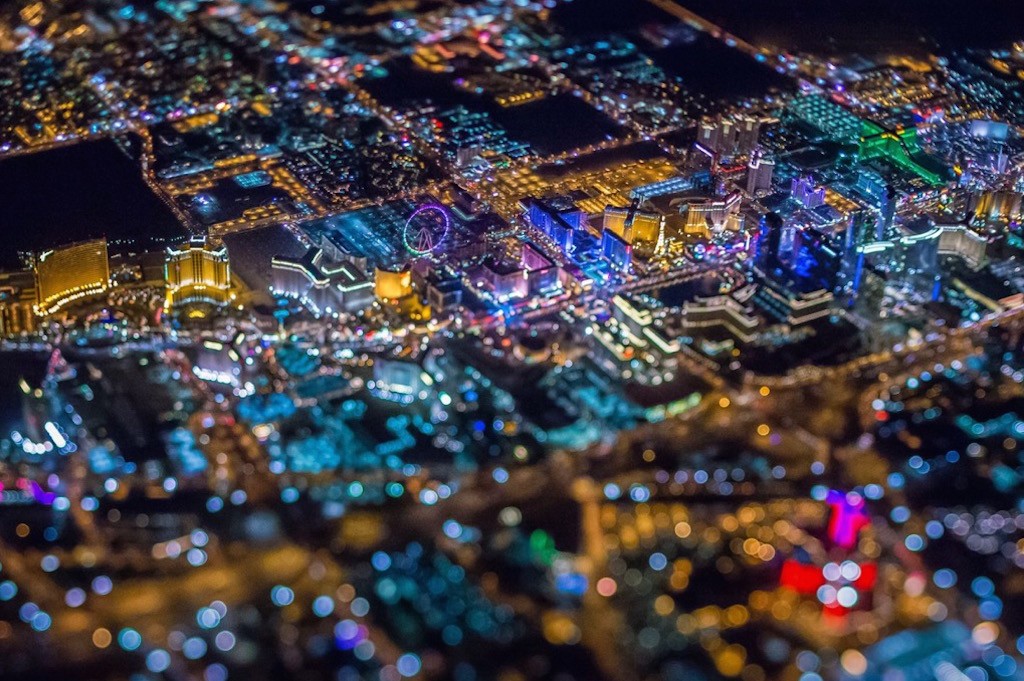
How do Gotham & Sin City look from way up there?

VincentVegas

Vincent Laforet, who shared the 2002 Pulitzer Prize for feature photography as a staff member of the New York Times, is now one of the world’s preeminent photographers. He is known to push the envelope of photography — whether it was giving a new meaning to the phrase “tilt shift” or using DSLRs for digital movie making. He recently leaned out of an “open door of a helicopter 7,500 feet over New York City” and took some fantastic pictures of New York from a perspective that is rarely seen. It was first time anyone had gone up there and taken photographs at night. The whole place looks like a cross between a computer board and Sim City. If you have not seen these photos — then you should.

I was completely mesmerized by the photos — and the story he shared on Storehouse (disclosurea True Ventures company & I serve on the board of directors)


A camera called iPhone 6+

The web, recently was abuzz with news that Apple had become the second most popular camera on Flickr, pushing Nikon down and just behind Canon. It is not surprising – more people take more photos with their iPhones (or other smartphones) than DSLRs or other standalone cameras. As someone whose interest in photography was catalyzed by the amalgam of Instagram and the iPhone, my most loved camera is my iPhone 6+. I have a Sony RX-100 (mark 3) and I have a Sony RX-1 (not sure why) but I absolutely love the iPhone 6+. It allows me to take photos that I could only dream of capturing a few years ago.

This weekend, I went for a photo walk with some friends. In addition to my iPhone 6+, I took the wide angle and telephoto lens made by Marc Barros’ Moment Lens. These results speak for themselves — the Golden Gate Bridge and the board were snapped without the Moment. The Sunset photos used Moment 60MM Tele lens and Average Cam Pro app for long exposure. No filters applied, and no touch up either — just look at the dust on the lens…ugh!

While these don’t compare to the high-end cameras and even pricer lens, they make the amateur in me feel encouraged about photography. I think this is the ultimate beauty of iPhone — it has made photography not scary. It has removed technology and made it just an act of creation. This is what Apple is good at — pushing technology aside. I hope they never forget that.


Cole Rise

Cole Rise is a San Francisco–based photographer and entrepreneur. He recently launched Lite.ly, an iPhone app that commercializes his Lightroom presets and Instagram filters. He has worked for both Yahoo and Apple, and he was a design consultant for Instagram. He was the founder of Subatomic Systems, Particle Progammatica, and Flagr. You may have seen his work in a few magazines, art blogs, CD covers, and the like, or perhaps used one of his filters on Instagram. You can follow him on Instagram and on his blog.


Introduction


Visual storytelling was not part of my vernacular until the launch of Instagram. It was the start of my enduring love affair with digital photography, and I have since become immersed in visual computing. But only recently have I started to grasp the long-term implications of this brave new world in which we are surrounded by cameras — big and small, embedded,