
Subscribe to discover Om’s fresh perspectives on the present and future.

Less than a fortnight ago, the proverbial airwaves and media web were falling all over themselves, chastising Facebook and its data addiction, which allowed the company to amass data on over two billion people. The insidious impact of the data and Facebook was all the object of moral outrage.
Fast forward to this week, all that has been conveniently forgotten – replaced by happy, shiny headlines from Facebook’s annual festival of self-aggrandization, F8. Add to that an earnings report that sent Wall Street into raptures and pushed the stock higher, not too far from its all-time high of about $194 a share. Morality and ethics have no place in this perpetual profit machine.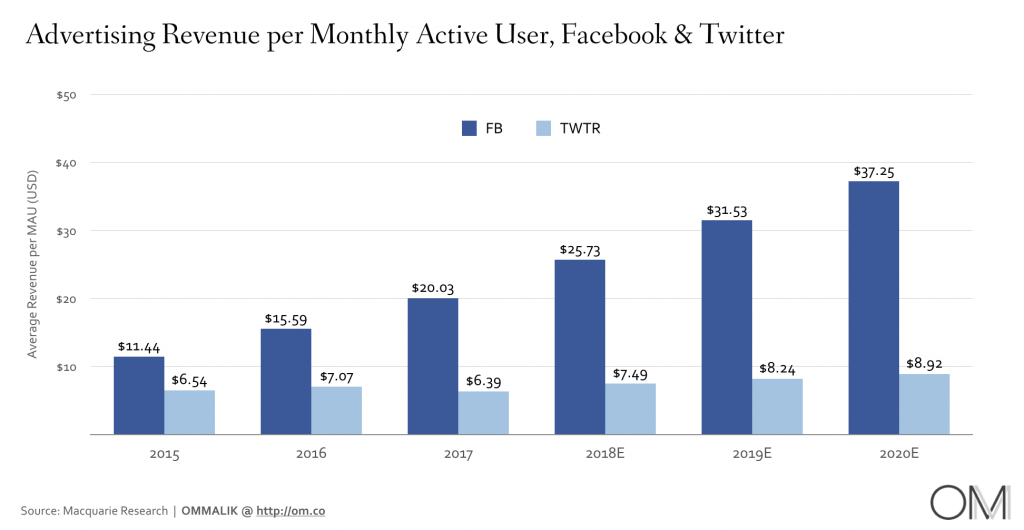
Mark Zuckerberg made jokes about his visit to Washington, Zuck-splained journalism to editors, launched a dating app aka privacy equivalent of a bunker buster, and ripped off as many features from as many companies as it could in a realistic fashion. There were vague promises of giving us a vague control of our data. What wasn’t vague was that so many smart editors and writers fell for this nonsense. After all, they had pages to fill and clicks to feed. Facebook, with F8, managed to bury negative attention into yesterday’s terabyte.
Before the Internet, we all knew that yesterday’s newspaper was nothing more than fish-wrap. In these days of hot-takes and online media, an equivalent is yesterday’s terabyte – headlines and stories buried in Google’s index by fresher, newer, digital detritus. The whiplashing speed with which media storms become gale-force winds and then the stomach churning velocity with which they vanish is the new reality of our media landscape.
When someone asks me how media has changed, I often point out that Google has trained editors to be optimized for the search engine, picking topics and focusing on whatever was a search engine’s preferred diet. Then came optimized headlines that got clicks: Digg got everyone on this track, and Facebook anaboliclly enhanced the “upvote” and Twitter mostly turned this into a spectator sport – making likes and retweets the acceptable currency of online news media. The result, we lose ourselves in a river of data, and information. We read headlines, not stories.
The hyperactive nature of media, enabled by our dopamine addled brains has made it virtually impossible for any sustained oversights on institutions. Social movements lose traction before they even get started, and even when they do, they don’t last long. It took a television channel and a newspaper in Britain to bring the Cambridge Analytica scandal to the world. A few months later, CA is dead, only to be reborn as Emerdata.
Our ability to change, think and imagine a future is getting buried under yesterday’s terabytes!
**
And now five stories that will give you something to think about this weekend!