
Subscribe to discover Om’s fresh perspectives on the present and future.

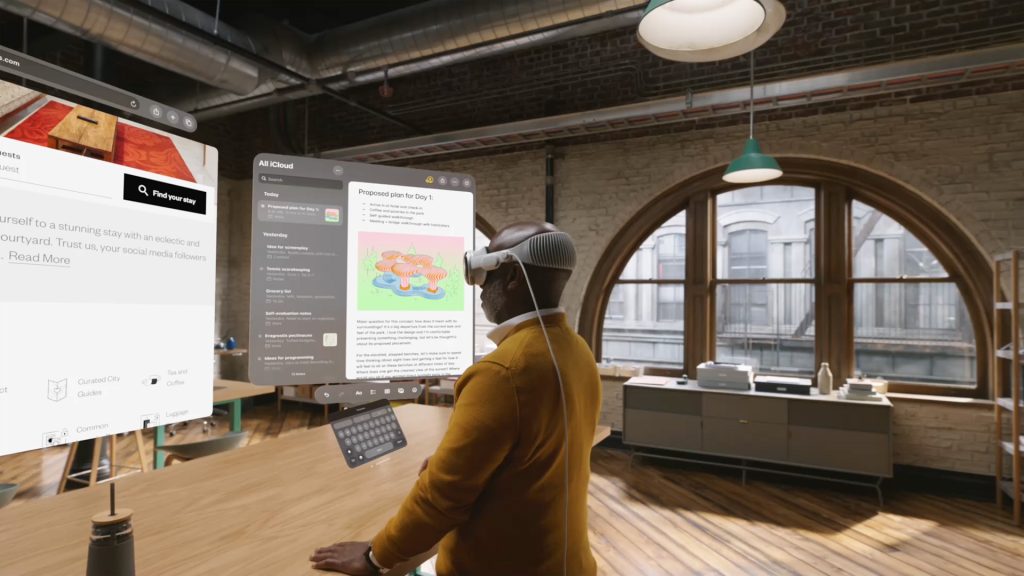
There is a common thread in the torrent of words that have followed the announcement of Apple’s Vision Pro headset — it portends a dystopian future and social isolationism. Most, if not all, picked up on the idea that we might retreat into a social cocoon and become more detached from human-to-human interactions.
While it is fashionable to blame technology and, more importantly, new technologies from big multi-trillion dollar companies, we have been on this trajectory of isolation for a while, especially in America. Take a look at this data from the US Census Bureau. In 1960, single-person households represented only 13% of all households. That number had increased to 28% or roughly 36.5 million in 2021. That number had ticked up to 37.89 million in 2022. The number of adults aged 18 and over living alone is increasing — from 33 million (14%) in 2011 to 37 million (15%) in 2021.
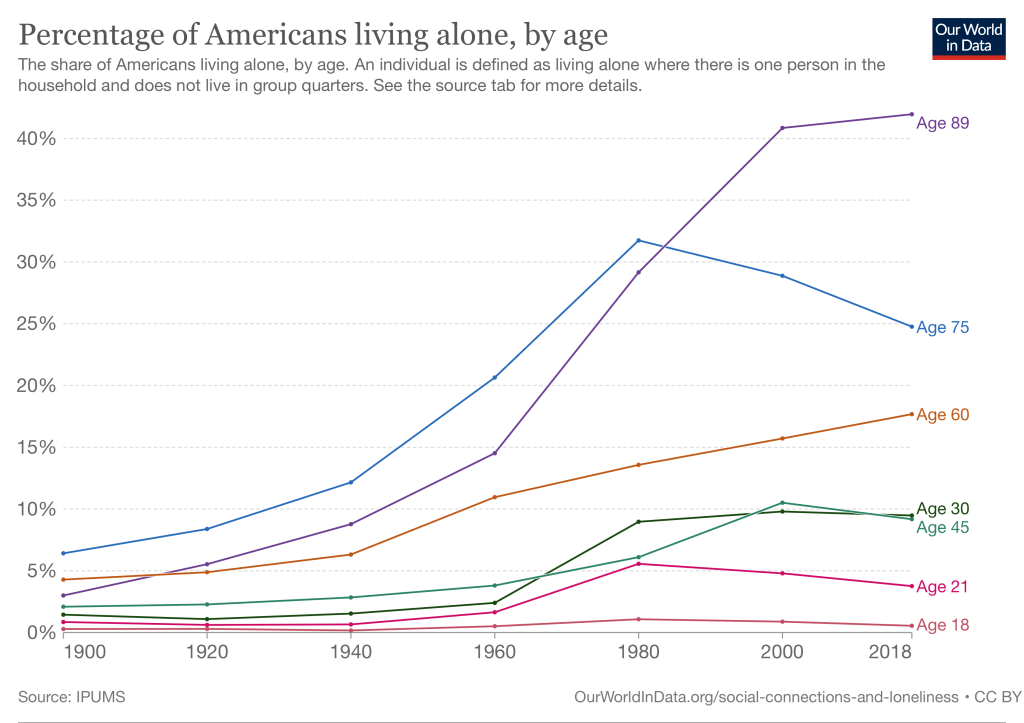
The fact is that, as a society, the idea of what a human-to-human social fabric is has been breaking down for quite a while — especially as our idea of work has been redefined. Whether it is a lack of permanence or changing economic reality, work is a reality that triggers change. As uncertainty increases, we rearrange the jigsaw pieces of our lives.
These lead to the fraying of human-to-human interactions. We end up depending on technology to maintain relationships from the past. Ironically, the same technology we blame for fraying social connections has allowed me to stay in touch with people who have come in and out of my life. Whether it is Facetiming with my parents, my college Whatsapp group, or Telegram room with my homies, it is all technology and creating some bond, even if illusionary. As I have written in the past, our relationship with big tech and tech, in general, is complicated.
I wonder if we are all too sensitive to isolation because we have come out of being locked in our homes due to a global pandemic. We have had to juggle hours of working in front of a screen, disambiguated from reality. And we didn’t like it. During the pandemic, I pointed out that the pandemic was a dry run for our bleak future — one brought on by climate change and the resulting collapse of ecosystems. You don’t have to look far — if you are in the North East of America, you see the impact outside your window. (Here is a link to my conversation with Howard Lindzon.)
A future of impossible temperatures, failing air quality, and the growing risk of pandemics is a consequence of rampant selfish consumption culture. This behavior might have started in the West but has spread worldwide. Big companies — from technology to luxury conglomerates such as LVMH are happy being enablers of all-consuming habits.
It is impossible not to imagine a hot world where we are forced to live in smaller, hermetically sealed cocoons. The reality is that in this future. We will need to interact with each other, somehow or the other. Apple is doing what a genuine capitalist does — preparing to serve a market of the future, to make as much profit for its shareholders as best it can. And let’s not forget we all want our big tech to make money, so we have money in our retirement years.
This is a product for our reality — tech giants will profit handsomely from it, but let’s not absolve ourselves from the role of our wants and desires in helping create the outlines for them to paint green.
June 7, 2023. San Francisco.