

Why Apple’s Vision Pro Will Change Movie-Watching
This weekend I did something I had not done in a long time — I went to the movies. I wanted to see the new Wes Anderson movie Asteroid City, and going across town was my only option. I took a long Uber ride and then sat through about 30 minutes of pointless commercials and trailers of movies that seem to be remakes or the second or third movie in a series. And then there were people looking for their seats in the dark and unable to find them — the movie theaters now work on minimal staff in the guise of being “contactless.”
I went with a friend, so we talked a little before the movie, but not much, as there were people around us — and I didn’t want anyone to silence me. And once the movie started, I was fixated on the screen and didn’t care if I was with someone or was in a social space. However, watching the movie was a solitary experience — as it has always been. The total cost of the evening — Uber ride and the cinema ticket — made me wonder: why couldn’t I pay a premium and watch the movie at home?
***
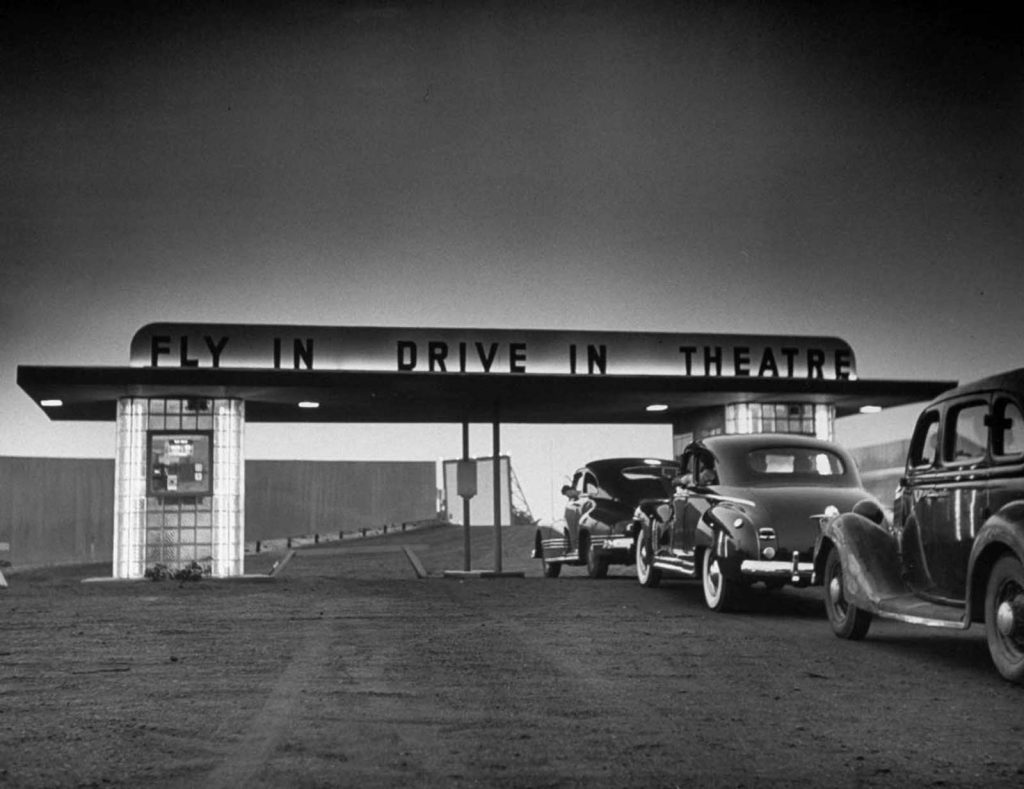
Every time I make that argument, people look at me as if I am some kind of an anti-social degenerate. Does no one else notice that our idea of what a social space is ever-changing? Remember drive-in movie theaters? They were all over the country, but now they exist in our imagination or as a nostalgia act.
We went from drive-in theaters to indoor theaters to multiplexes. And that is a good arc to follow to understand where we are going. The driving forces of change in the movie experience have been the human desire for comfort and convenience. And above all, property values — each change in movie viewing maybe be driven by technology, but it has been about deriving maximum value from the land.
Indoor theaters meant more shows, which meant more revenue per square foot. Multiplexes meant more screens which attracted more people, which meant more revenue per square foot. Smaller multiplexes inside shopping malls, too, are all about the moolah. As a property developer, you can make a lot more money selling apartments than you can from half-filled theaters.
I do admit movies at one time were a social experience. We all used to have a shared moment when cinema was the social epicenter of the community. We enjoyed coming together to jointly participate in emotions inspired by the movie — laughter, horror, or simply the shock. With the death of rom-com and R-rated comedies, we can’t experience collective (humor or) horror. Today, all we are left with are big-budget sequels of superhero films that are as satisfying as a super-sized fast food meal.
Times have changed, and so has our approach to socialization. Now we can’t even have a conversation without looking up from our computer screens. With the rise of social media and digital platforms, our interactions and the movie-watching experience have evolved. On-demand on our screens is the future, no matter how much traditionalists want to fight that.
***

Many people were critical of Jason Kilar when during the pandemic, he decided that the Warner Brothers make movies available on-demand at the same time as movie theaters. It made perfect sense at a time when people couldn’t go to the theaters. And it will make perfect sense in a few years when we have Vision Pro and its many copycats all around us.
With its high-resolution displays, spatial audio, and immersive technologies, it is and will be a much better movie-watching experience. Honestly, I can’t wait to have one to watch movies and baseball games and experience new media types. Apple has developed the future of TV (the device) and movies with Vision Pro. What they delivered is much better than what I had imagined in 2019.
Whether we like it or not, Vision Pro is a device for our dystopian present, not for some notional dastardly future. Climate change screams in our faces every day. Social divisions, driven by online disinformation, are here. Wars are a spectacle to be followed online. Gun-totting crazies shoot kids in school with all too much regularity. Welcome to the hell we are imagining for the future.
In my piece about the future of movie theaters, I wrote:
The fact remains that we are living in increasingly isolated lives. We live with our headphones as barriers to the sounds. Our homes are going to act as a filter from the harshness of the climate. So virtual communal viewing is perhaps the only way to experience entertainment together. The hardware of today is still a work in progress. The headsets are getting better, but need to be lighter and more comfortable to wear for sustained viewing.
In time, the software and hardware are going to come together in perfect symphony. In particular, Apple has an opportunity here — they have all the building blocks — video and audio technologies, semiconductor skills, and ability to create desirable consumer experiences. Viewing screens on our face seem dystopian, but I choose to think of it as a better way of viewing. Who knows, it might be thermodynamically more efficient than going to a cinema.
***
Hollywood hasn’t woken up to the future that is Vision Pro. And it won’t realize that for a while — just as the record industry ignored online music and traditional media ignored online publishing. It has been over a decade since I made a simple observation.
For the media industry (which is video, music and print), there has been one more, and perhaps the farthest-reaching, failure: the inability of the folks to grok that today’s audience is not tomorrow’s audience. It goes without saying there’s a whole generation of folk that has either grown up, or are growing up, on the Internet. Their consumption and online behavior is going to be predicated on a distribution medium whose basic premise is abundance. They will find, curate and consume on their own terms, on their own choice of screens and on their own time.
Every incumbent still ignores that. A generation growing up with multiple screens and on-demand media will have different social and viewing dynamics than the generation before.
But for now, good times are back, and Hollywood (despite the writers’ strike) is popping bottles. Axios reports that the box office is booming, especially during the crucial special summer movie season. “With more than $3.1 billion in domestic ticket sales, theaters are pacing ahead of last year by 22%,” Axios reports, pointing to the release of pending mega movies such as Barbie and Oppenheimer.
Citing PwC data, Hollywood Reporter reports, “Global cinema admissions will reach 7.2 billion in 2027, at a lower level than pre-pandemic 2019, which counted around 7.9 billion admissions.” Hollywood is getting around the slowing growth in admissions by boosting ticket prices so that “global cinema revenue will finally reach pre-COVID pandemic levels by 2025, when it is predicted to hit $46.5 billion, followed by further growth to $52.1 billion in 2027.”
PwC predicts that the US box office will exceed $10 billion in 2025 and hit $10.71 billion in 2026 and $11 billion in 2027. That’s still below the $11.7 billion in revenues the industry raked in before the pandemic hit. These numbers mimic the reality that growth will slow down almost too low single digits.

***
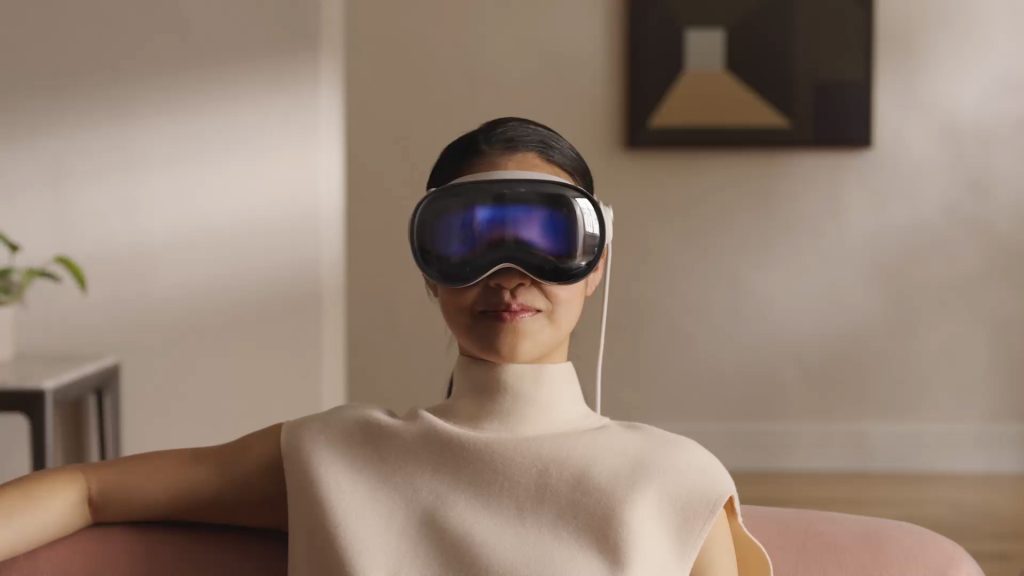
Forecasts, of course, don’t account for the fact that “attention” will shift with the introduction of new “face computers.” Just as the iPhone siphoned attention away from traditional forms of media to new media formats (the latest being TikTok), movie theaters will fight an uphill battle for attention and wallets. Eventually, the future haters in Hollywood will have to make movies for the audience that will natively want an immersive, spatial experience.
Sure, it won’t happen in the next three years, but it will happen. Even though I experienced it for half an hour, I have no qualms in saying that Vision Pro is still underhyped. It will inspire others to develop their devices — the grand Samsung Xerox machine must be in overdrive. The Chinese hardware companies are not sitting still. The “race for face” and rise of generative “AI” means new visual experiences that will be highly personal will become a reality.
“The good news is that this will all need production, storytelling, and everything else Hollywood is good at. The bad news is that you won’t need the mega studios. And you certainly won’t need movie theaters — which will probably end up like the “drive-ins.”
What about Asteroid City? I will say, wait a few weeks and watch it from the comfort of your home — you need to see it at least a few times to understand what Anderson is trying to say. Like all of Anderson’s movies, it is visually stunning, and I can’t help but wonder what it would look like on a Vision Pro.
June 26, 2023. San Francisco
Update June 27: I forgot to mention that Vision Pro and devices like that will help overcome Hollywood’s quibble about selling direct-to-consumer – each movie will be available to a single viewer and can be made available in a specific time frame.
PREVIOUSLY
2 thoughts on this post
Comments are closed.
“Home” versions of all media continue to be my transformative requirement. 1 on 1 or 2…though the latter is rare when your better half has a strong passion for individualized communication…matching your own. Every time I start to write an analysis/description that satisfies that need, I bump into contradictions that guarantee eventual predominance of direct-to-individual tech. At least in lives offering the opportunity.
Dear Mr. Malik:
I completely agree with your June 26 essay that media created specifically for the Vision Pro’s spatial capabilities will redefine the next generation of digital entertainment.
As an example, my screenplay adaptation A Night at Gatsby’s is ideal dramatic content for the Vision Pro, with its hand/eye/voice navigation, 180°-3D-8K video and spatial audio directly supporting the script’s viewer agency through character/object interaction and story branching. It can also be streamed interactively to a computer/tablet/smartphone and non-interactively to a television.
A Night at Gatsby’s is a reimagination of the classic novel that breaks the fourth wall and immerses viewers in one of Jay Gatsby’s unforgettable parties to relive his story over one night from the initial rumors about him, through his reunion with Daisy and confrontation with Tom, and ending with his lonely farewell.
2.5 million Americans aged 16-24 read The Great Gatsby annually and an additional 175 million may do so during the rest of this century. Tomorrow’s media-savvy students will prefer digital dramatizations over study guides as better preparation for class discussions, presentations and assignments. The enduring education market for A Night at Gatsby’s will generate substantial revenues, royalties and commissions for decades to come.
The website anightatgatsbys.com provides more information on the video production and its companion playbook (stage play + novelette.)