
Subscribe to discover Om’s fresh perspectives on the present and future.

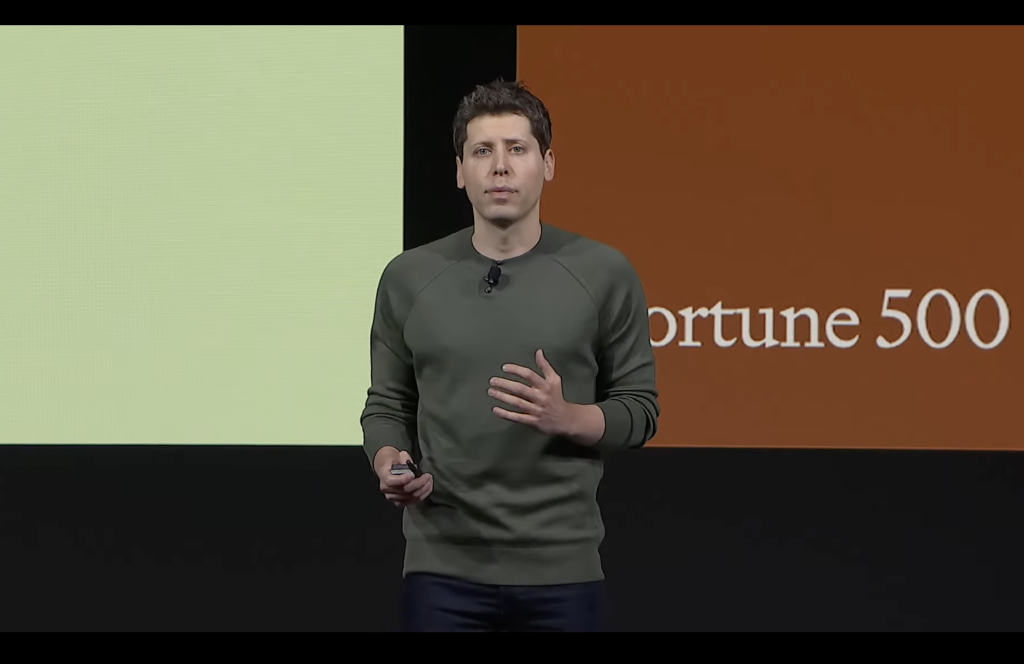
Even for a region accustomed to tremors, the news of Sam Altman, CEO of OpenAI, being unceremoniously ousted from the company was like an event off the Richter scale. His exit was announced in a terse press release, along with Greg Brockman’s demotion from the chairman of the board. This sent shockwaves across Silicon Valley and the entire technology ecosystem. The board named CTO Mira Murati as the interim chief executive.
Like everyone else, I found the news hard to believe. Sam Altman fired? How could Altman, the renowned face of this high-profile company, be out? Just a day or two ago, he was mingling with leaders from APEC, taking swipes at rivals at Grok and Google. Altman has been the man since OpenAI released ChatGPT a year ago, marking it as the most interesting development in Silicon Valley since the iPhone and Facebook.
Throughout the afternoon, details emerged in drips and drabs. Two details stood out: investors in the company had no prior knowledge of Altman’s firing. Microsoft, a major backer of OpenAI (to the tune of $13 billion,) received only a 60-second heads-up, forcing CEO Satya Nadella to hastily release a short statement:
We have a long-term agreement with OpenAI with full access to everything we need to deliver on our innovation agenda and an exciting product roadmap; and remain committed to our partnership, and to Mira and the team. Together, we will continue to deliver the meaningful benefits of this technology to the world.
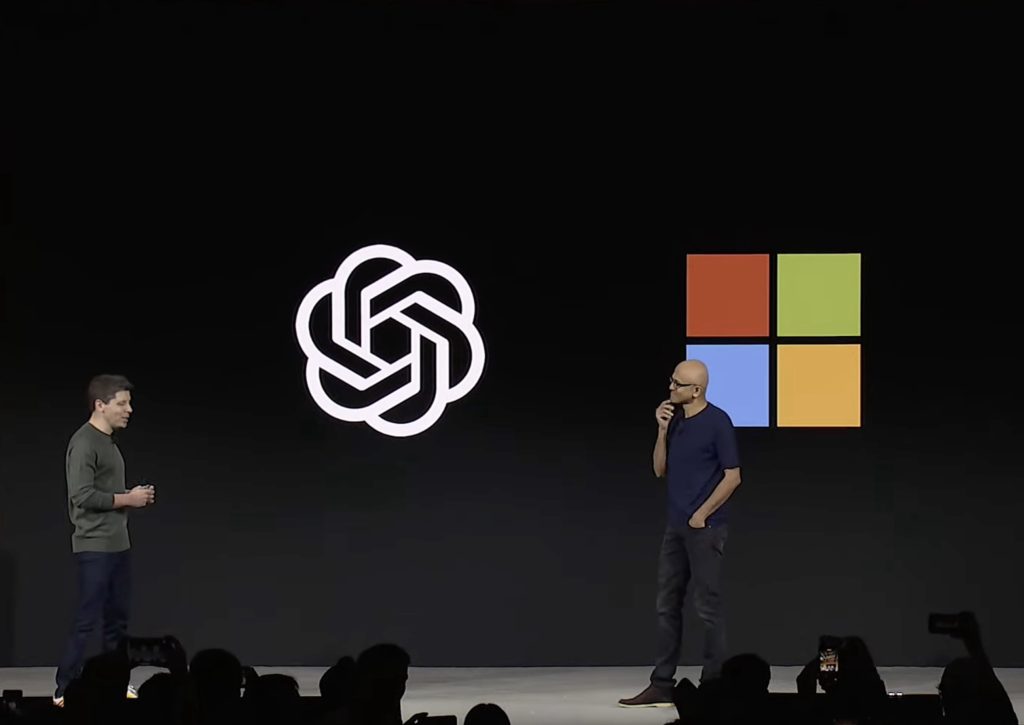
What a way to end the week, during which Satya Nadella hosted Microsoft’s annual Ignite conference, brought Sam on stage, and painted a continued renaissance powered by artificial intelligence. Microsoft’s shares fell by about $6 per share on the news, closing the day at around $369 per share. The share price dropped a further $3.58 per share in after-hours trading.
There are quite a few takes on the play-by-play events, but for me, the big question is what this really means in the long term for the forward momentum of artificial intelligence and its impact on the broader technology ecosystem. While it might sound pessimistic, the past 24 hours have exposed a massive and obvious foundational risk in placing all bets on a single entity.
It’s likely that Satya Nadella and his team at Microsoft didn’t expect Sam Altman’s firing and the subsequent upheaval at OpenAI in their AI future plans. One has to wonder if this was even considered as a foundational risk. I understand that investing billions in OpenAI, partly for Azure’s Cloud use and access to top AI research, was attractive, but one has to wonder if the ambition to outperform Google and Amazon Web Services overshadowed these risks?
I was watching the Ignite keynotes, and it’s clear that Microsoft is expanding beyond OpenAI and starting to support other AI models. But OpenAI was and remains central to their plans. At the OpenAI Dev Day, Satya told Sam in front of an audience that, “we love you guys” and “just fantastic partnering with you guys.” I, for one, would love to know what Microsoft would do if, in the worst-case scenario, OpenAI unravels.
I know that would not be good. Microsoft will likely survive, but what about the countless others who have relied on OpenAI to build their features, products, startups, and businesses? Sadly, betting on a single entity is inherently risky — a lesson we’ve learned from history.
Lured by the size of the platform and easy distribution, many bet on Facebook and its platform. Entire startups were created to leverage that ecosystem. However, Facebook was the only real winner. Only a handful, like Zynga, nearly succeeded. As I often say, people here seem to treat history with disregard. We don’t learn from the lessons of the past.
In many ways, the OpenAI shake-up is a good thing.
It serves as a reminder for everyone, especially startups and businesses, to start thinking about building “resilience” into their plans. Sure, start with OpenAI, and continue using it, but it’s crucial to explore and invest in open-source LLMs. Even Microsoft is starting to support Open Source LLMs on its Azure platform. As an investor, you really should be asking your startups about ‘resilience.’ It’s important to have a moat around your own business.
In the not too distant past, companies like Zynga and Dropbox used the AWS cloud to scale their operations. But once they grew sufficiently, they transitioned to their own infrastructure. Similarly, companies with larger ambitions need to look beyond a single vendor, whether it’s OpenAI or Anthropic.
It might not be obvious to everyone, but over the long term, open source has always been a catalyst for positive change. Therefore, I believe an open-source approach to AI will lead to a better future.
I have no idea how things will play out at OpenAI, but let’s hope they continue to move forward. OpenAI has catalyzed a platform shift. While many might not agree with it, they have forced us to think beyond the status quo, and about the future of computing. Sam and Greg will be fine and will likely rebound, perhaps to even greater heights.
November 18, 2023. San Francisco