
Subscribe to discover Om’s fresh perspectives on the present and future.

While I now like dogs — hi, Sadie Michel — I wasn’t really a dog person until I met Mr. Gibbs, who out of nowhere captured my heart. He very quickly became my dog-son. Gibbs was a black toy poodle — though his face was as salt-and-pepper as mine. We became inseparable buddies from the minute my friend, his owner, introduced us.
Gibbs was getting on in years when I met him. He was about 10, which is ripe old middle age in dog terms. He was cordial, friendly, yet careful. I mirrored his approach to relationships and people. It’s a weird thing to say, but that dog and I were quite simpatico. And then just like that, he was gone — missing or dognapped or whatever. It has been just over a year since. I often think about him — his photo pops up on my Aura frame.
I am unlikely to get a dog — again, I am not a dog person. However, the lasting gift of Gibbs has been that I am more open to being friends with dogs, petting them, and getting close to them. It’s remarkably different from how I viewed dogs while growing up.
I grew up in a quintessential lower-middle-class neighborhood in Delhi. No one had pet dogs — the only dogs were the ones who roamed the streets. They barked incessantly at night and often got into scraps with each other. Kids threw rocks at them. The dogs were flea-bitten, and if you got bitten by one, oh boy, not only did you get anti-rabies shots in your stomach, but your mom whooped your backside raw.
Bollywood movies, especially those starring Amitabh Bachchan, often used “street dog” as a pejorative. So you can easily imagine why I wasn’t really a dog person. Even today, when I go home, I find packs of street dogs — scrawny, emaciated, and almost sad-looking — fighting to find some shade as the sun beats down on the city. It’s hard to find love for such creatures. Post-Gibbs, though, I feel guilty about feeling so heartless — though I can’t overcome my fear of them. When I do feel that way, I remind myself that dogs in the wild and humans have coexisted for a long time.
Jennifer Holland, author of “Dog Smart,” eloquently described this human guilt by looking at dogs from the canine perspective. She writes:
they are very much like the proto-dog who, thousands of years ago, learned to tolerate our human ancestors just enough to take advantage of them and get what they needed (nibbles at the trash heap, maybe a handout or two, even shelter in an unseen corner of a dwelling) while staying at the periphery of the peopled spaces.
But the dogs for whom the street is and always has been home: This is something else. And there are hundreds of millions of them; in many places they are considered a natural part of the landscape. In fact, the vast majority of dogs exist in this way, unleashed, unfenced, following only canine rules, participating in a sort of glorious, albeit flea-bitten, freedom.It’s a hardscrabble life, being “out there” struggling to survive, and typically its not a long one.
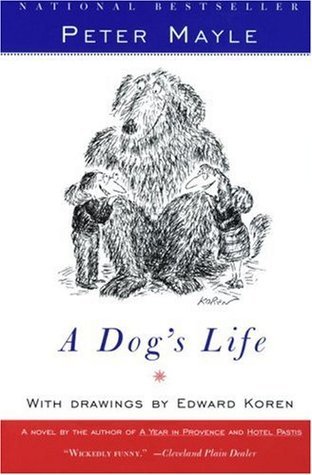
I suppose they are living a life not too different from their ancestors, the wolves — in a tribe, in a pack, in a gang. I remember reading “A Dog’s Life” by Peter Mayle. It’s a lovely story about the world as seen through a dog’s point of view, in that typical Mayle style. The book essentially makes the same point as Holland does, except with excellent French food, wine, and Mayle’s wit. Whenever I miss Gibbs, I pick up “A Dog’s Life.” I read a few pages.
It puts me in my place.
December 23, 2024. San Francisco