
Subscribe to discover Om’s fresh perspectives on the present and future.

It is just over a year since Apple launched its face computer, and seventeen years ago it launched its skinny computer. The trajectory of one tells a lot about the future of the other. But before we get to that, a little trip down memory lane embellished with some grainy photos snapped with old camera phones.
I was still in the hospital, convalescing from my heart attack, when I saw Steve Jobs announce the new tiny MacBook Air. In one simple action, Apple’s co-founder showed why it was superior to all those netbooks. I really miss Jobs’ showmanship — how he slid it out of a manila envelope. Imagine seeing a computer that was 0.16 inches thick at a time when all MacBooks were an inch thick. And it weighed less than 3 pounds compared to traditional computers that tipped the scales at over 5 pounds.
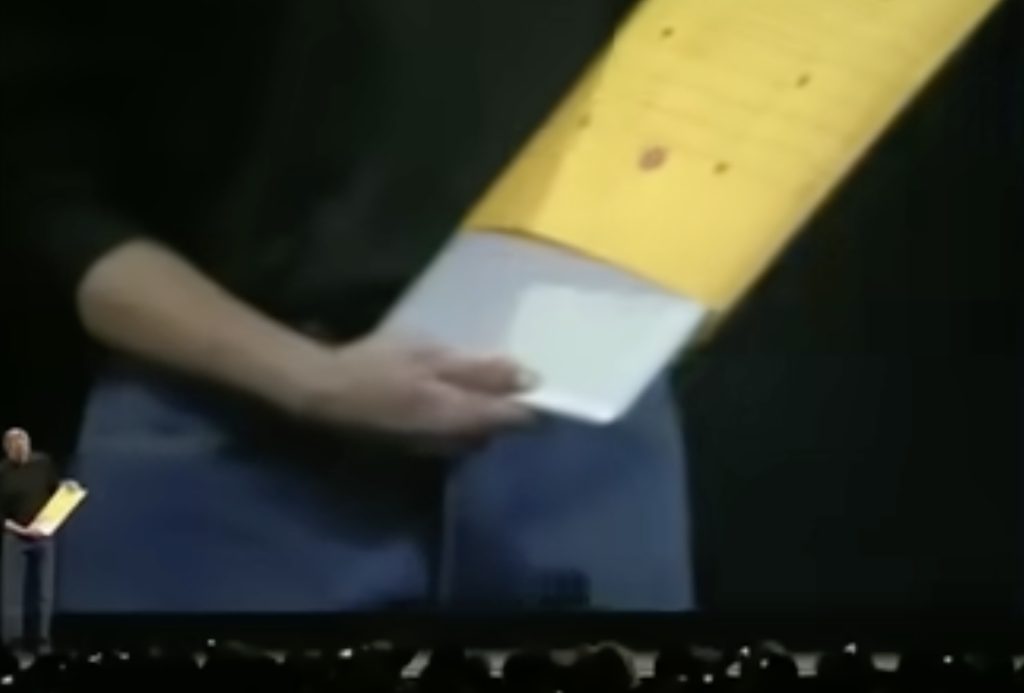
The visual impact of that one action was astounding — and that’s why I see all the current generation of executives and founders, both from Apple and elsewhere, as mere Temu-clones of the impresario. Imagine how he would have handled Apple Intelligence’s launch. Or the Vision Pro.
I knew I had to have it, even though my priorities at the time were different. Still, it allowed me to get excited about something, instead of obsessing over my health challenges and feeling negative about my circumstances. I was excited about things that continue to excite me: new technologies. The allure of cutting-edge gadgets provided a welcome distraction from my health concerns, offering a glimpse into a world of innovation and possibility.
A week after its launch, after the reviews came out and it was available for preorder, I ended up ordering one. It had a 13.3-inch display, Intel Core 2 Duo processor and, if memory serves me right, set me back about $2,500. And then I had second thoughts. Oh, did I have second thoughts.
Life, I had learned, is too short to be swayed by less-than-stellar commentary or lack of features. In the end, I simply loved the idea of the MacBook Air and the future it portended. The underpowered Intel chip was not fast enough to do much, except generate heat and make it uncomfortable to use on a lap. I remember my colleague Liz Gannes’ then-new puppy, Crash (RIP), would come and sit on the laptop. I guess he liked the warmth, as all puppies do.

That underpowered chip was probably one of the initial reasons why Apple created its own chip design program. Thinking about the power requirements made them the first company to consider power consumption as a crucial aspect of computing on the go — something that remains a key part of their chip strategy. That underpowered device with a single port likely made me yearn for better wireless connectivity on my computers and other networked devices.
The original MacBook Air wasn’t perfect, but I still took that curvy little thing with me everywhere. The device essentially helped me form clear and strong ideas about cloud computing — many of those ideas eventually made their way into iPad and Chrome-based machines from Google. If you go back to Jobs’ commentary during the launch, you could easily see the future.
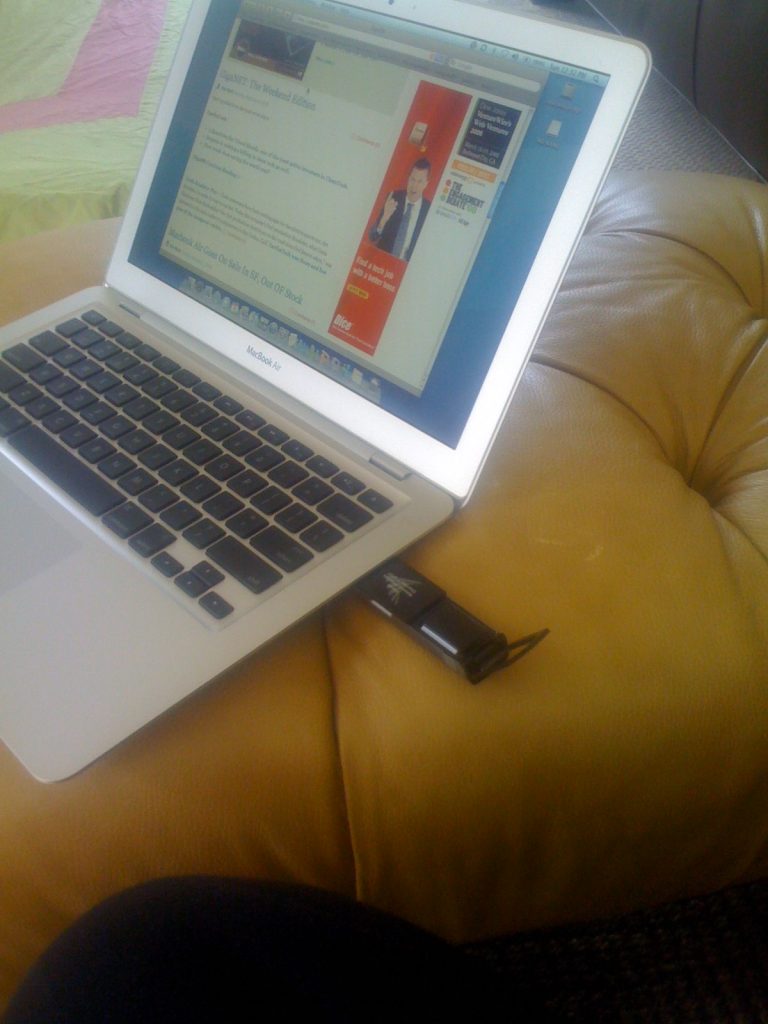

He was right when he said, “We see these really as the next generation of MacBooks. We think all notebooks are going to be like this one day.” He saw the Air’s design compromises as the future of laptop computing, prioritizing portability over traditional features and ports. He touted ideas like watching movies as rentals through iTunes instead of using a DVD drive — a future we now commonly live by streaming video. He wanted you to use iPods for music instead of burning CDs. Apple Music or Spotify is how we stream today. Or use Time Machine and Time Capsule for wireless backups. We now seamlessly back up to iCloud or Backblaze. And we all have multiple remote disks in the cloud.
Apple has long been a laggard in incorporating the internet into its products. In my 2016 essay for The New Yorker, I pointed out that “internet services and infrastructure are its Achilles heel. They are in tough competition with services provided by Internet native giants like Google, Amazon and Facebook.”
That lack of network-first thinking has allowed Spotify to become a leader in digital music and a major player in podcasts. Apple’s inability to view networks, rather than hardware, as the epicenter of consumer behavior has been an ongoing challenge for the company. In 2017, I wrote: “Apple has problems when it comes to its internet infrastructure and, more importantly, lacks the cloud-and-data-native thinking that is crucial for success in the post-device world. None of Apple’s senior management team is internet native and they need to kickstart the cultural shift to a more data-centric, internet-native company.”
I am digressing — this is about the MacBook Air, one of the best-selling computers of all time.
After Apple redesigned the MacBook Air in 2010 and introduced an 11-inch model, the laptop came into its own with the transition to Apple Silicon. According to publicly available estimates, the MacBook Air has been Apple’s most successful model. Between 2008 and 2010, the less-than-stellar machine sold fewer than 5 million devices. However, after a makeover in 2010 and price cuts, sales soared. From 2011 to 2019, the wedge-shaped MacBook Air reportedly sold more than 40 million units. The Apple Silicon era has seen MacBook Air sales skyrocket. In 2020 alone, the laptop sold more than 20 million units. Recently, it lost its iconic look, which for some users, including myself, diminished its uniqueness and status as a design icon.
Nonetheless, there are vital lessons in MacBook Air’s success, and it can be viewed as a blueprint for Apple’s long-term product strategy. In 2008, at $1,800, the Air was a radical compromise. It sacrificed ports, power, and features for unprecedented thinness. At that time, thinness was so unique that it allowed Apple to position the Air as a premium product. This approach enabled Apple to pioneer new manufacturing techniques and establish a new product category while recovering R&D costs through high margins.
In time, technologies improved. Solid-state drives became cheaper, batteries got a little better, memory costs dropped, and screens improved. Eventually, as manufacturing efficiencies increased and component costs declined, the Air transitioned from an expensive technological showcase to Apple’s mainstream laptop at $999. We’ve seen Apple do the same with its high-end iPhones, which is why I’m excited about Vision Pro’s future trajectory. (Happy belated first birthday, Vision Pro!)
Vision Pro’s $3,499 launch price reflects its position as a technological pioneer with significant compromises. Like the original Air, it trades practical limitations for breakthrough capabilities. It’s not an easy product to make, and it’s severely limited by what consumers can do with it, but just like the original MacBook Air, it shows what’s possible with time. If anything, Air’s 17th birthday should be a good reminder: The Vision Pro will eventually spawn more accessible variants while maintaining premium options.
As for the MacBook Air, I haven’t owned one for nearly a decade. I’ve upgraded to a more expensive MacBook Pro. That said, the original device is and will always remain a special part of my life. I wish I still had the unit — it went with the old company’s assets, along with many other personal mementos.
January 16, 2025. San Francisco
Comments are closed.
Great ode to the original MacBook Air. It truly was a marvel. I’m not sure I’m ready to bless the Vision Pro with the same glow however. There’s a lot more at play against the Vision Pro that I don’t think even the MacBook Air could make up for. Steve Jobs would’ve showcased it in such a way that people would “get it” before they even purchased it. That’s why the MacBook Air announcement was so amazing. Even then, before 2010, Apple was a tiny version of itself today. Today it’s a behemoth facing many anti-trust lawsuits and a lot more competition where hardware isn’t as hard as it used to be.
Either way, I truly enjoyed this thoughtfull journey and thinking exercise.
Two points.
First, I am having small health challenges related to aging, mainly arthritis, but you remind me again that looking ahead is a good way to live.
Second, your MacBook story reminds me that the fall of Intel is one of the great tragedies of our tech era. It took a long time to get rolling but once it did, there was no stopping it.
Dana
I am sorry to hear about your medical challenges. That is the worst news. I hope you find some relief soon. It is good to think about the future as it keeps the brain imagining interesting ideas.
And for your point about MacBook and Intel, what a shame to see a giant like Intel whither away
I saw this X post by Robert Scoble with respect to Vision Pro and Apple’s future as a going concern. I’m curious what your thoughts are;
https://x.com/Scobleizer/status/1879959008163115293
Robert is a smart guy but he is wrong here. Apple will figure out the “intelligence” and new paradigm in time. You have to remember that Meta is not winning in AR or VR or hardware. Tesla is falling behind the Chinese in car business and is going to have its hands full. A lot of us who are old enough to remember, Cisco was in the same position as Nvidia. In other words, too early to make any predictions or see where it will end up. Also Scoble couldn’t stop waxing eloquent over Vision Pro. I tend to be a little more patient in either my optimism or pessimism 🙂
I loved the MacBook Air from the beginning but have yet to own one. I now have a MacBook Pro 16 inch but am tempted to buy an Air for travel. Plus it is so cute!
Hah. I wish I was traveling as much to justify another machine. For me, the current Pro kinda works well and is best of both worlds when I am getting out there.