
Subscribe to discover Om’s fresh perspectives on the present and future.

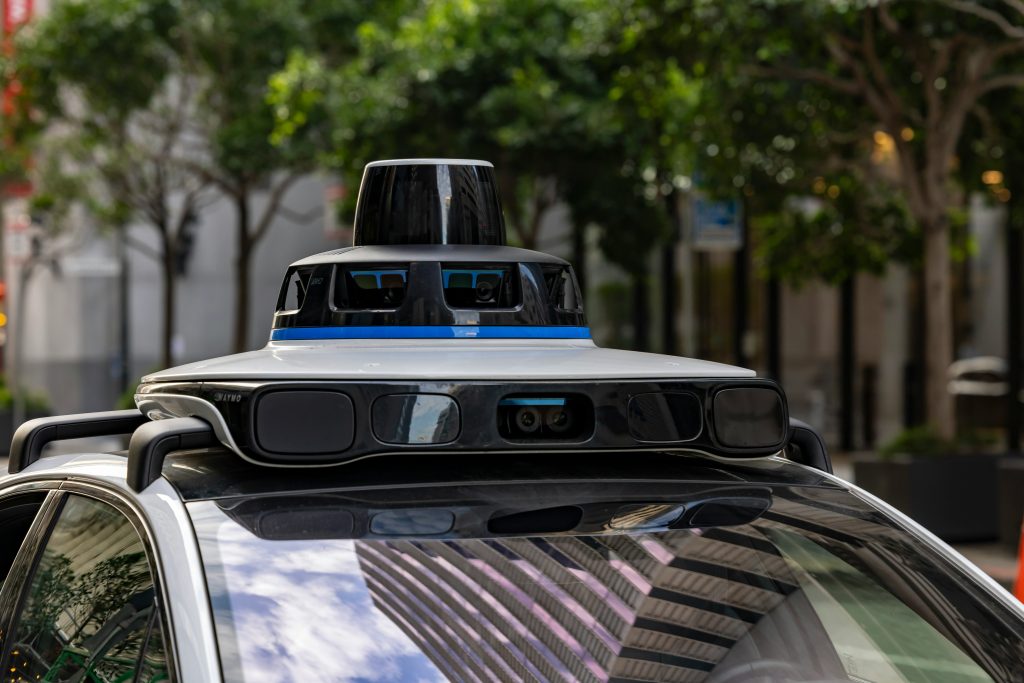
Over the past three years, I have embraced three technologies almost completely. Generative AI, Apple’s Vision Pro, and Waymo. They are all part of my daily routine. And while I can skip Vision Pro occasionally, I don’t leave home without Waymo. I am probably one of their earliest adopters, willing to wait an extra ten minutes for the Waymo versus Uber. Yes, it drops me off a few hundred feet from where I need to be. Yes, it takes a bit longer. Yes, it can’t go everywhere. Yes to all the problems. And yes to the fact that I am okay using a human as a backup to this robot. And yet I am confounded by its valuation, especially given the challenges of growth.
When I started reading an interview with co-CEO Tekedra Mawakana in Bloomberg, I was hoping for some clarity. I didn’t get any. My editors would have had me re-report the story, and pushed me to get answers that help understand the $126 billion valuation and Waymo’s growth trajectory.
Mawakana told Bloomberg that in 2025, Waymo “quadrupled the number of trips that we are providing.” She called it an “inflection point.” It was actually 3.3 times. Waymo’s own blog reported about 4.5 million rides in 2024 and 15 million in 2025. That said, Waymo was doing about 12,300 rides per day across three cities in 2024. By late 2025, that number was 57,100 rides per day across six cities. So maybe there is something to that “quadruple” she was talking about. The beauty of language is that it can allow us a lot of latitude.
Bloomberg reports that their annualized revenue run rate topped $350 million. That puts the valuation at 360 times revenue. And in case you were wondering, $13 billion of that $16 billion round came from Alphabet, Waymo’s parent company. The rest was outside money from Sequoia, DST Global, Dragoneer, and Kleiner Perkins. Nice way to boost your book. It is the disease du jour in Silicon Valley these days. Every AI investor is happily marking up their own investments.
Currently the average fare for Waymo is roughly eighteen dollars per trip. So even if they hit their weekly trip target of one million by the end of 2026 and reach $1 billion in revenue, they would still be valued at 126 times forward revenue. Uber trades at roughly three to four times revenue. Tesla at its most frothy was maybe around twenty times forward twelve-month revenue. That is a rich valuation. I guess the big thing about future valuations is that you can be very optimistic. So let’s not pay too much attention to the multiple and instead focus on the physics of the problem.
Unlike the voodoo economics of SaaS or AI, these are actual cars on actual roads. There are only so many rides a vehicle can give in a day. As of late 2025, Waymo had roughly 2,500 Jaguar I-PACEs on the road. There are about eight hundred to a thousand in San Francisco, another seven hundred in Los Angeles, five hundred in Phoenix, two hundred in Austin, and about a hundred in Atlanta. San Francisco and Los Angeles generate roughly 68 percent of all Waymo rides. Phoenix, which has been operating for five full years since 2020, still accounts for only about 20 percent of the business.
Published data shows that each vehicle currently does about twenty-five trips per day. The average trip lasts about fifteen minutes. Waymo reported 15 million trips and 3.8 million hours of rider time in 2025. According to California Public Utilities Commission filings, there is about eighteen minutes of idle or repositioning time between trips. Each car is already running roughly sixteen hours a day. Since these are electric vehicles, they need time to charge. To hit one million weekly rides with the current 2,500 vehicles, each car would need to complete fifty-seven trips per day. That is over fourteen hours of active ride time alone. That does not include charging, maintenance, or repositioning. Physically impossible.
No matter how you slice it, their fleet has to grow big and fast. Even with 3,500 vehicles by year-end, the number would be forty-one trips per vehicle per day. The reality is that they need anywhere between 5,500 and 6,000 cars to hit their own target. They need to more than double their fleet in eleven months. Not that it can’t be done. They have $16 billion in the bank, and can buy as many cars as they want. But whether they can get as many cars as they want is a whole different story.
Each Jaguar I-PACE costs roughly $175,000. About $75,000 for the car and $100,000 for the sensor stack and compute hardware, according to co-CEO Dmitri Dolgov. To get from 400,000 weekly trips to one million, assuming current utilization of roughly twenty-three trips per vehicle per day, they need to add at minimum 3,500 more vehicles. That is over $600 million in vehicle costs alone, before you factor in mapping, operations centers, remote support staff, and the regulatory apparatus for each new city. The next-generation Zeekr RT platform brings the vehicle cost down to maybe $75,000 total. That helps eventually, but these vehicles are still in testing, not deployed at commercial scale.
Waymo wants to expand to twenty cities in 2026, including London and Tokyo. It looks massive on a slide and makes for a great headline, but Waymo’s own history should give us pause. New cities start slow. Austin launched in March 2025. Nine months later, it accounts for about 8 percent of rides with two hundred vehicles. Atlanta launched in June and accounts for about 4 percent. Phoenix, the most mature market, took five years to reach its current scale. Several target cities don’t have robotaxi regulations yet. Illinois, where Chicago sits, has made them outright illegal.
If the new cities perform like Austin and Atlanta in their first year, they might collectively add 50,000 to 80,000 weekly rides. That is useful, but it is not where the million comes from. The million has to come from cramming more cars into San Francisco and Los Angeles. To be fair, there is plenty of room to grow there. The wait time is still far too long.
Then there is what I call the fare trap. A twenty-dollar ride is easily palatable. But on the longer rides, it is not clear that Waymo has an advantage, at least not yet. When I got access to their new freeway service connecting San Francisco to the rest of the Bay Area, I tried it out. I took one to Stanford. It cost $125. A weekend ride to Millbrae ran $85. I took the rides because I was curious. I am unlikely to take them again. Uber is cheaper. I don’t have to wait as long for a ride. At those prices you can take what Manhattan people call a “black car.”
I am not saying I won’t pay a premium for a safe, clean, and timely ride. But I am not crazy. Still, the longer rides do help Waymo’s revenue math. If the average fare shifts from $18 toward $35 as longer trips come online, one million weekly rides becomes $1.8 billion annualized instead of $936 million.
With the help of Claude, and publicly available data, I created a rough model for Waymo’s business, just to get a better handle on how to really think about the company and its prospects. These are still back-of-the-envelope numbers, and not the actual data the company has, but this is just a projection based on data I could find. In order to achieve a generous thirty-times growth multiple, Waymo would need roughly four million weekly rides at about $20 per trip. That is about ten times where they are today. At $30 per trip, the most optimistic scenario starts to look almost plausible. The entire valuation thesis depends on longer, more expensive trips becoming the norm. Not the short urban hops that make up most of the business today. But longer trips take longer, and there are only so many hours in a day.
The tricky thing for Waymo is finding a scenario where prices, volume, competition, fleet requirements, and costs are all in perfect sync. That is the combination that would make them worth $126 billion. Or even more. For now, the company is still registering staggering losses. Alphabet’s “Other Bets” segment lost $3.6 billion in Q4 2025 alone. It is hard to figure out what percentage of those losses come from Waymo, but it has to be a substantial chunk, since Waymo is the dominant component of the segment.
Look, I get it. This is a big swing. At present there is one company trying to do what Waymo is doing. Fully driverless, commercial, paid rides at multiple-city scale. I know this because I ride in one almost every day. The technology is real. The growth is real. The experience borders on magical. Despite all the negativity around these cars, I feel far safer in a Waymo than with a human driver. Uber rides often feel like riding on a skateboard tied to a go-kart.
That is why I wanted more from that Bloomberg piece. I want this company to exist. I wanted to understand whether the math works. Or is this a ride to nowhere?
There is no question. I am using them and I love it so much more than Lyft or Uber! I actually look forward to it! Which is a different feel.
Also… would you consider moving to Substack? Totally random.
No, I won’t. I like owning my own space and working on my own terms. Since I don’t charge anything and don’t plan to, I see no advantage. I will try a new format soon on Substack, but this works for me. Thanks for your comment.
The idea might work but the math doesn’t. So much money swishing around simply desperate for a home.
Eventually money train stops for everyone. 🙂
Reminds of the delusiuonary optimism around the Boring company. Tunnels around LA zipping people in their Tesla’s . Back of the envelope calculations don’t add up to sustainable or meaningful impact on traffic. same with California fast trains.
In the very long term i see that autonomous driving as being able to remove vast numbers of cars and concrete out of the system
I am not sure what you are saying Tim. I think they will have an impact on traffic. Fewer people will own in time. I am a believer in shared driving resources versus individual mobility resources. As for Boring company, well that was another hyped product from the great master of hype. Waymo is a company I have followed from their first tiny car. This thing works. And I am glad it exists.
Excellent analysis – really clear, thank you
Time to revisit Uber long case…
My guess on uber is that they use Waymo for humans, and humans for delivery of non-human stuff.
Exactly my reaction. I far prefer Waymo to Uber. I don’t have to talk to anyone, I don’t have to listen to their music, I don’t have to worry about them watching TikTok while they are driving. The prices seem fair, so far. I take Waymo anlmost any time it goes where I need to go. I have a car but less and less patience with the hassles of traffic and parking. When this lease runs out I doubt I will get another car.
“I don’t have to listen to their music, I don’t have to worry about them watching TikTok while they are driving.” I totally am with you on this. So much of this is very much lack of quality control by Uber. Waymo has a good opportunity unless they blow it.
I think you’re missing it. Owning the vehicle cost is NOT the strategy. Opensourcing the OS to partners is. It’s the phone strategy in automobile form.
Open source OS works in phone world because they has apps and ads to monetize it with, though nothing like Apple did with the iPhone hardware and services, I want to see how they do it with Waymo, and turns it into $$$s
Great analysis and tone. Shows what we are missing from mainstream media.
Great analysis Om – you’ve really nailed the disconnect between the ridiculous $126B valuation and what’s actually happening on the ground.
The London expansion bit had me scratching my head. I’ve been here 20+ years and honestly can’t imagine how this works in a city that’s basically designed to frustrate private vehicles. We’ve got cycle lanes everywhere, bus lanes, pedestrian zones, and 20mph limits right across central London. The whole infrastructure is built around public transport, walking, and cycling – not cars trying to navigate this maze.
London’s transport is nothing like the SF/LA sprawl where Waymo makes sense. As you know here you’ve got the Tube every couple of minutes, buses constantly, Boris bikes on every corner, and most places you actually want to go are walkable anyway. The value prop just doesn’t exist.
Your 360x revenue multiple observation is spot on – that’s just mental compared to Uber’s 3-4x. This really does feel like Alphabet throwing their cash around to pump up valuations and stay ahead of Tesla and the rest. When your big growth story requires doubling your entire fleet just to hit basic targets, you’ve got to wonder if this is actually scaling or just burning money very expensively.
The physics problem you’ve highlighted is the killer though – 16 hours a day utilization, charging time, repositioning between rides. These aren’t software problems you can algorithm your way out of. They’re real-world constraints that no amount of hype or cash can solve.
Is this genuine innovation or just a very expensive story Alphabet’s telling itself?
The surveillance capitalism characteristics of Waymo (which I too very much enjoy using) could have a positive impact on their bottom line. Despite Waymo’s intimacy and calmness I do feel a little uneasy about what is essentially a geospacially tracked recording studio. I can turn off Android listening to sell my conversations about products I might purchase in the future to vendors, but I have no control of that in a Waymo.
We may be bombarded with ads in the future too.
I also watched the interview with the Co-CEO and it was telling how she side-stepped any talk of an IPO.
Waymo as the prototypical example of a Peter Pan company, in a suspended state of subsidized childhood, protected from public market forces by a search monopoly, and denied true price discovery inside the Neverland of private secondary markets.
The biggest trap for investors is confusing strategic value with financial value. Alphabet doesn’t keep Waymo to make a profit on rides; it keeps it as a hedge. If Robots with built-in World Models replace Search, Alphabet needs to own the platform.
The danger for VCs is investing in Peter Pan companies hoping for a financial exit, not realizing the parent company values the asset for strategic control. This misalignment leads to unicorns that never IPO. It’s a trap because the exit is blocked.
Have you considered the scenario where they sell the tech to other car companies who retro fit their existing vehicles lines and operate the fleet. Waymo gets a royalty per ride. Those rides will count against their goal without the capex and opex cost
Google ads in cars. Uber Advertising already hit “$2B annualized revenue” in year 2, look at Kristi Argyilan’s recent Linkedin post
Longer trips may bring the desired higher average fares, but will also likely bring higher idle time and repositioning costs, whilst of course reduced the number of trips per hour.
If pricing is per rider minute, then local rides and higher occupancy may generate higher total revenue per vehicle hour.
A short remark regarding the charging times of electric cars: if you were to choose to charge batteries at a dedicated location and swap them, cars could keep driving while the empty batteries are being recharged in the meantime.