Technology & Change: Field Notes From The Present Future
What To Read This Weekend
It was Apple week and unsurprisingly even I got carried away and wrote a lot about Apple’s launch week. While the big high-end items were new MacBook Pros, the real story to me was the Fusion Architecture. But I am a chip-kinda guy. Sadly, Apple doesn’t give you the deep details, so one is left to postulate some well-reasoned ideas. So that is what I did.
Back in 2008, Steve Jobs said, “We don’t know how to make a $500 computer that’s not a piece of junk, and our DNA will not let us ship that.” That was then. This is now. The company knows how to do this, and do this well.
The real strategic story of the week was Apple pushing value. Thanks in large part to its ability to make high-quality things at scale, I am sure it is also preparing itself for whatever economic doldrums are coming our way. It is also a good time to launch a full-frontal on Windows 11 and Chromebooks. On a more personal front, I am already in love with the new midnight blue Neo. I can’t wait to get my hands on it.
Here are seven articles worth your time this weekend.
25 Years of iPod Brain. Molly Mary O’Brien bought a fourth-generation iPod at 14 with cash earned pressing potatoes through a french fry cutter in Vermont. What follows is a love letter to the device that taught a generation how to build a relationship with music. I miss my iPod. She is right, the iPod’s gift was its constraint. That early tension between abundance and curation is something we crave so badly in the age of algorithmic gods. [Dirt]
The Secretive Company Filling Video Game Sites with Gambling and AI. An eight-month investigation by Aftermath into Clickout Media, a shadowy affiliate marketing company that has been buying beloved gaming sites like GamesHub, The Escapist, and Videogamer, then stuffing them with crypto casino links and AI-generated content under fake author profiles. Internet doesn’t need AI slop, when we already have humans ruining it for greed. [Aftermath]
“We See Everything.“ A joint investigation by Svenska Dagbladet and Göteborgs-Posten found that data annotators in Kenya, working for Meta subcontractor Sama, routinely review intimate footage captured by Ray-Ban Meta glasses. As a line from Casablanca goes, “I am shocked, shocked that there is gambling going on here.” [Svenska Dagbladet]
Anthropic and the Pentagon. Bruce Schneier cuts through the noise on the Anthropic-Pentagon standoff with the clarity nobody else brought to it. This is not really about one company being more moral than another. The real lesson is about the need for democratic structures and legal restrictions on military AI, not corporate heroism. [Schneier on Security]
$599. Not Junk. I love John Gruber’s take on new Macs. So, I was keen to read what he had to say about the MacBook Neo. He thinks Apple is going to sell a zillion of these. [Daring Fireball]
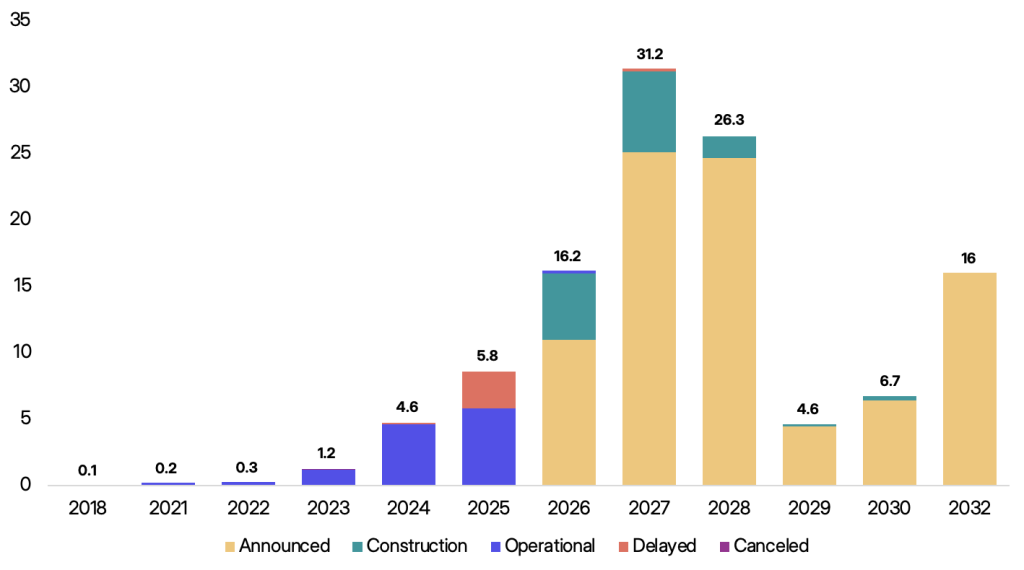
Reality Check. Everyone talks about the AI infrastructure buildout like it’s a done deal. It’s not. Sightline Climate is tracking 190GW across 777 large data centers announced since 2024. Of the 16GW slated to come online this year, only 5GW is actually under construction. Last year, 26% of expected capacity slipped. Their estimate: 30–50% of the 2026 pipeline won’t materialize. Meanwhile, hyperscalers are quietly giving up on the grid entirely, building their own power sources. The bottleneck isn’t chips. It’s watts. [Sightline Climate]
In Memoriam. Dave Farber, true Internet router. He was one of the most important people in the creation of the Internet, and he taught the people who did most of the work turning what he once called “a research project” into the backbone of modern communication. They don’t make people like Dave Farber anymore. [High Tech Forum]