
Subscribe to discover Om’s fresh perspectives on the present and future.

It was late into the evening. I wanted to take a break from everything digital. Relaxing by doodling in my notebook. Trying a new grind. Seeing how the metal tip felt on the billowy silky Tomoe River. Nothing dramatic.
Somewhere in the middle of all that I let my subconscious take control of my mind, and my hand. And with that my words, and my pen. When I stopped and read, it shook me. I had written something I have felt.
The more I look for what I don’t know I’m looking for, the more likely I am to not find it.
So I am likely to be disappointed. Be disgruntled. What triggered this was my reaction to a new nib grind. It wasn’t really living up to its billing. Not every grind or nib should, as they too are creation of a moment, the artisan finds themselves in. It was not about them. But more about me.
It made me realize, the more new nibs, new grinds I try, I end up not thrilled with the new or appreciative of what I already have.
The universe in its own unique way, was slapping me silly and asking me to stop. And just try and be happy with what I have. Not find happiness with what I can have next. After all, in the end, it is about knowing what I am seeking really.
The pattern repeats. Objects are what change.
Things that somehow add up and pile up. Another new pen. Another new nib, new notebook. It’s all a distraction. Things that seem to bring happiness, but in the end are nothing but distractions from life and the emptiness of it.
The doodling led to self-reflection, and realization, that what I was chasing wasn’t a pen. Or a nib. Instead it was an imagined feeling that something new, something novel would produce. This feeling lives in the future, in the imagined version of the experience. We all feel it, one way or the other. We act on it, one way or the other. Nibs for me. Labubus for someone else.
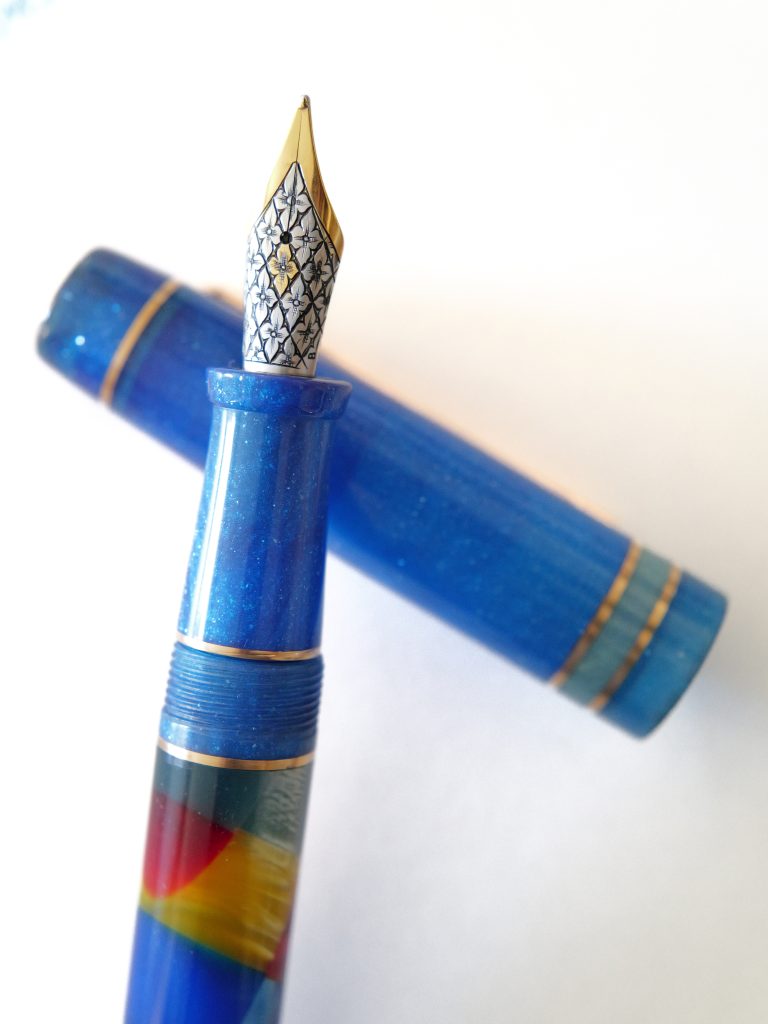
The actual nib and pen, once inked are nothing like what was imagined. When the nib skips, and catches on paper, the imagination has none of that. That feeling of disappointment. But this is not just about nibs.
It never was. Clothes. Books. Another notebook. Swipe left, swipe right. The rhythm is identical. You’re not looking for a thing. You’re looking for the version of yourself you imagine owning it would produce. You can’t get there. Not because the thing is wrong. Because that self doesn’t exist. Acquisition isn’t the answer of finding self. It is always elimination, stripping down to the essence. And yet the trap of our modern now is that the Lego blocks of consumerism will complete the thing that really it wants to keep incomplete.
Buddhists call this Tanhā. Loosely translated it means craving. Tanhā is the addiction to wanting itself. Not the object. The wanting. What makes it hard to see is that the seeking loop feels like aliveness. The browsing, the imagining, the anticipating. It produces an energy that feels like engagement with life.
These days we call it FOMO, the fear of missing out. It is the algorithmic, bastard child of Tanhā. Social media didn’t invent this. It surely industrialized it. Every pen post, every rotation photo, every “new pen day” thread is engineered to make your current pen feel insufficient. Not because it is. Because the platform needs you to keep scrolling.
The cost of infinite options is that you never fully inhabit any of them. You hold everything lightly because the exit is always visible. Nothing becomes what it could be if you stayed.
It is ironic. Till recently, I had been using a version of the same camera I started taking photos with over a decade ago. My new camera is a more constrained version of the original. I know it intimately. Like the crook of the hand of a beloved with whom you have walked many walks that go nowhere, but end up somewhere. I know the images before they are captured.
I am also the same person who ruthlessly edited his wardrobe down to one hundred pieces, where the new one comes only when something has to go. It is a restricted palette of colors, choices, and clothing that are determined from knowing myself, what I like, and why I like things a certain way. It is unusual to be so precise in one thing and yet wayward in the other.
The person who writes with one pen for ten years knows things about it. I should know. I used the same pen from 1990 through the turn of the century before buying a new one, to celebrate the new century. So, I should know better. Yet, the whole modern social edifice is built on the new, the novel, and the next.
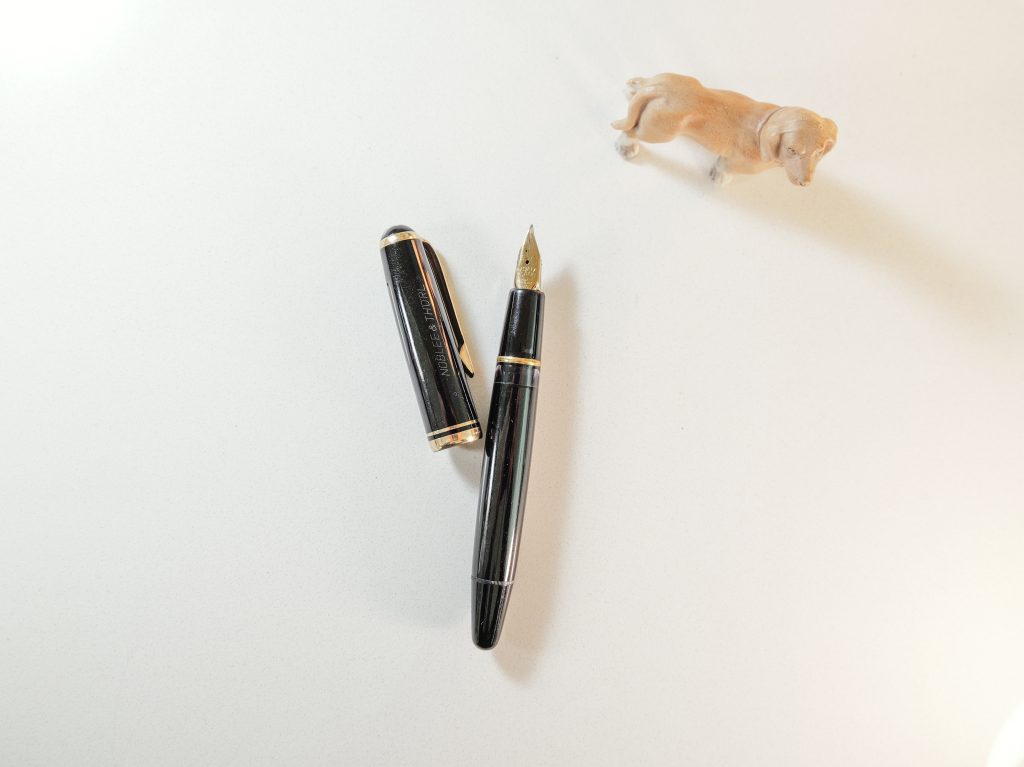
As a lifelong lover of ghazals, and having grown up in northern India, my first understanding of the word Tanha comes from Urdu. It means alone.
Solitary.
Craving.
Loneliness.
Somewhere in the linguistic memory, craving and loneliness were understood as the same condition.
The seeking loop. The new nib, the new ink. The swipe left or right. The next thing. This isn’t just desire. It’s modern society’s reality of finding meaning and company in objects. It makes you wonder if one is not filling space with things, and instead it is about filling an aloneness that things can’t actually reach.
The answer is not in wanting more.
Buddhists call the practice sati, bare attention. To be with what’s in front of you long enough to see it clearly. And so attention, then, isn’t just a practice. It’s learning to be alone without reaching. To sit with the tanhā, the loneliness, the craving, without immediately converting it into a search. Concrete, in my case: I probably don’t know what my best pen can actually do. I’ve never spent enough consecutive hours with it. I switch before I find the edge. It is strange, because I spent hours, days, weeks, and months with my camera. I should have learned.
It is getting late. The notepad is still on the desk. A few more pages have been used. The ink has dried. Somewhere in the middle of doodling and testing nibs I had stopped being a collector and started being a writer again.
I wonder if subconsciously I had come to a point where I now know it is time to start paring back. Finding the joy in the intimacy of knowing something longer. A lot longer. Just as my favorite clothing. My only camera. My favorite watch.
Is this what it feels like when a pen stops being a collector’s object and becomes a writer’s tool?
I don’t know how long this feeling lasts. But something inside me says, this is the point.
Well written. Wisdom shared. Be well. RC
Richard
Thank you
👏👏👏
🙏🏽
Thank you for sharing your thoughts. I plan to read this before I am about it buy another fountain pen.
Thanks for reading
Did you arrive at ‘via negativa ’ … in this route?
🙂
Not really. My journey was very much my own path of mistakes and excess
The last photo made me want to start searching for vintage Montblancs. FOMO again….
Lol, the vintage MBs are pretty awesome in all sorts of ways.
One of your finest.
Hit home….. and this one
Finding the joy in the intimacy of knowing something longer!
A lost art today
Thank You. Really appreciate it. I am finding this harder too, and am forcing myself to go deeper.
Perhaps the feeling you are experiencing is the transition from focusing on “having” to “doing”? And since you are referring to a pen as a “writer’s tool”, are you looking ahead to a state of being with the identity or label as a “writer”? (Sorry, I just don’t like putting punctuation in the quotes)
I may never be as good a rider as my 25 year old BMW motorcycle.
I will never be as good a photographer as my 1981 film camera.
Etc.
And regardless of anything, everything I do is done using the body I inhabit, which I get only this one for now. So I must learn to be with this.
Thank you so much for continuing to write and post, I don’t often take time to read, and every time I do I have an illuminating experience.
Drew
First, thanks for reading and sharing your feedback and comments.
To your questions, let’s get the big one out of the way 🙂
I am a writer. I have been for most of my life. It is not an identity. It is an existence. Your read of my post is different than my intent.
I think the “tool” as an “object of collection” and “quest” is the problem. Not the identity or the why of my love for my pens.