
Subscribe to discover Om’s fresh perspectives on the present and future.

“One should not only photograph things for what they are, but for what else they are.” — Minor White
I have not been out in the wild making landscapes for a while now. Almost a year. However, I have found new subjects to explore. San Francisco, obviously, remains my favorite muse. California is my darling. But at home, I have been exploring how to push myself creatively. And one arena I have been exploring is fountain pens — my other lifelong hobby.
I write with them. I cherish them. I collect them. What I wasn’t doing was photograph them.
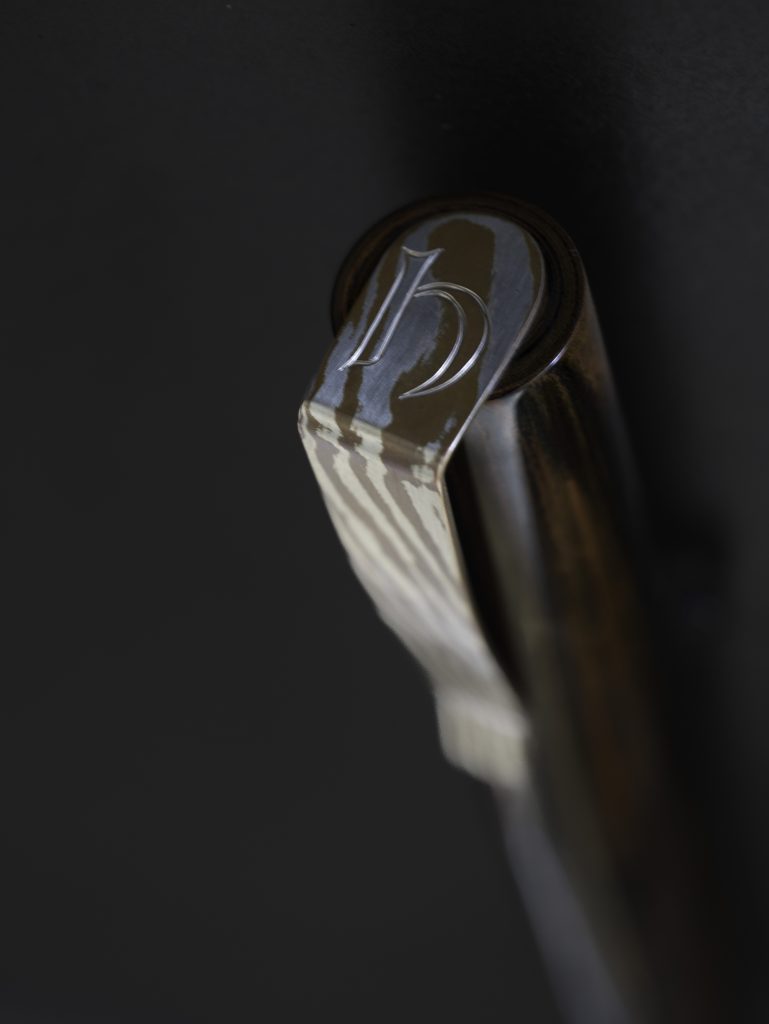
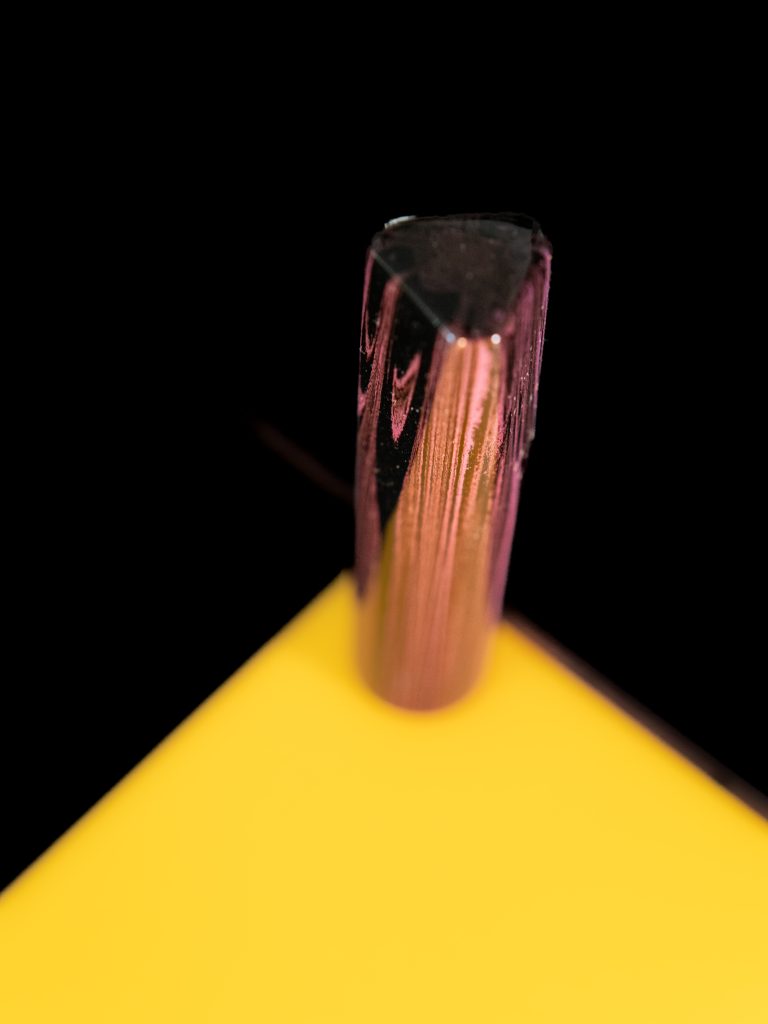
I also found that most fountain pen photography is quite boring. The sameness of it. Product shots, meant more for a sale than for enhancing the beauty of objects so lovingly created. I wanted to do something different. More abstract. More me.
As the philosopher Dōgen said: “Not to seek reality apart from appearances, nor to cling to appearances as reality.”
I am trying. In the process, learning. To find beauty in the things I use to create words, which have a beauty of their own.
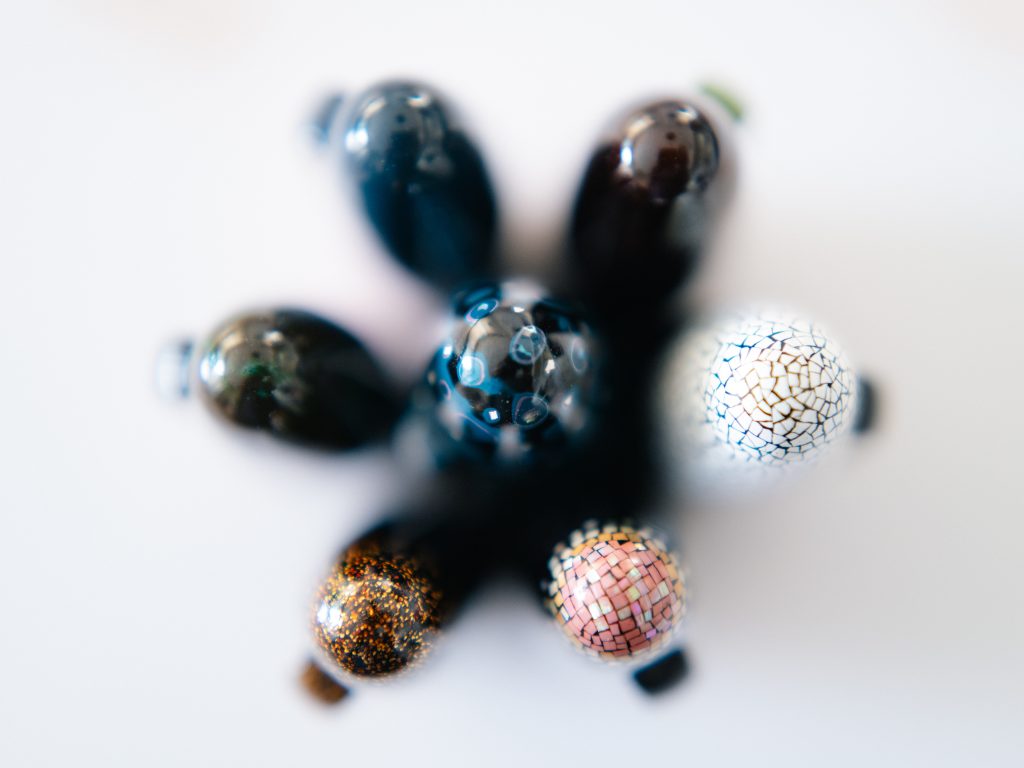
Two new tools have made this possible.
My friend Kiran Karnani of Harlowe sent me a couple of small portable lights — the Sol — that attach to the iPhone via MagSafe. LEDs with the ability to change color and temperature. With two of them, you can muck about with color, with shadow, with the way light wraps around a hard object and makes it feel alive. I don’t intend to become a macro expert. But these lights give me enough control to mean what I’m doing.
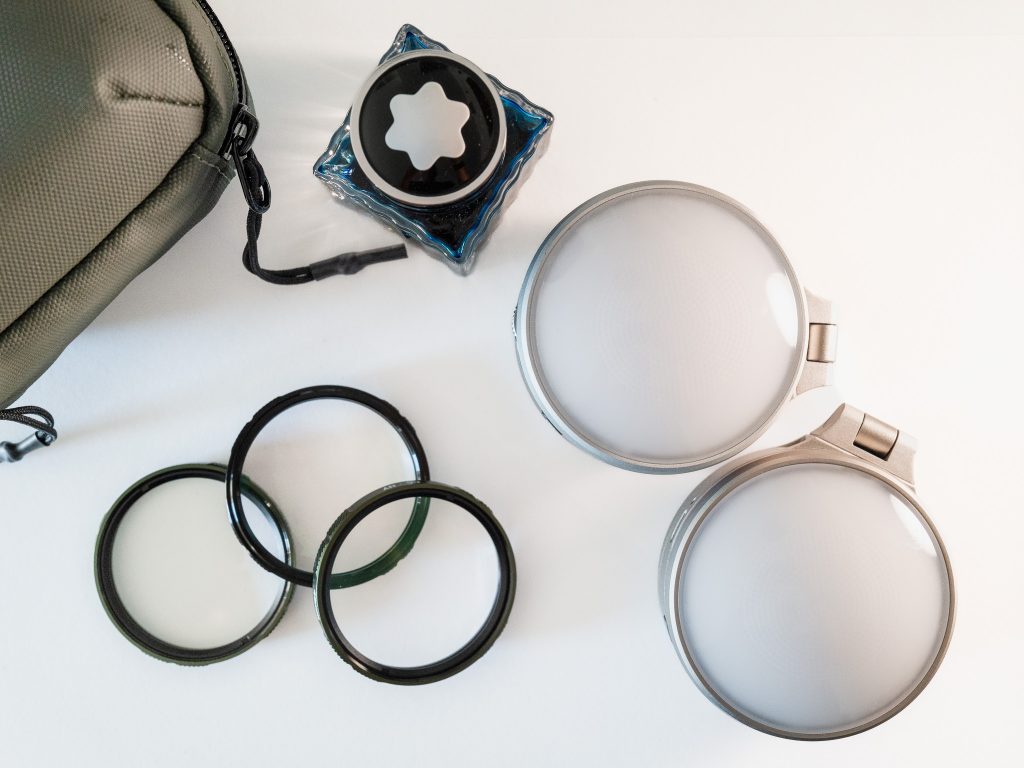
The second tool is a ShortStache Shift Diopter made by PolarPro. They sent me review units in 49mm and 82mm sizes. I have been using the 49mm version in combination with my Leica Q3 43, which has a built-in macro mode. A diopter, to put it simply, is a close-up lens — a secondary optical element you screw in front of your lens. It reduces the minimum focus distance and increases magnification, letting you get closer than your lens could otherwise focus. Particularly useful for macro work. Shift diopters come in three strengths — +2, +4, +8 — each pulling you closer to the subject. (I also have a Leica ElPro e52, and will do a comparison separately.)
Shift diopters opened creative possibilities I didn’t expect. The selective focus, the way sharpness falls away at the edges — it isn’t a technical compromise. It’s an aesthetic choice. I decide what matters, and the rest becomes part of the abyss.
It is an edit. Just like writing itself.
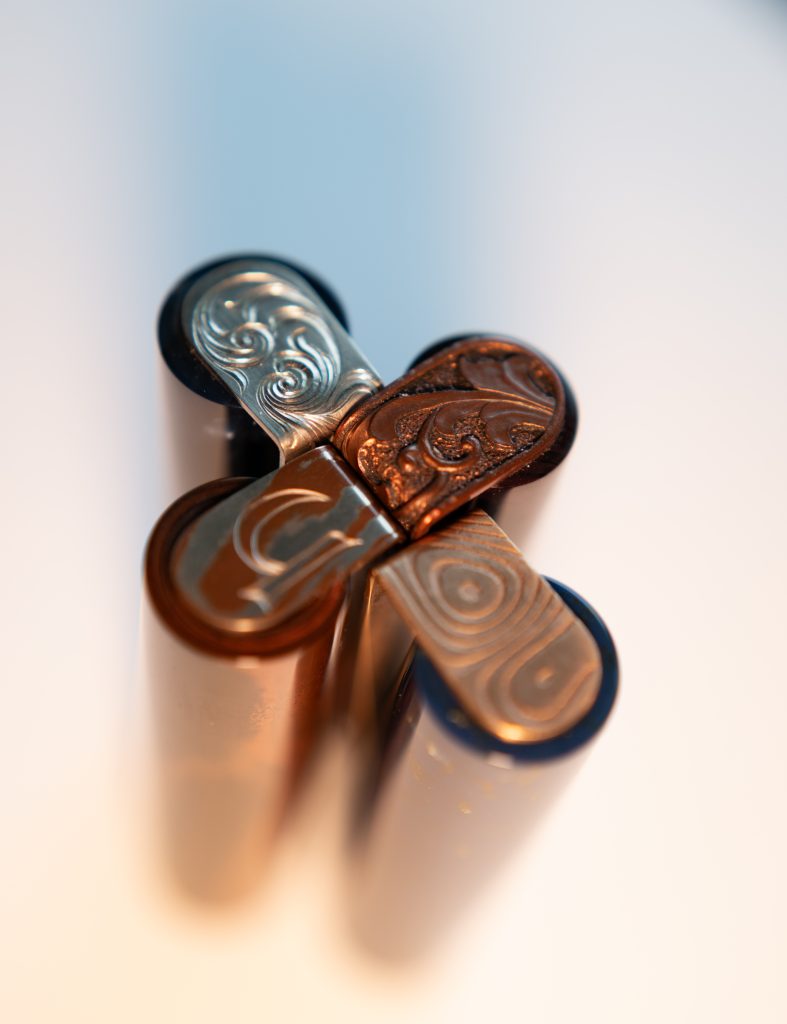
What I am really trying to do and in the process understand is how much of my approach to landscape photography translates to pens. Can I get to the very essence of their existence — not the whole object, but the fragments that tell the story? The light catching a section of celluloid until it stops being “pen” and becomes color, curve, depth.
The most important thing I keep reminding myself: leave something unexpressed. Give the viewer room to imagine the landscape. Rather than show it all.
I want to make pen photographs that feel that way. Nothing resolved. Nothing explained.
“In all things, irregularity is intentionally preferred.” — Yoshida Kenkō, Essays in Idleness
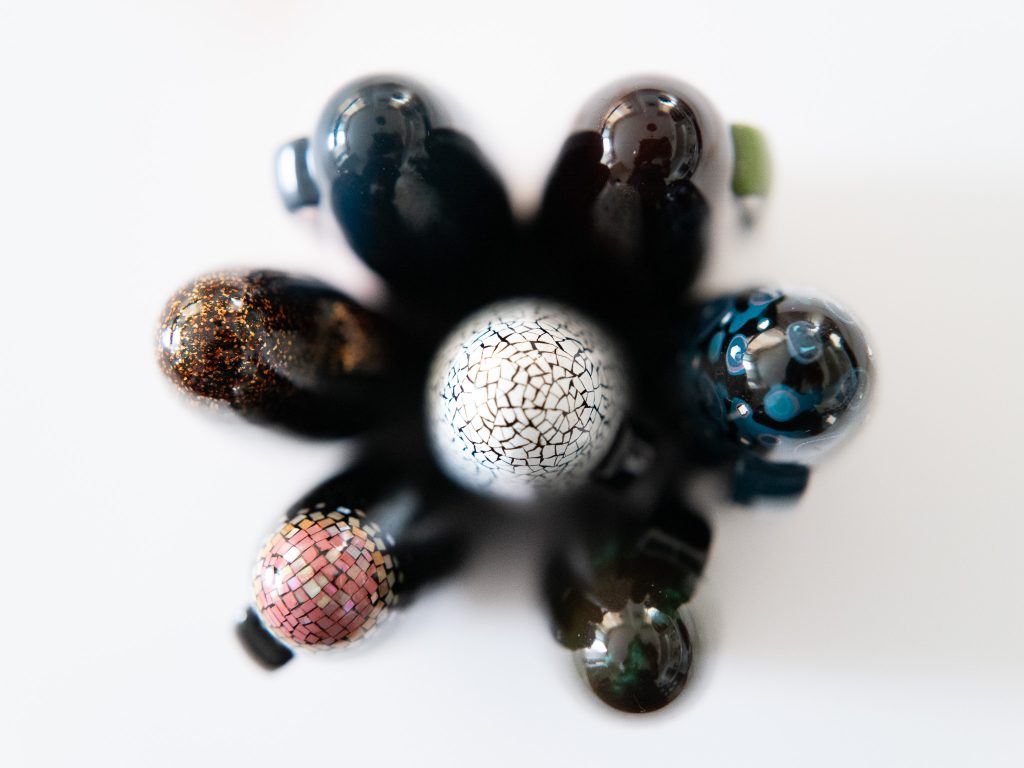
March 30, 2026, San Francisco
Your visual language develops poetry. To witness your ethereal and zen-like landscapes translated to everyday objects of expression underscores your mastery and art of seeing with intention.
You are very kind. I am doing my best to try and figure out what is my language.
Love these! More such explorations, please.
Thank you Karen