Wabi-Sabi of Vintage Digicams

When reading this story about the growing popularity of vintage digital cameras in Wired, I was reminded of this quote by Don Draper from the television series Mad Men:

“Nostalgia – its delicate, but potent. Teddy told me that in Greek nostalgia literally means “the pain from an old wound.” It’s a twinge in your heart far more powerful than memory alone.”

TLDR: Vintage digital cameras from the early 2000s are having a moment. They are being used as tools for artistic expression. Their “flaws” – low resolution, noise, and imperfect colors – are becoming prized features in an era of AI-perfect smartphone photos. It is funny that this story comes out when Sony launched its latest, most advanced camera, the new version of the A1 — and it makes photography feel almost like a video game.

Key Points:

  • Photographers are looking for older cameras with CCD sensors that produce


Ai, Big Tech, & Markets

CompanyNov 5, 2024Nov 11, 2024Change ($B)Change (%)
Meta$1,445B$1,471B+$26B+1.80%
Amazon$2,174B$2,175B+$1B+0.05%
NVIDIA$3,432B$3,563B+$131B+3.82%
Microsoft$3,059B$3,108B+$49B+1.60%
Tesla$808.9B$1,124B+$315.1B+38.95%
Apple$3,378B$3,389B+$11B+0.33%
Alphabet$2,078B$2,211B+$133B+6.40%
Total$16,374.9B$17,041B+$666.1B+4.07%

My good friend John Gruber was quite upset about the election results. He was even more upset by the words used by big technology executives to congratulate the president-elect. He didn’t mince words.

As is often the case, his blog serves as a good prompt for my brain to explore some strange paths. Not surprisingly, his blog post prompted me to examine the market capitalization of big tech companies (including Tesla for obvious reasons) at the close of the market the day before the elections and compare it with the same figure a week later. These seven companies have added $666 billion in market capitalization since the election results were announced.

In a way, this reflects stock market sentiment around “cloud” and “AI.” Nvidia, Microsoft, Alphabet and Meta are all in on AI, and you can see their stocks reflecting that. Apple has


How I Followed the Election Results

In the past, I typically followed election news and results on television networks like CNN and websites such as The New York Times. This time, I opted for Apple News’ Election Center coverage instead. It turned out to be good choice.

This approach significantly reduced the anxiety I experienced when watching live feeds on television networks or checking platforms like Twitter or Threads. Just as MSNBC and Fox are filter bubbles, so are Threads and Twitter. As someone who is acutely aware of the perils of “filter bubbles,” I make a good effort to limit my exposure to them to a few minutes a day. I did exactly the same when following the Election Day results.

By viewing one consolidated source, Apple News, unaffiliated with mainstream publications or television channels, helped filter out excessive and unnecessary commentary surrounding the elections and results. It was effective, consistently up-to-date, and visually clear


Apple Intelligence’s Transcriptions Are Very Good

I have been using MacWhisper for recording and transcribing my conference calls and interviews for quite a while now. I have also tried FlowVoice.AI for using voice to respond to emails, text messages and do short dictations. Now that I have upgraded to the latest version of the Mac operating system, today, I decided to put the new Apple Intelligence voice transcription to the test. 

I dropped an audio file with a 58-minute-long interview into a note I created in Apple Notes. Less than a minute later, the conversation was transcribed. I then clicked on the audio file and inserted the transcript into the current note. 

It did a great job of organizing the conversation — questions and answers — in a streamlined fashion. In general, it did a much better of formatting the text in a readable manner. A series of related comments showed up as a single paragraph. There was literally no difference in the actual text generated by Apple Intelligence and MacWhisper. I tried on some older


Siri Sucks, Even By Apple’s Numbers

The Wall Street Journal’s technology columnist Joanna Stern interviewed Apple software chief Craig Federighi (watch the interview) ahead of the Apple Intelligence launch. It is a good chat, but one bit caught my attention:

Joanna: Siri was introduced 13 years ago, which is kind of hard to believe. Is Siri gonna finally live up to that promise?

Craig: The journey never ends. Siri processed today, I think it’s something like 1.5 billion requests every day.

If my memory serves me correctly, it’s roughly the same number Apple shared during the WWDC keynote. So, essentially flat. While 1.5 billion might appear big, when it comes to internet scale, it isn’t such a large number for a company the size of Apple. I looked up the number of active Apple devices. That number is estimated to be 2.2 billion devices — I assume this includes phones, computers, watches, headphones, TV-streaming devices, and


Waiting for Apple’s Intelligence

Apple Intelligence won’t actually launch until about five days after the new iPad hits stores on Oct. 23.

The bigger obstacle is that the first Apple Intelligence features are underwhelming – with the more impressive capabilities coming later.At the start, the signature feature will be notification summaries. These can be quite helpful – if they’re accurate – but they lack the wow factor of competitors’ offerings. Compared with the latest fare from Google, OpenAl and Meta Platforms Inc., Apple’s Al is still far behind.

Even some internal studies at Apple reflect this, I’m told. The research found that OpenAl’s ChatGPT was 25% more accurate than Apple’s Siri, and able to answer 30% more questions. In fact, some at Apple believe that its generative Al technology – at least, so far – is more than two years behind the industry leaders.

Bloomberg

Apple’s “intelligence” can’t come fast enough. Remember the fanfare


The Camera Is In Control

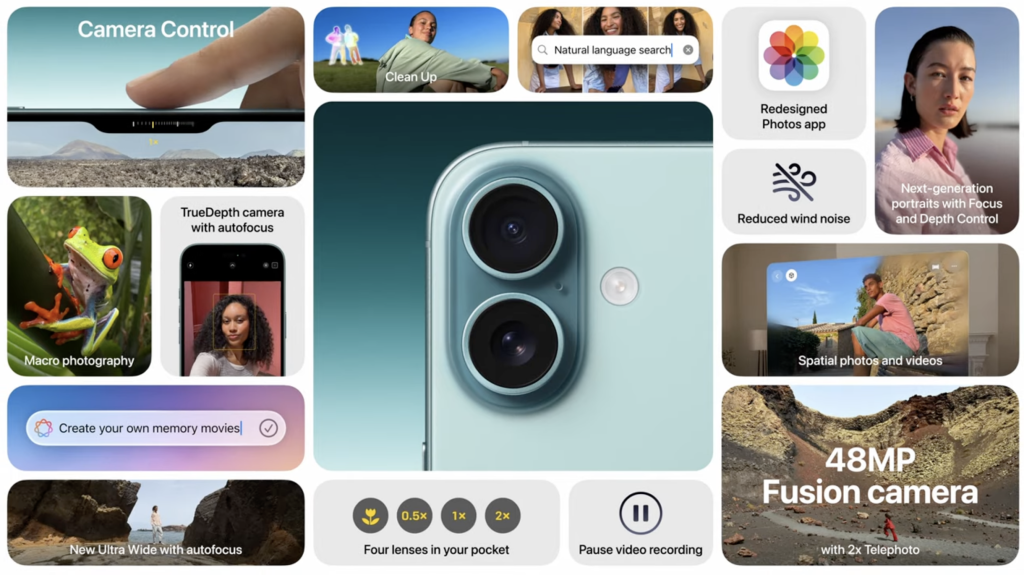
If you’re a longtime mobile phone enthusiast like I am, you’ve already seen a dedicated camera control button on phones well before Apple entered the smartphone market. The Nokia N95 is a notable example that comes to mind. Of course, there was Sony Ericsson with its own models. And let’s not forget — though many have — the Windows Phone. But that was the past, and the camera control button is the present.

Apple isn’t first, but it’s making the “camera button” more powerful. The “camera control” lets you use the phone like a regular camera, but it does much more. The iPhone camera becomes the “Third Eye” concept I have been talking about for a long time. I planned to write a book about it, but life got in the way.

As per Wikipedia, according to ancient Hindu Vedic texts, “the third eye (also called the mind’s eye, or inner


My Thoughts About Apple’s iPhone 16 “Glowtime” Event

Did you know that at one point more than 2 million people were watching Apple’s fall 2024 launch event stream on YouTube? If nothing else, it shows a deep interest in the company and its products. These events — carefully crafted exercises in public relations — seem to have the same place in the modern zeitgeist as fashion collections being unveiled every season. Predictably, we are either disappointed or excited about what is on show. It’s not surprising that the reaction from those who follow Apple and its products is divided.

It’s hard to internalize, but we are at the end of the “phone hardware” cycle. From 1996 to 2007, we had a world dominated by 12-keypad phones that did a few other things. From 2007 to 2024, we have had a rectangular slab that does many things, including making calls. The first cycle lasted 11 years. This one has


The iPhone Content Machine: A Visual Essay

Apple’s iPhone 16 launch event differed greatly from most of its past events. It was larger and more overwhelming. There were fewer familiar faces among the attendees, and there was also a new type of attendee — content creators. They were busy filing short bursts of information to their followers in vertical formats: videos, selfies at Apple Park and occasional comments about the products themselves.

I decided to become a fly on the wall and chronicle the spectacle unfolding in front of me. I focused on those who were there to create content about the devices, not the devices themselves. It was fun to just float among the crowds with my Nikon Zf and a 40mm lens.

It was a wonderful spectacle — just to bask in this new kind of raw media energy. Content for the sake of content. Events for the sake of content. Fog of content. It’s