
Canceled Streams

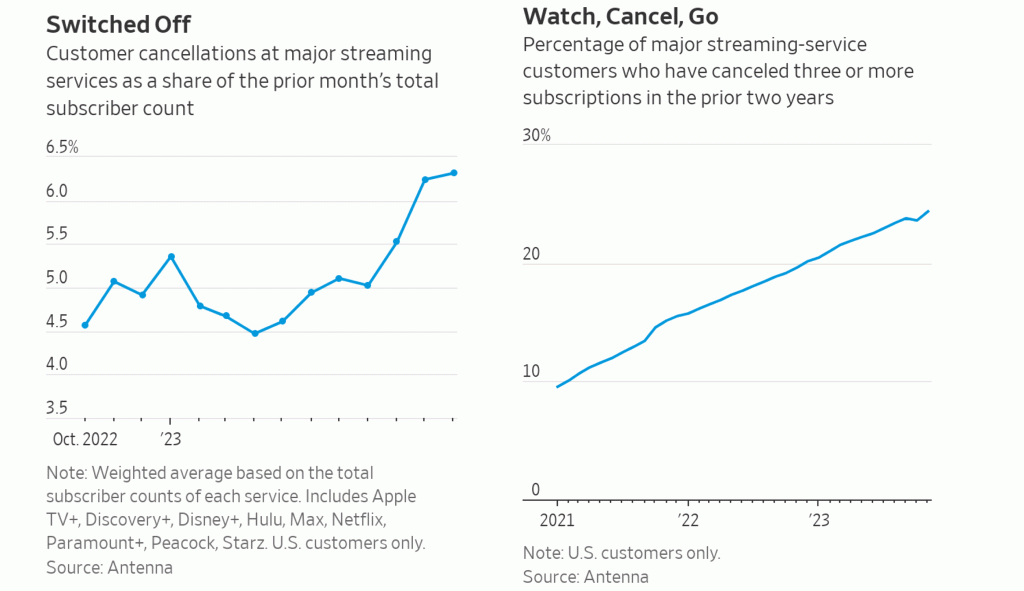
Subscription overload is a problem that is finally being discussed in the open. The mainstream spenders seem to have had enough of it — especially when it comes to streaming services. The Wall Street Journal, citing research from analytics company Antenna, writes:

About one-quarter of U.S. subscribers to major streaming services—a group that includes Apple TV+, Discovery+, Disney+, Hulu, Max, Netflix, Paramount+, Peacock, and Starz—have canceled at least three of them over the past two years, according to November data from subscription-analytics provider Antenna. Two years ago, that number stood at 15%, a sign that streaming users are becoming increasingly fickle.

Disney Minus

It is no secret that I am a big fan of BBC/National Geographic’s reality TV show, Life Below Zero. It is now in its twentieth season. As someone who didn’t have a cable television account, I used to buy the season from Apple’s iTunes store. I paid for the first fourteen seasons. I didn’t mind because it is a guilty pleasure and allows me to get my “Alaska fix.” 

However, things have become harder since it is no longer feasible to buy the “season passes” or watch the most recent episodes. You can buy one season at a time, and even then, you can’t watch the 19th or the 20th season. Frustrated, I decided to sign-up for Disney+ with Hulu (without Ads) and ESPN+. I canceled my ESPN+ account and signed up for the whole enchilada. Given that one of the perks of my American Express credit card is a


Cord Cutting is Mainstream

Leichtman Research Group rolled out their latest consumer research on household viewing habits today, and the results are telling:

74% of all U.S. households have a subscription video on-Demand (SVOD) service from Netflix, Amazon Prime, and/or Hulu – up from 64% in 2017, and 52% in 2015.  Among those that have an SVOD service, 69% have more than one of these services – up from 51% in 2017, and 38% in 2015.  Overall, 51% of U.S. households now have more than one SVOD service, an increase from 33% in 2017, and 20% in 2015.

In 2007, when we launched the NewTeeVee blog, I cut the cord. A dozen years later, it is pretty clear that cord-cutting has become as mainstream as La Croix, Shake Shack, and Uber. So, it is no surprise that everyone from AT&T to Disney to News Corp is starting to roll-out their over-the-top services. It remains


Smart Home is a Home that’s always spying on you

It is ironic that we pay good money to buy and install devices that steal our privacy and sense of identity. We complain about Facebook’s ill-effects on society, but have no problems leaving digital footprints by excessive use of the service. We love Alexa, but we don’t stop and wonder what is the end game here? What impact will friction-free ordering have on our consumption. We buy smart devices, and never ever think that they are the spy in the house of life. 


4 Startup Lessons I Learned From Hulu CEO

Jason Kilar runs Hulu and yesterday I got a chance to catch up with him and discuss everything from Hulu Plus to his relationship with his content partners. During the course of our conversation, he offered up some tidbits that are valuable for entrepreneurs. They may seem simple and obvious, but more often than not we tend to overlook them.

  1. Learn from experience and use that to grow in a methodical manner. In other words, have patience because “everything takes time” he said. His company started with two content partners and now has 226.
  2. He pointed out that in a competitive marketplace “there isn’t going to be one single model that will win it all.”
  3. He said that a lot of startups make a mistake of not identifying and focusing on un-met needs.
  4. In order to succeed, folks need to learn to walk in a customer’s shoes. “You need to