
Future Shocked

It has been 50 years this month since Alvin and Heidi Toffler published their book, Future Shock. The Tofflers have since passed on to the next plane. However, they have left behind a work, that is amazingly prescient, especially when seen in the context of the current pandemic and its impact on society. “The future always comes too fast and in the wrong order,” he wrote in the book. I wonder what he would have thought about the present—the rapidity with which we have been thrust into the future is quite surprising and unsettling.

Millions of ordinary psychologically normal people will face an abrupt collision with the future.

Future shock is the dizzying disorientation brought on by the premature arrival of the future… [It] is a time phenomenon, a product of the greatly accelerated change in society.

The Tofflers came up with terms such as information overload and prosumer. And they


The Baby Gull

A few days after the pandemic shutdown began in San Francisco, I noticed seagulls were spending more time in the communal pool in our building complex. Devoid of people, it wasn’t surprising to see gulls take up residence in the pool.

After a few days, it became clear that it was just two gulls, and they were now residents of our complex. Fast forward to today, it seems they have had a baby. And the baby is growing up fast. The baby has left the nest. Instead, it is now hanging around in the fountain that is in front of the building.

Momma gull is keeping the baby company. I have not seen the dad anywhere around. They are quite messy — but it is not that bad. It is a good distraction from the daily craziness that surrounds us. It is also a good reminder of the time that


Covid-19 vs Past Pandemics

COVID-19 pandemic is the second deadliest pandemic in America, based on the numbers collated by Marshall Auerback. As of today, the US facility rate stands at 0.051 percent.


An elephant’s 1700-mile pandemic trip

What an uplifting story about an elephant who spent most of her life in captivity, alone and finally found a friend and a place to roam free. If anything, just think of our past few months, and then imagine who hard past 25 years must have been for this animal. As an invasive species, it might be time for us to really rethink our planet in context with its other inhabitants. #nontech

How to move an elephant 1700-miles in the middle of a pandemic? / The New York Times


It all feels so mundane

"Our daily lives are so mundane, we get taken over by what is immediately in front of us, and we don't see beyond that." - Benedict Cumberbatch

It has been 164 days since the self-imposed isolation started. Maybe it is time for me to stop counting. In 180 days, I thought that we, as a society, would come up with a framework to deal with reality after the virus but before the vaccine. We are nowhere close. 

The year is half-over, and it already feels like a year lost. There is a feeling of resignation that life will be like it is for a thinkable future. For the lucky few — I am one of them — there is an option to work from home. For others, a more significant crisis is around the corner. There won’t be homes for many. It doesn’t matter – a prevailing sense of doom


HomePod as a speakerphone

It might not be perfect, but Apple’s HomePod smart speaker has its uses, especially if you live within Apple’s ecosystem. I use it to add items to my to-do lists, quick calculations, and listen to music. It is sitting behind my computer screen, and I usually stream music to the device using AirPlay. It sounds lovely – and way better than my decade-old Sonos speaker. 

However, since the pandemic related lockdown, I have been using HomePod for making calls. For once, I feel I am getting more value from its $300 price tag. 

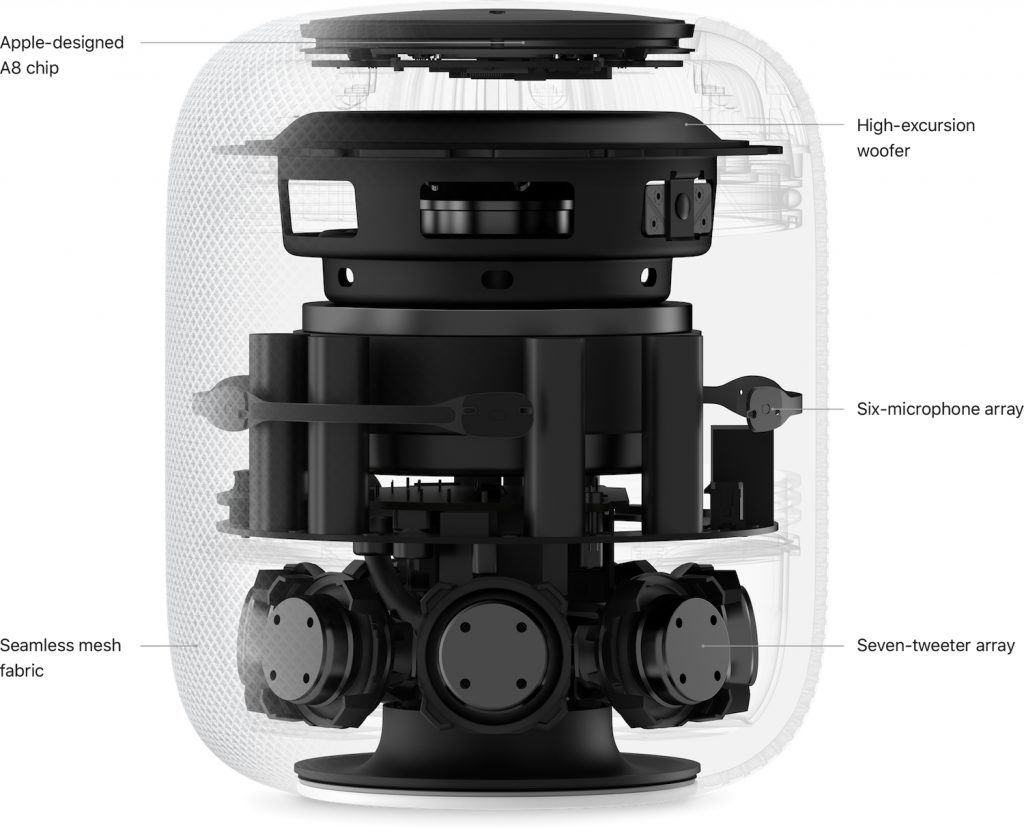
It has a six-microphone array, making it easy for the device to pick up the speech from a soft talker like me. I tell Siri to call someone, and it uses the Phone to connect with them. In some cases, I ask Siri to facetime someone. Like my mom and I do Facetime Audio calls all the time.


Social media’s out of control growth

Earlier this month, I pointed out that the pandemic, and being locked indoors is turning us to social media in large numbers. And now that Facebook, Snap, and Twitter have reported their numbers, it would be an opportune time to check my thesis. During the months of April, May, and June my thesis has seemed to hold.

  • Facebook reported that it had daily active users count of 1.79 billion, a jump of 12% year-over-year. DAUs were 1.73 billion on average for March 2020. From that standpoint, I am a bit surprised that the number didn’t go up higher, but it is a noticeable bump. Facebook’s daily active people (DAP) was 2.47 billion on average for June 2020 versus 2.36 billion at the end of March 2020. Facebook’s DAU numbers don’t include the details of Instagram’s growth and usage.
  • Snap, too, reported strong growth in usage and number of users. Snap DAUs


Signals: The Pandemic Edition

I found these stories informative and interesting. They outline the second and third-order impacts of the pandemic. They should add another dimension to your reading about the pandemic. — Om

Why Brooks Brothers went bankrupt? You might think that the COVID pandemic was to blame for the shutdown of the most American of fashion icons, but in reality, the seeds of its irrelevance were sown a long time ago.

Americans will pay too much for the COVID vaccine? Why and what one mogul thinks can be done about it.

Nothing makes us aware of our clutter problem than staying and working at home all the time, as The New York Times reports.

The pandemic could make US food system become more resilient, reports National Geographic. I hope so, but I don’t feel optimistic considering the vise-like grip of big food cartels on our economy.

It is good to take a


Best Instant Noodles are not on this list

The Wirecutter, a product recommendation publication, recently published a list of best instant noodles as selected by chefs, ramen nerds, and cookbook authors. Some of these brands I have tried, and some I hope to partake in the near future.

However, as someone who grew up in Delhi, nothing quite competes with Maggi Noodles (with classic Masala flavor.) Why? Because it has the taste of memories. 

When Maggi noodles were introduced in India, as kids we had no idea that there was this thing called ramen noodles. We had Tibetan noodles. We had an Indo-Chinese version of chow mien. But there was nothing like Maggi -Minute Noodles. These were created in Switzerland, and the brand was acquired by Swiss food conglomerate, Nestle. This is one of the biggest snacks in India, despite some controversy around its ingredients. It has spawned its only culinary trend in India, as this article in Eater outlines

What keeps