
Prof. Jeffrey Sachs

My conversation with Professor Jeffrey Sachs, an author, economist & globalization guru at Columbia University.

I recently had a chance to catch up with Jeffrey D. Sachs, a world-renowned professor of economics, bestselling author, and syndicated columnist. In his book, The Ages of Globalization, he takes readers through a series of seven distinct waves of technological and institutional change. Given that we are going through another technological shift, our conversation veered into the end of industrialization, the future of society in the digital age, and how to really think about globalization in the age of the network.

Here is an abbreviated transcript of our conversation:

Om: The new book is called The Ages of Globalization. I can’t help but notice the irony of the timing of the book. Whether it’s the coronavirus or whether it is our political environment, it seems globalization is out of fashion these days.

Jeffrey Sachs:


[Podcast] Stuck@Om with Author, Economist & Columbia School Professor Jeffrey Sachs

In this episode of Stuck@Om, I’m joined by world-renowned economist, professor, and best-selling author Jeffrey Sachs. A central topic in our conversation is Jeff’s newest book The Age of Globalization and the impact of digitalization on our culture and economy. 

Photo Courtesy: Jefferey Sachs

We dissect how COVID-19 has clearly changed office culture — and how it won’t be the same after this. Coronavirus has taught us that 80% of our work can be done anywhere. We are recognizing that we can function with a decentralized workforce. How will that impact how people live and function in society? 

We also talk about the inaccuracies being portrayed by the stock market. We’ve seen over 40 million people apply for unemployment, yet the stock market is up. Jeff notes that the stock market isn’t a snapshot of the economy — it’s a snapshot of a piece of the economy at the exclusion


Tech and the inevitable unintended consequences

This isn’t the first time I have written about the dichotomy of technology. We are often caught between convenience and consequences. Some of the consequences are of our own making. But often, there is a lack of understanding on the part of technology companies, especially platforms that have replaced our traditional spaces — Twitter, Instagram, and Facebook. They often launch features that are driven by a simple metric: engagement. The higher the engagement, the more attention they can hoard, and the more attention they have, the more advertising dollars they can gather.

None of these companies actually think about the second and third-order impacts of their decisions. Facebook, refused to acknowledge that its platform and its hyper-viral nature was being capitalized by a Russian group to game the American democracy. Twitter, too seems to not understand that a lot of its current problems are a result of willfully ignoring the


Has pandemic pushed us into a post-human future?

Sometimes you want to go
Where everybody knows your name,
And they're always glad you came;
You want to be where you can see,
Our troubles are all the same;
You want to be where everybody knows your name.

Cheers theme song

A few days ago the dry cleaners who moved into my building over a decade ago, shut down. The pandemic’s pause took a heavy toll on their business, and it became virtually impossible for them to continue. I didn’t even get to say a proper goodbye. We didn’t know each other socially, but we were sociable — we knew about each other’s lives, health, and travels.

I had an easy familiarity with them made doing business, pleasurable. I became their customer just a few days after another long time cleaner – Phil — retired to take care of his ailing wife. Phil and I had become friends


In Sadie’s Footsteps

On the 100th day of my isolation, I decided to go and meet Chris Michel and family for a socially distant walk on the beach. Well, less beach, more sand at Fort Funston, one of the most beautiful areas of our city. Chris, obviously brought his adorably cute Berniedoodle puppy, Sadie, who was literally jumping for joy when she got to the sands. She was off and running. Galloping really! She was on the dunes. She was sitting on the sand. And when she wasn’t playing with other dogs, she will be hanging out with Chris. 

However, she made it a point that whenever I set up my camera to shoot a photo, she came right in the frame. Click, and off she went. Of course, she managed to leave footprints — pawprints really — on the pristine sand dunes, that were shimmering in the not-yet-sunset light. Highwind conditions were


Do American Values include “life”?

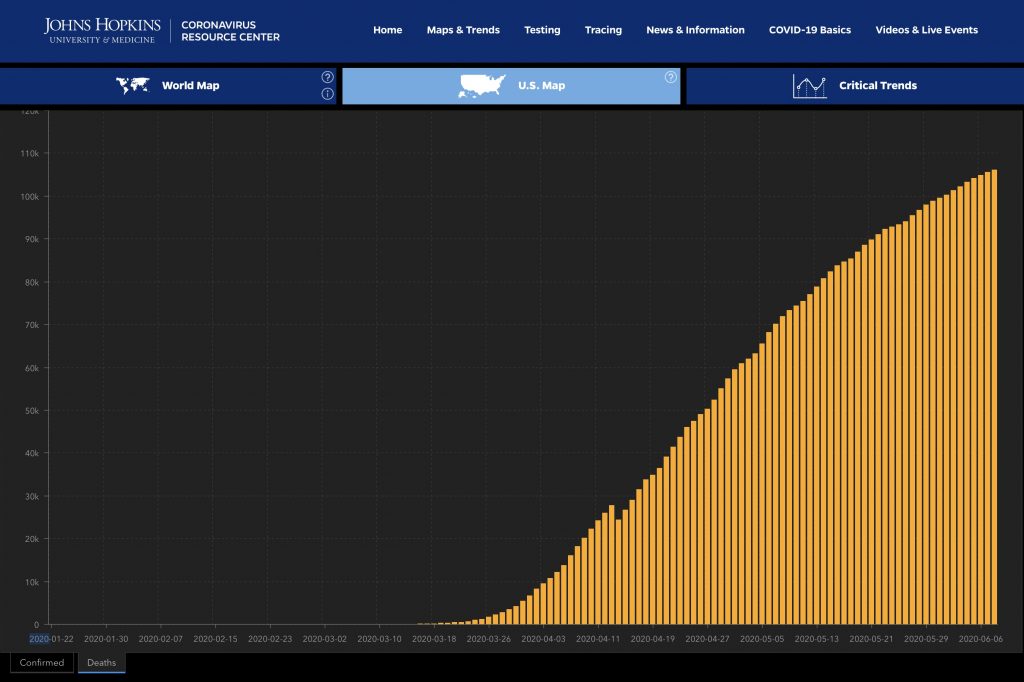
Past few weeks, I have made me wonder if all those politicians and talking heads who profess and talk about upholding American values, value one thing that every human should value — life. Nothing brought home the fact that we are seeing the daily deaths due to the COVID-19 continue, thereby pushing the cumulative totals across the country to a scary level. As of today, 111,750 people have died in the US, out of a total of 408,964 globally, more than any other country. And yet no one seems to really care or mourn their loss.

I first saw it on Twitter. “Someone poke holes in this scenario,” a tweet from Eric Nelson, the editorial director of Broadside Books, read. “We keep losing 1,000 to 2,000 a day to coronavirus. People get used to it. We get less vigilant as it very slowly spreads. By December we’re close to normal, but


[06.08.2020] Daily Notes

It has been 102 days since I started self-isolating myself and dealing with the pandemic. This forced break from the normalcy has led to my conversations with self, that continue to reshape my own expectations of myself. I am continuing to self-isolate, but slowly starting to take socially distant visits with friends who have been equally diligent about isolating. 

It is good to be cautious — especially considering that 511 epidemiologists (aka people who know a lot about viruses and not random investors) think that it is prudent to expect a semblance of cautious normalcy sometime between three to 12 months. I definitely don’t want to work in an office for a while.

By the way, every day, when I go for a walk I see one in ten people walking, running or biking on Embarcadero in San Francisco wearing masks. It is usually the middle aged or seniors. This is


Pandemic’s impact in data

text
Photo by Adam Nieścioruk on Unsplash

The coronavirus pandemic is accelerating the behaviors we had already been dabbling with, such as cord-cutting, streaming videos, and working from home. As other options of distraction have dwindled, we are starting to see the full impact of those trends. The pandemic-induced lockdown has also had an impact on everything from the sale of phones to flu outbreaks. Here are some data bits to highlight the ongoing pandemic’s impact on our society.


  • Global sales of smartphones fell 20 percent during the first quarter of 2020. Though much of the fall was because of Chinese lockdowns, don’t be surprised to see further declines, because the rest of the world lagged in taking preventive measures. Huawei took the worst hit, and they might take a few more hits. Apple seems to be faring well. [Gartner]
  • Given how tight things are at present, most of the planet may