
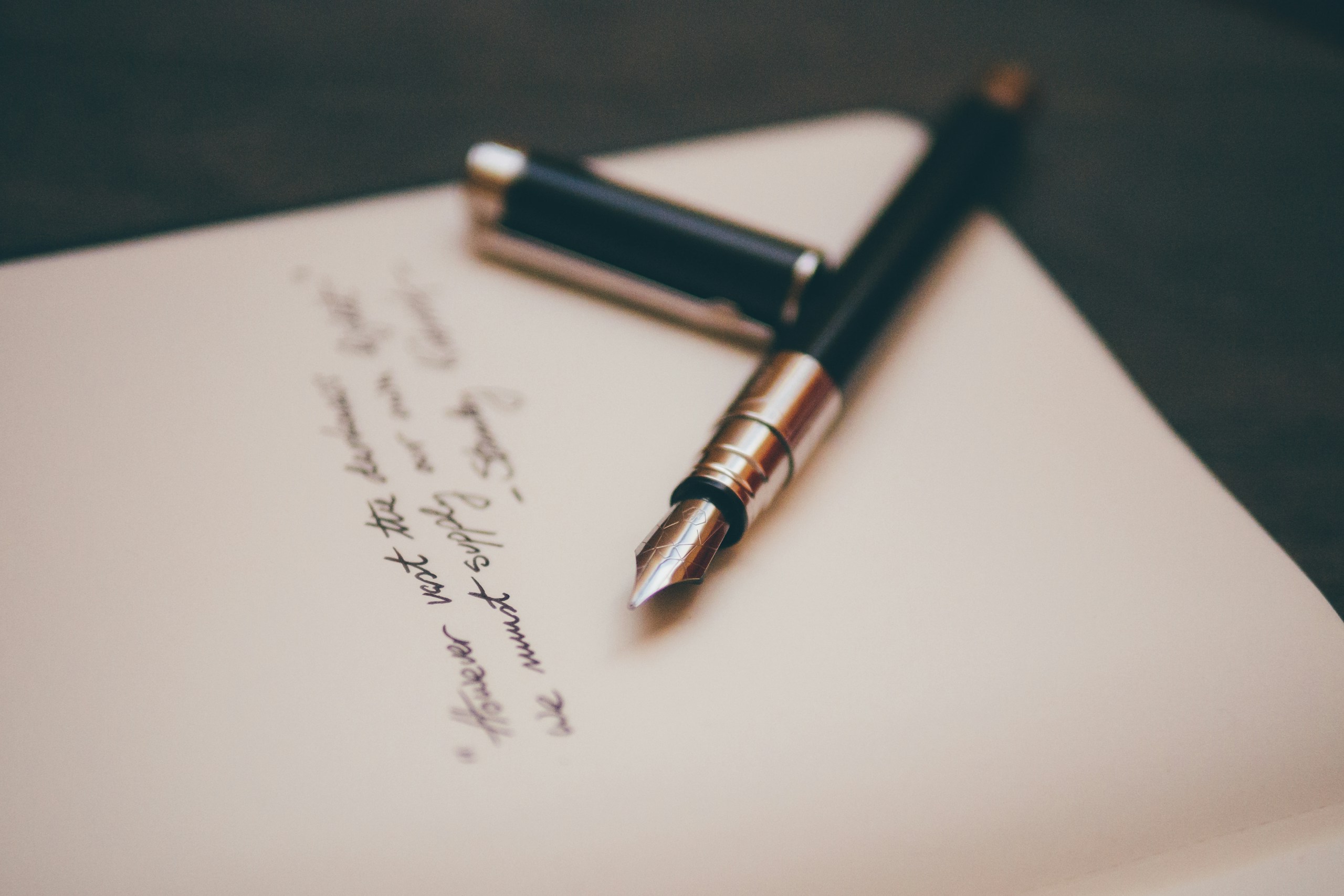
Write like a human

black and silver fountain pen
Photo by Álvaro Serrano on Unsplash

Given that I have been writing three decades, including eighteen-plus years a blogger, I am hardly surprised that I am repeatedly asked: how should I write? And my answer is always the same — write like a human. 

We are getting buried under freeze-dried news reports and hot takes that make supermarket baloney feel like a prime cut. Everything feels like a faded facsimile of everything else. It is the internet equivalent of the same strip mall mediocrity. 

So that is why I say. Be real. Write like a person. That is how your words will be unique because only you can be you. 

Your writing should reflect your thinking. You don’t need to become someone else. You have to look no further than inwards to find your words and your writing style. 

Your writing should have the same compassion you have when you speak
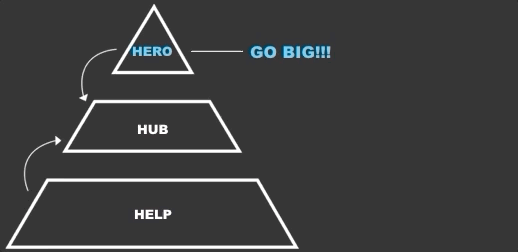

Hero, Hub & Help: How to be an online brand

Brendan Gahan, one of my former interns and now Chief Social Officer at Mekanism, recently shared a piece on how brands can embrace and evolve on YouTube. He calls this content strategy — Hero, Hub, Help. “All content on a brand’s channel should fit within these categories,” he writes. “If it doesn’t, then don’t do it.”

Brendan’s piece got me thinking about my own frameworks of blogging I would share with my team and new members who joined our reporting staff. The breakdown was pretty much the same.

  • Even today, when I write on this blog, I don’t expect everything I write to go big, though occasionally there is “hero content.” Like my interview with Brunello Cucinelli about the dignity of work. It has had a few million views since I published it five years ago.
  • I don’t necessarily expect everything I write to get attention — I write it because


From Death Valley to Silicon Valley

Badlands, Death Valley with Leica SL2.
ISO 50. Focal length 50mm. Aperture f/9. Shutter Speed 1/200th of a second

Though only separated by 500 miles of tarmac, Silicon Valley and Death Valley might as well be different planets. One is dry, desolate, soulless. The other is a desert of pristine beauty and a reminder that, in the end, we are all bit players on the movie set of Planet Earth. After unplugging from my daily life, re-entry is always hard. This is especially when coming back from a photo trip, where I am immersed in the act of trying to interpret the moment. In 2019, it is safe to say that I became an interpretive photographer – not a documentarian.

So perhaps that is why I was a little disappointed by my visit to the Death Valley National Park. It turns out that it isn’t in my photographic sweet spot.


What makes a good magazine editor?

In his tribute to Steve Watkins, an editor with Outdoor Photography magazine, landscape artist Bruce Percy noted:

“He was completely enthusiastic, encouraging, supportive, and willing to give contributors to the magazine free rein in coming up with ideas.”

Bruce Percy, Photographer

I started reflecting on my own past and all the great editors I have worked with in the past, and those qualities were present in all of them: David Churbuck at Forbes.com, Blaise Zerega and Jason Pontin at Red Herring, Josh Quittner at Business 2.0, David Lidsky at Fast Company, and more recently, Nicholas Thompson at The New Yorker and now at Wired.

When I think of legendary editors — Jim Michaels (Forbes,) David Remnick (New Yorker,) Graydon Carter (Vanity Fair,) Jann Wenner (Rolling Stone,) Kevin Kelly (Wired,) and Anna Wintour (Vogue) — they have all benefited from one more thing: they were able to consistently predict the zeitgeist and


Why Pen + Paper are good for you

Even though I love technology and incessantly download productivity apps, I still am a paper-and-pen guy. I love the feel of fine artisanal Japanese paper notebooks and extra-fine nibs of my Sailor fountain pen. I draft my weekly newsletter in the note book. I use it to make my to-do lists, and I write all sorts of random things I learn during the day. Of course, I make notes of my meetings in my notebook — which sits with one or more fountain pens, along with my glasses and a Kindle, in my Dsptch Musette.

My paper and pen obsession has many upsides, as a recent article in Fast Company outlines:


Mirror

New York is one place where I get a break from the routine and get some time to contemplate. Ironic, considering that New York City is the urban equivalent of Twitter – constant distractions, noisy and full of spectacles and spectacular. The obvious benefit: walking five miles a day results in me losing between 5-7 pounds per visit. But for me the opportunity to walk the busy Manhattan streets has two obvious benefits — a lot of alone-time and a chance to hone my skills to ignore the noisy-ness that is our online world.

It was one of these walks (which co-incidentally took me by the offices of Forbes.com) I got a chance to reflect on how I have changed as a writer. From a frantic newswire reporter to an online writer to a magazine writer and back to the frenzied world of blogs, it has been an evolution that