
Subscribe to discover Om’s fresh perspectives on the present and future.


Build it, and they will come! And no, I don’t mean the fabulous baseball movie but high-speed broadband networks. And not only will they come, but they will also know how to use the speeds. This is just the start for a generation of consumers who are growing up on gigabit connections and are reliant on the “network” for everything.
For nearly a decade-and-a-half of writing about broadband, I would write about places working on gigabit networks. Usually, it was some small municipality building its network. A town in Tennessee or an occasional European (usually East European) city would give me a glimpse of the gigabit future. Fast forward to the end of 2022, and nearly 26 percent of U.S. households are getting gigabit speeds, up almost 100 percent at the end of 2021, according to OpenVault, a company that tracks network and network behaviors. OpenVault’s latest report notes that more and more folks are opting for higher speeds — the percentage of subscribers in tiers under 200 Mbps declined by 43% in the fourth quarter of 2022. Leichtman Research Group, another research group, estimates that at the end of 2022, nearly 90% of U.S. households — about 111 million — had broadband at home.

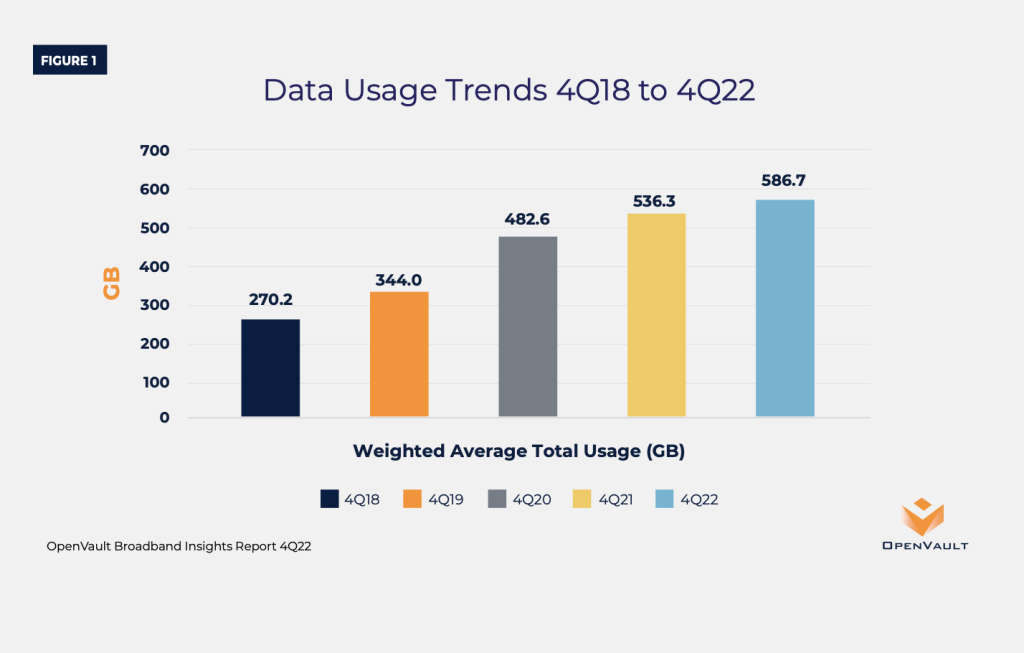
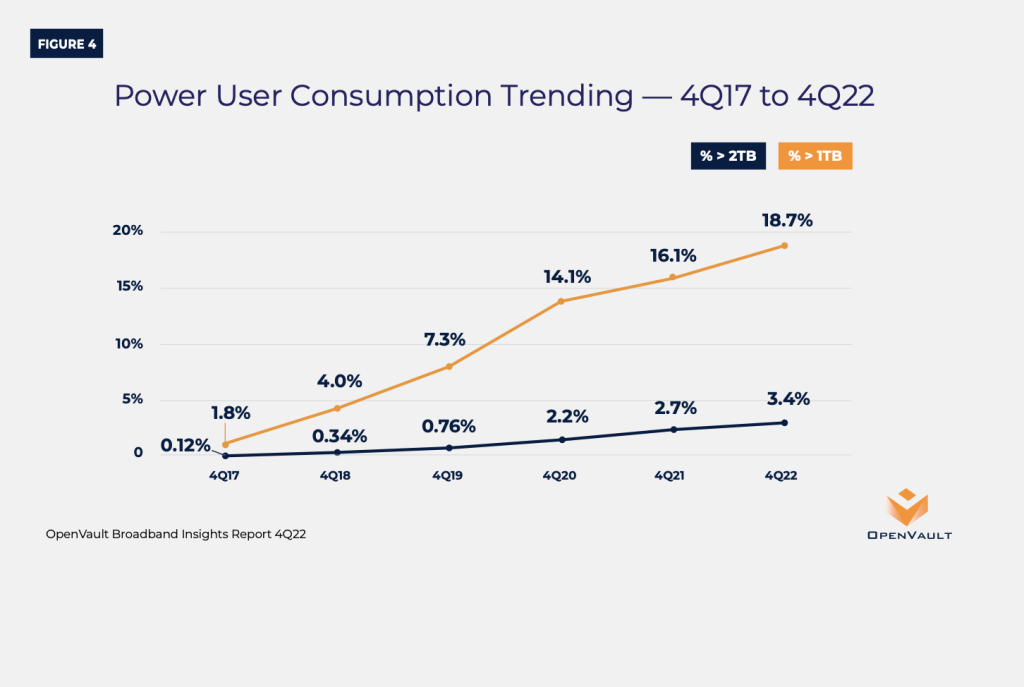
Higher speeds mean more data consumption by households. With more of us opting for streaming video over traditional cable networks, it is not surpassing. The average per-household data consumption was 586.7 GB at the end of 2022, an increase of nearly 10% over the prior year. The power users — are consuming more data. OpenVault notes that the power users consuming one terabyte or more per month in 4Q22 was 18.7%, a year-over-year increase of 16% and ten times the percentage observed just five years ago, at the end of 2017. What’s more astonishing is the growth of superusers (ahem, folks like me) who consume two terabytes or more per month. Their numbers increased 25%, from 2.7% to 3.4% — a nearly 30 times increase within the past five years.
I am one of the superusers, and I have a connection from WebPass, an exceptional independent service provider that Google acquired. The company, the best in business at one point, is now a ho-hum provider of a basic gigabit connection. Most of my life exists on the data network — video streams, music streams, work streams (zoom and more), plus most of my software resides in the cloud and needs solid connectivity. I am often surprised by how much bandwidth I use monthly — and I don’t even play video games.
I am lucky that I pay a flat rate — I wouldn’t want to be trapped in the usage-based billing nonsense. OpenVault data shows gigabit plans are getting more traction with usable-based billing (UBB) data plans — 35% in Q4 2022 vs. 13.4% in Q4 2021. I suppose cable guys have figured out better marketing bullshit. They are selling “unlimited data” as a perk for higher-priced Gigabit plans. As I said, better bullshit, even if not very original — wireless companies have been selling this schlock for a while.
The report’s most notable aspect was that a “noticeable boost in bandwidth consumption occurs annually at about the same time in December and into January, and each year consumption has been higher than the year before.” And once the bandwidth consumption goes up, it doesn’t fall. For example, in December 4Q22, the usage during the peak hour increased by 18.3% over the peak hour of the previous December (1.56 GB to 1.85 GB).
The peak bandwidth usage will keep increasing, and the networks must prepare for this reality. If and when mixed reality devices become commonplace, the need for bandwidth, both at home and on the move, will explode. Constantly updating and visually rich compute environments need bandwidth as much as graphic chips and batteries.
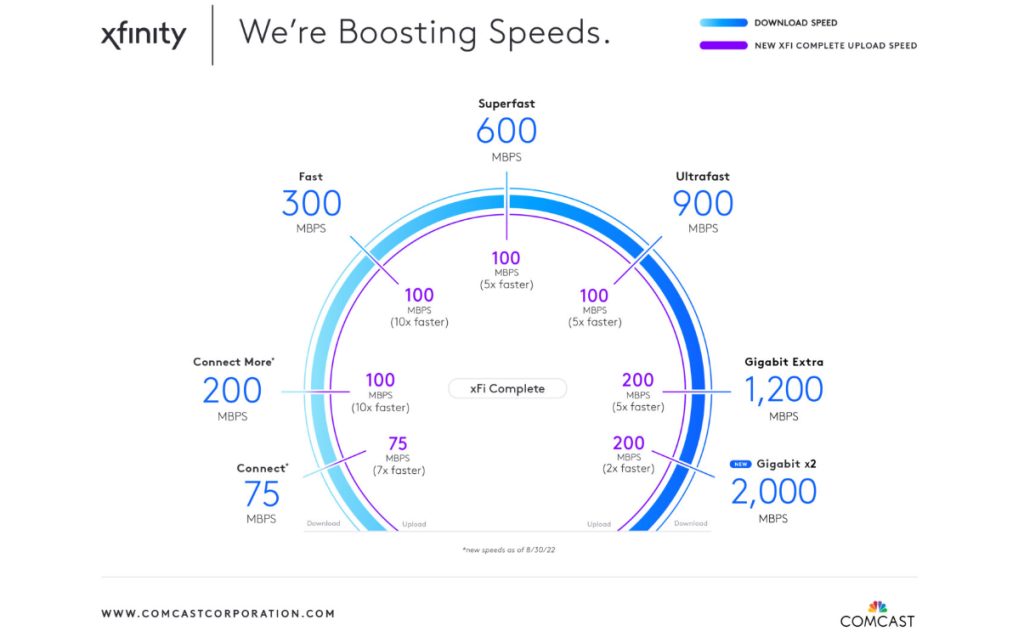
Maybe now you understand why Comcast is pumping out the “10x” speed ads and [upgrading its networks to][ support 10Gig speeds]. The company plans to launch multi-gigabit symmetrical speeds by the end of 2023. I am glad that network providers have finally figured out that there is a lot of money to be made in selling bandwidth and more of it.
Like I said — build it, and they will come.
February 27, 2023. San Francisco
Comments are closed.
Wow! I was just curious about the pricing in the US and I visited we pass…63$ is way more than what we pay here in Italy.
As a reference, 1Gbps flat connection floats between 19€ to 24.90€ per month.
10Gbps is starting to appear in bigger cities for 36euros flat per month.
That’s a huge difference, I wasn’t expecting that!
When google bought them they charged $40/month. Since then the price has gone up, service quality has gone down and outages are more frequent.
Om, please come to Santa Fe NM ( county), where we are held hostage by a parasitic corporation that provisions barely 11mb up and 1mb down. Maybe you have friends that can buy them out and we can just get coax or fiber or just plain help!!!!!
Yikes. I hope things can get better. Have you thought about getting the county to build its network? Alternatively, there is always Starlink — you might not be an Elon fan, but that is way better than 11 Mbps.