There must be something to this whole notion that “time flies!” I distinctly remember writing a short essay about the incredible adaptability of the Ethernet, the technology protocol, on the 31st birthday of the technology that came from Bob Metcalfe’s work at Xerox PARC in the early 1970s. Metcalfe and David Boggs (who passed away in 2022) invented the Ethernet. It was inspired by ALOHANet, a packet radio network used to communicate among the Hawaiian Islands.
It just turned 50 years old — remarkably, it still powers our networks into the future. That is some serious resilience and longevity — no wonder (belatedly, in my opinion) Metcalfe got the 2022 Turing Award. In 1973, Metcalfe wrote a memo on a “broadcast communication network” linking personal computers (PARC Altos) to create a local network that moved data at 2.94 Mbps per second. In 1976, the follow-up work on the memo led to the publication of the seminal paper “Ethernet: Distributed Packet Switching for Local Computer Networks.”
Since then, Ethernet has adapted and become a core part of our digital life. I would not be exaggerating when I write that Ethernet is a foundational technology. “It could use be as ubiquitous as water and air, at least from Silicon Valley’s perspective,” I wrote in my essay, Ethernet Everywhere, “thanks to its elegant simplicity, has spread its tentacles everywhere from local area networks, homes, city networks and now is getting ready to take on the carrier networks.”
Year
Ethernet Type
Speed
1973
Experimental Ethernet
2.94 Mbps
1980
Ethernet Standard (10BASE5)
10 Mbps
1985
Thin Ethernet (10BASE2)
10 Mbps
1990
Twisted Pair Ethernet (10BASE-T)
10 Mbps
1995
Fast Ethernet (100BASE-TX)
100 Mbps
1998
Gigabit Ethernet (1000BASE-T)
1 Gbps
2002
10-Gigabit Ethernet (10GBASE-T)
10 Gbps
2010
40-Gigabit and 100-Gigabit Ethernet
40 Gbps, 100 Gbps
2016
2.5G/5G BASE-T Ethernet
2.5 Gbps, 5 Gbps
2017
200/400-Gigabit Ethernet
200 Gbps, 400 Gbps
2018
25-Gigabit Ethernet
25 Gbps
Please note that these are the major speed milestones and not every minor variation or update is included.
For my essay, I interviewed Metcalfe, and we talked about Ethernet’s future and past.
“I see Ethernet developing in four directions: UP, DOWN, OVER and ACROSS. UP in speed – whether we jump to 40Gbps or 100Gbps … DOWN to the 8 billion processors shipped each .. OVER wireless links – WiFi, WiMax, ZigBee … ACROSS the telechasm between LANs and WAN.”
He was spot on. From 2.94 Mbps in 1973 to 400 Gbps in 2023 — the Ethernet is getting faster, more powerful, and more entrenched in our digital infrastructure. Gigabit Ethernet is commonplace as a last-mile technology. Infrastructure networks are running at 100 Gbps. And 800 Gbps is on the horizon.
Has Ethernet really endured? Well, not really. You couldn’t take a piece of 75-ohm coaxial cable from the 1970s, increase the speed of the clocks in the electronics and run a common bus local area network using a data clocking rate of 200Gps. That just won’t work.
So, today’s high-speed Ethernet networks have some bits in common with the earlier Ethernet networks, and some are radically different. However, it is still possible to take an Ethernet packet frame off a high-speed Ethernet network and pass it into a 10Mbps Ethernet LAN. The Ethernet packet framing protocol and the station addressing plan are both largely unchanged.
There is an intriguing mix of simplicity and ingenuity within the original Ethernet design.
Ars Technica has a great rundown of the history of Ethernet. It is a little long and dense, but worth reading. The article points out that in the future, a new technological approach will help extend the use of Ethernet into the next few decades.
Transparent Interconnection of Lots of Links (TRILL), which should allow for building flexible, high-speed Ethernet networks using “lots of links” rather than a single fast link. In any event, it seems likely that the future of high-speed Ethernet involves some form of parallelism.



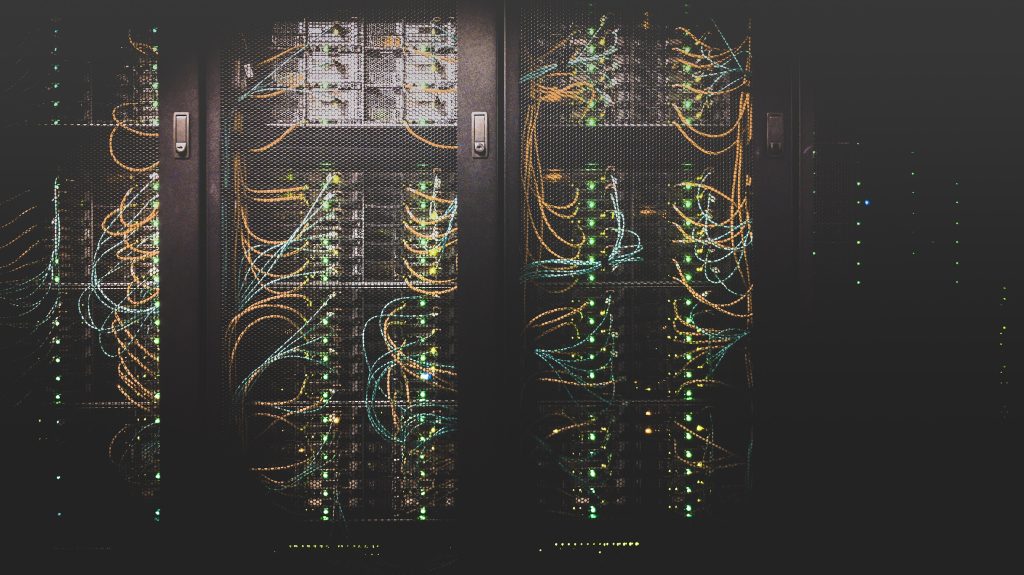
Ethernet just turned 50, so it’s considerably older than me, and yet I use it directly if not every day, then most days.
Running an ethernet cable to one’s primary desk is underrated.