
Subscribe to discover Om’s fresh perspectives on the present and future.


Facebook/Meta launched Threads, a Twitter competitor, last week. Mark Zuckerberg says 100 million people have signed up for the new social platform. Yes, I am one of them, in case you were wondering. My approach to social media is simple: controlled consumption. As on other platforms, I will use Threads at my convenience. There is no urgency to open the app first thing in the morning. It is not as if anything critical is awaiting. For now, it lacks Facebook’s hallmark addictive dopamine loops. I am sure they will come in time — this is a Zuckerberg production.
A common reaction to Threads has been skepticism. One can understand why many, especially leaders of other social applications, are critical of Threads. Still, I think it is a master stroke by Zuckerberg, who finally gave his company something to cheer about and shift attention away from its fight with Apple. More importantly, he has an army of willing idiots training his large language models. He doesn’t want to pay either Twitter or Reddit for their data — and it makes sense that he would roll the dice on Threads.
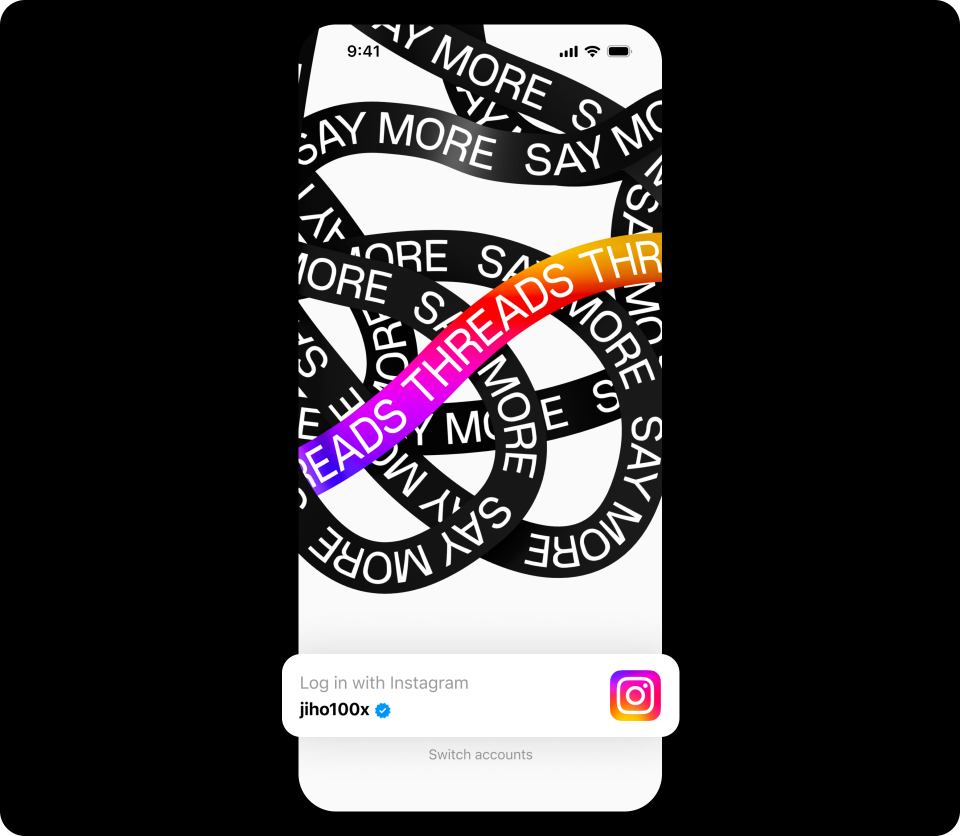
Why is the Threads App getting so much traction? Much has to do with the fact that Facebook used Instagram’s social graph to bootstrap the new network. Threads app feels like an Instagram-adjacent product with a very familiar user interface: it looks like Twitter, with all the smoothness, ease, and familiarity of Instagram. Facebook knows infrastructure well. And that’s why it can easily scale a network to handle 100 million accounts.
Dustin Moskovitz, a co-founder of Facebook, pointed out on Threads itself: “This is a mature social networking leadership team – they’ll make mistakes, surely but they’ll be mostly *new* mistakes, rather than having to speed run all the lessons learned from past social networks. They will have bots & spammers, but they’ll deal with them with sophisticated reputation systems, like they do on Insta and FB, rather than with “this is the only way” nonsense like forcing subscriptions and surprise rate-limiting weekends. It’s a complex problem, no doubt; AND it can be solved with complex solutions rather than big sticks (that also somehow fail to work!).”
What Moskovitz is saying is that Facebook is a multi-thousand people organization that is built to incorporate machine learning, AI, and a very powerful social graph to turbocharge its efforts. The days of getting a social network to grow by importing an address book are gone — instead, it is about using, reusing, and using the social graph again to launch new products. As I said on Threads, this is now going to be the new “playbook” for Facebook, and they will try and go after any rival that they deem weak and wounded. Don’t be surprised if Zuck goes after Reddit.
For now, Threads lacks the underlying angst of Twitter, and that’s not a bad thing. I am not sure we need one more place on the Internet to keep eating away at our sanity. Some others have more nuanced explanations of the what and why of Threads.
A late-night text from a friend put it best: “I don’t want that stuff in my brain right now – the fact they are shoving Wendy’s ads and sports nonsense and bygone friends and friends of friends and reality tv people in my face is just an utter waste of my limited time on this planet.”
Perhaps that is the point. By stealing time (aka attention) away from Twitter, Threads takes the much-needed ad dollars away from Twitter and Elon. No brand wants the risk of being on a platform run by a loose cannon. Especially when they have a more brand-safe option. Moskovitz pointed out that Facebook has built a large infrastructure to fight spammers, bots, and (occasionally) misinformation. In short, it is built for advertisers who want to spend money.
Threads app seems to be having an early impact. Cloudflare CEO says Twitter’s traffic is tanking:
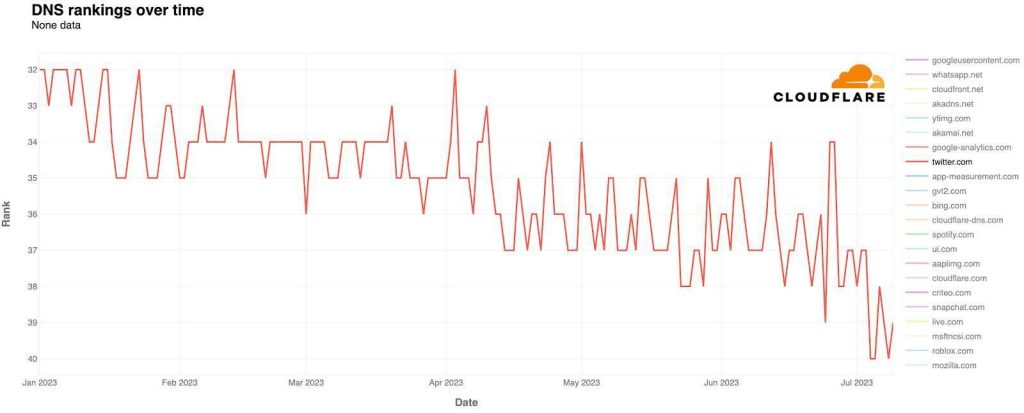
This rapid growth seems to have gotten under Elon Musk’s skin. No wonder he is calling Zuck a cuck — giving the rest of us even further proof that money doesn’t buy you class or brains. In reality, the more Threads grows, the more it takes ad dollars away from Twitter, and the $44 billion mistake starts to look bigger and bigger.

I, for one, don’t mind the “cage match” between Musk and Zuck. Sorry, I meant Twitter and Threads. There are too immensely unlikeable guys who are the face of technology.
***
Comments are closed.
Any federation requires incentives and disincentives to clear supply and demand efficiently; aka settlements. Until the internet crowd “gets” this (and the right level and structure of settlements for north-south and east-west supply-demand clearing) we are doomed to repeat the competitive failures and end up with monopolies.