
Subscribe to discover Om’s fresh perspectives on the present and future.

A decade ago, I hosted a conference exploring invisible interfaces and interactions in the connected world. The AI Pin is a hardware manifestation of some of the ideas we explored at that event. At the time, I wrote:
I don’t care as much about the hardware as I do about the software and the experience of these wearables. Why? Because I want to see if Apple can retain the Jobsian philosophy of omission as the ultimate enabler of wonder. I want to see if Cupertino’s software can move beyond icons, apps, flat design, or something equally fashionable—something where perfection can emerge from the invisible.
Since then, I have been waiting for someone to build an experience like that. Humane, a San Francisco startup cofounded with former Apple designers and engineers, has announced a new device, the AI Pin, that comes pretty darn close. Imran Chaudhri, a former human interaction designer at Apple, is president of the company and co-founded the company with CEO Bethany Bongiorno, another former Apple executive. (What is AI Pin?)
If you think of Humane’s AI Pin as just another device, it is easy to shrug your shoulders. However, when you place it in the context of the development of computing, you can see we are at the start of thinking about computing differently.
Computing as we know it has been ever-evolving—every decade and a half or so, computers get smaller, more powerful, and more personal. We have gone from mainframes to workstations, to desktops, to laptops, to smartphones. It has been a decade and a half since the iPhone launched a revolution.
Smartphones changed personal computing by making it “everywhere.” Personal computing, as we know it, is once again evolving, this time being reshaped by AI, which is making us rethink how we interact with information. There are many convergent trends — faster networks, more capable chips, and the proliferation of sensors, including cameras.
Smaller, lower energy, more powerful, and more capable chips mean we can now build smaller, more capable devices. The faster networks of today can deliver the power of the cloud instantly. More importantly, what is different is the emergence and progress made by what is colloquially called AI. Large Language Models (LLMs) and Natural Language Processing (NLP) progress means we no longer need old methods to acquire and interact with information.
If you have been a regular reader, then you are familiar with my argument that artificial intelligence is really augmented intelligence for us mortals, allowing us to cope with the complexity of an ever-digital world. AI is here to make personal computing even more personal.
It is a fertile ground for reinvention of what is a personal computer. We have already seen Apple and Meta’s ideas for the next evolution of personal computing. Humane is proposing another very different idea of personal computing for the post-smartphone era.
You can see I am very excited about the AI Pin. I have been privy to the development and evolution of the device, but I have not really put it through the paces. What I am talking about here is not really a review but is based on my impressions after limited interaction with the device.
Before I do that, I want to make it clear neither personally nor through True Ventures, where I am a partner emeritus, I have any financial interest in Humane. I am simply excited by the audacity and magnitude of their idea. These kinds of moonshots are what keep me excited about technology. While large companies like Apple are expected to introduce a new hardware (and software platform,) you don’t see many startups have such a giant ambition.
In my past life as an investor, I had invested in a company called Narrative—a wearable camera startup that had a similar big vision, but it ran into the reality of being too early. Maybe that is why I appreciate what the team at Humane has built with the AI Pin more than other skeptics. For me, this is the obvious next step in the evolution of computing.
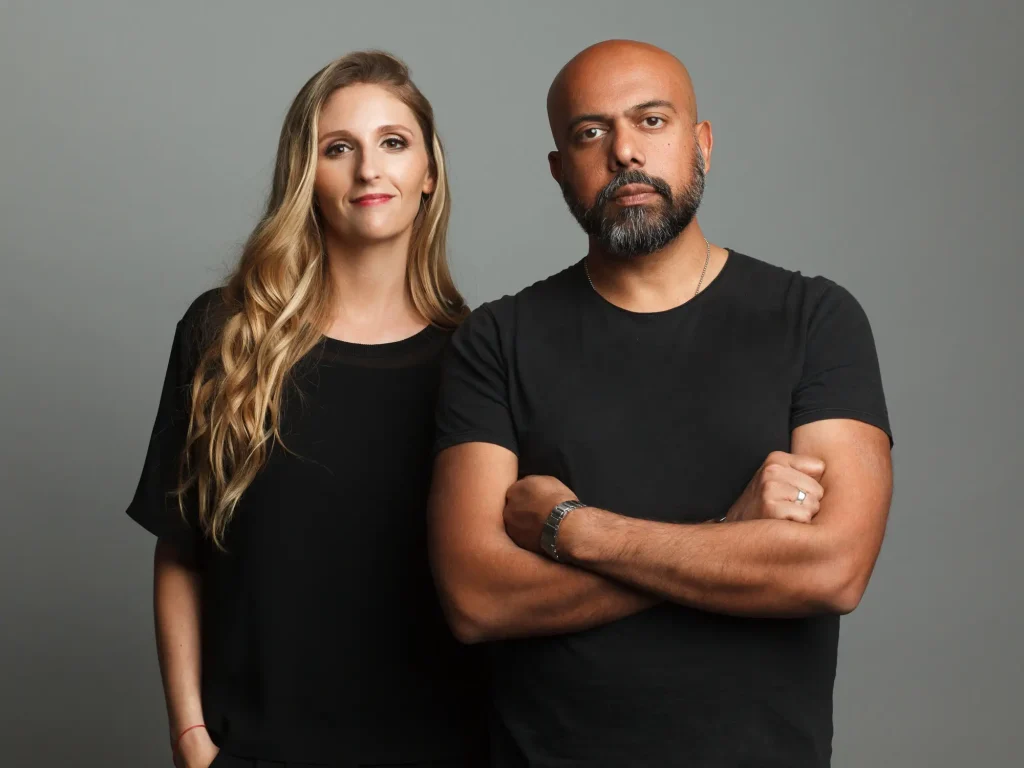
“We’ve got a new market emerging here,” Chaudhri, co-founder of the company, said in an interview (read.) “We’re all about creating the best interface possible—one that leverages AI to vastly improve your computing experience.”
It’s not about replacing current devices but rather introducing a new way of interacting with technology and, in the process, moving personal computing forward. Imran and Bethany have tapped into a big cadre of ex-Apple talent to build this future.
What does the next step in personal computing mean? So far, we have used mobile apps to get what we want, but the next step is to just talk to the machine. Apps, at least for me, are workflows set to do specific tasks. Tidal is a “workflow” to get us music. Calm or Headspace are workflows for getting “meditation content.” In the not-too-distant future, these workflows leave the confines of an app wrapper and become executables where our natural language will act as a scripting language for the machines to create highly personalized services (or apps) and is offered to us as an experience.
In this not-too-distant future, we won’t need apps to have their wrapper. Instead, we would interface with our digital services through an invisible interface. Do I need to create a playlist in my music service when I only want it to play a certain kind of music? (By the way, that was the number one use case on Amazon’s Alexa.) Alexa, Google Home, and Siri are some technologies that have set the stage for this interaction behavior. Our kids are growing up talking to machines — for them, it will be natural to use their voice to get machines to do things.
The way I see it, the evolution of apps to “experiences” means that we are seeing the end of the line for the App Store as we know it. “It’s not about declaring app stores obsolete; it’s about moving forward because we have the capability for new ways,” Chaudhri argued. Humane’s idea is to make these workflows (aka apps in smartphone terms) available to us through its myriad interfaces — primarily voice.
And I buy this future! Why? Because I have seen the shift before.
When the iPhone launched, there wasn’t a shortage of skeptics about the notion of a touch screen as an interface. I can still remember the hue-and-cry over a virtual keyboard. Fifteen years later, no one even flinches at the obviousness of a smartphone. In a few years — voice (thanks to the AI) will be part of our digital interaction reality. It won’t be the only one, but it will be an important one.
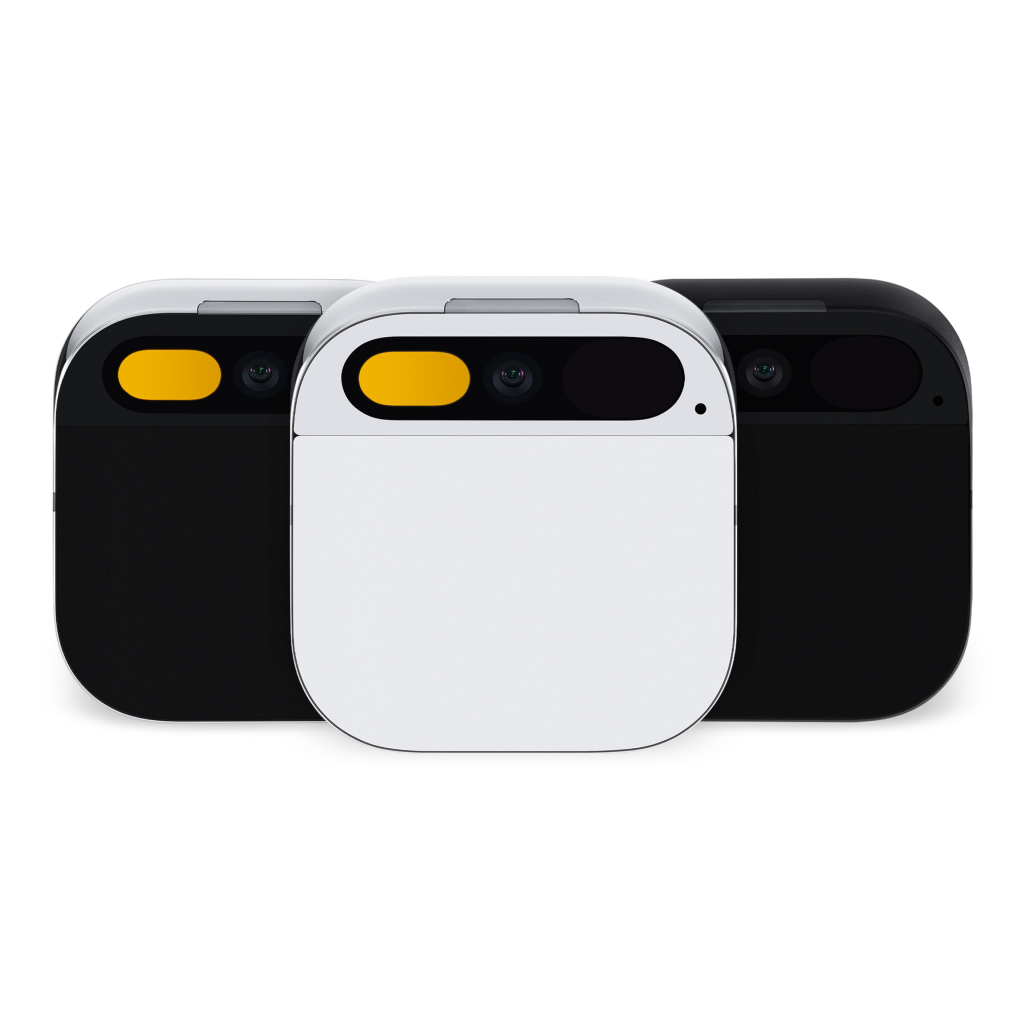
One of the challenges of any new product, especially one that puts AI at its core, is that it is met with immense skepticism and suspicion. “You can’t control the environment in which your ideas are born, nor can you control the environment in which they’re ready to be deployed,” Chaudhri acknowledged the concerns.
The biggest challenge for Humane, and the AI Pin is privacy. “At Humane, we start with the principle that you should own as much of your data as possible,” Imran said, pointing out that Humane takes unique steps to protect user data when interacting with third-party services, anonymizing data to ensure privacy and preventing reconstruction or profiling. I still have doubts—not about his intentions but about the history and needs of his partners.
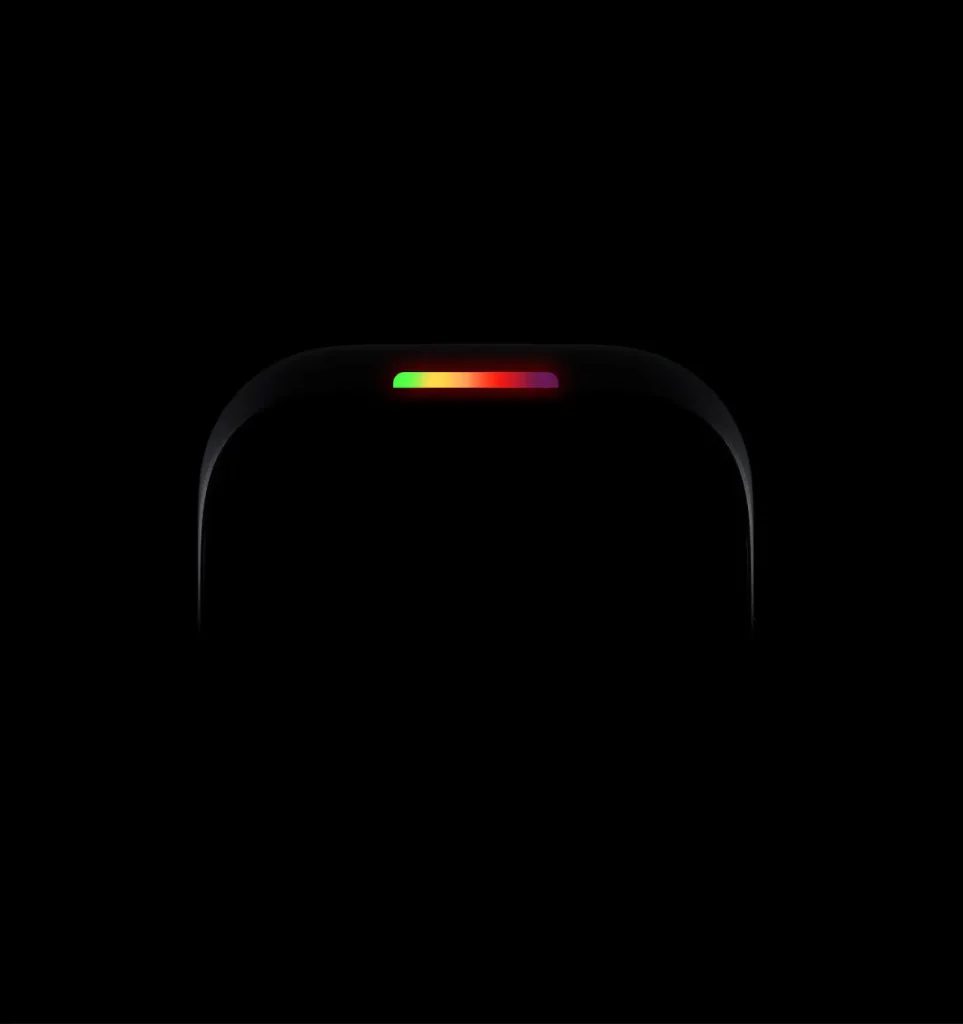
More importantly, this is a brave new world, and I am not entirely convinced that Humane has fully solved the privacy challenge. Sure, the AI Pin comes with a trust ring—when it is in use and faces someone, it lets those across from you know it is active by turning on a green ring. A red ring means it is off. It is a bit too nuanced if you ask me. It feels a little unsettling and creepy. Or maybe I am being too much of an old fogey.
And even if you look past those many challenges, a long journey awaits the founders and their team. Like any other startup, now that its product is ready, Humane has its challenges—the company has to figure out how to go from being a product to a company to a growing business.
It still has to convince people that it is worth the $700 sticker price and the $25-a-month service. And if that is not enough, it has to figure out the boring, messy stuff like customer support and do all that while trying to stay ahead of the inevitable copycats.
While others might not see the potential just yet, and despite all these challenges, I remain excited not just for Humane, but for whatever startup out there wants to build this new audacious future. Why? Because they are trying to deliver on the immortal words of Charles Eames:
“Eventually everything connects—people, ideas, objects…the quality of the connections is the key to quality per se.”
The AI Pin
November 9, 2023. San Francisco
Comments are closed.
Hey Om, long time reader of your newsletter as a young tech professional with a background in human-computer interaction. This read was great, and I completely share your vision for the future of computing from invisible interfaces to a departure from the application paradigm.
I am curious if you have the time to give your musings on a few topics:
Do you think the consumer’s desire for choice will provide a substantial challenge for departing from the application paradigm?
Do you think we will get to a point in which we don’t even need personal devices? That is, computing is embedded enough in the world around us and able to b personalized to an extent where we do not have personal ownership of the devices?
This is a more personal one but I really respect you and your career so any insight you can give here would be appreciated- when I read about this field, especially Humane, I want to work on these things so bad. I am currently a product manager at Capital One, departing from my background in HCI and augmented reality. I am now applying to grad school for HCI to get back into the field, specifically with consumer products working on making true of the vision above. I feel this innate rush in me to get back into the field ASAP, like every day I am not working on this stuff it will be harder to get back into advanced interfaces. Do you have any perspective for a young professional on this matter?
Any and all conversation is appreciated, you are one of the most interesting people I have came across so it would be great to hear your thoughts!!! I hope all is well and you have a great Thanksgiving.
Regards,
Will