

So What’s The Latest with Apple’s VisionPro?
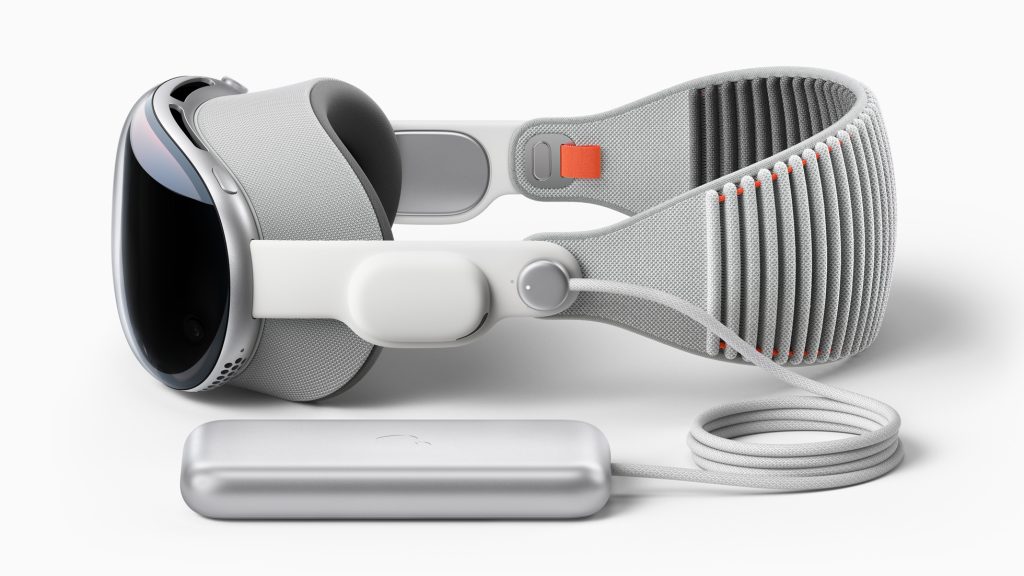
It shouldn’t come as a surprise to anyone that I am a big fan of Apple’s Vision Pro, a spatial computer that probably will reshape our relationship with entertainment, media, and content—if nothing else—when it comes to market. Ever since Apple announced the device at WWDC 2023, I have used it twice—and both times I came away even more excited about it. As I wrote then:
When Sony launched the Walkman, it gave music feet. The iPod took that idea further into the digital realm and trained the mainstream to expect any music anytime, anywhere. It also accelerated the “headphone” culture, where we slowly receded into our cocoons — perhaps becoming less social. In 2019, I made a case for the future of TV and what Apple can do about it. The Vision Pro will do the same for video content and make us much less social, no matter what Apple’s demos try to project.
However, the question everyone seems to want an answer to is: when will it arrive? The next question is how many will Apple make in the first year? Apple has said it will launch in early 2024 — and I don’t see any reason why it won’t. Bloomberg has reported January 2024 as the month of likely launch. “Apple has only said publicly that the Vision Pro is coming in ‘early’ 2024, but the company has been aiming internally to get it out the door by January,” Bloomberg’s Mark Gurman reported. “At this point, I would expect a release to at least occur before March — barring any unforeseen snags.”
Now to the second question: Apple wants to ship and sell a million units in year one. There were some early reports that production snags due to production bottlenecks around Organic Light-Emitting Diode on Silicon (OLEDoS) displays could cause Apple to miss its targets. Not anymore. Chinese media outlet Jiemian reports that the company has started production of its spatial computer, and suppliers have overcome the production bottleneck of OLEDoS displays — the key component of Vision Pro. (OLEDoS is also known as Micro-OLED.)
Even as Apple is trying to diversify its supply chain and move production of its products to different locations such as India, when it comes to its new and higher-end products, Apple still trusts its Chinese production supply chain. And nothing is as cutting-edge as Vision Pro, which uses some of the most advanced technologies, starting with the displays.
The Vision Pro has two internal displays with a total of 23 million pixels. In comparison, a 4K TV is 3,840×2,160, or 8,294,400 pixels. OLEDoS displays are newer advanced screens that take the benefits of OLED technology (like high contrast ratios, deep blacks, and flexible design) and combine them with the advantages of silicon-based electronics (like integration with other electronic components). The key point of OLEDoS displays is that they can be incorporated into devices that need non-traditional screens, such as the Vision Pro.
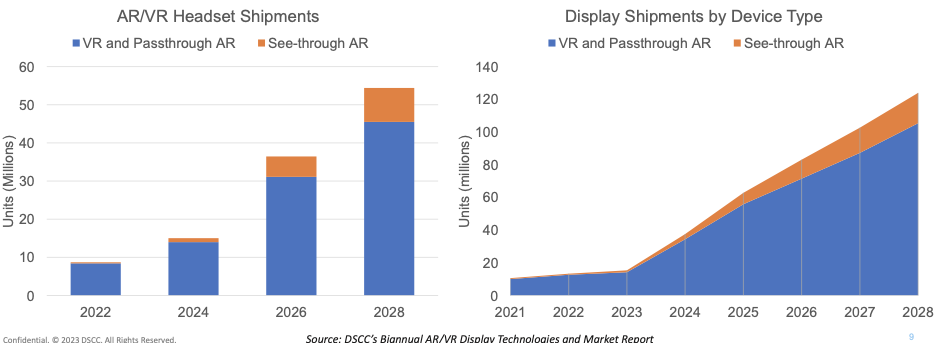
It is clear that a million units is not a big number of units, but it is not an insignificant number. At $3,500 a pop, a million units equate to about $3.5 billion in additional revenues for the company — or about 0.9 percent of its 2023 sales. As a comparison, Apple released the first iPhone in June 2007 and sold approximately 6.1 million units. At an average price of $550 ( I took the average of the two models on sale) and multiplied that by 6.1 million, iPhone’s year one revenues came in at $3.35 billion. By the way, in fiscal 2023, Apple sold $205 billion worth of iPhones.
While it is hard to predict how the future will turn out for the Vision Pro, I wouldn’t be surprised to see if Apple manages to grow Vision Pro sales to the rumored 10 million units in year three — research group International Data Corporation (IDC) predicts that about 25 million “mixed reality” headsets will be sold in 2026.