
Subscribe to discover Om’s fresh perspectives on the present and future.

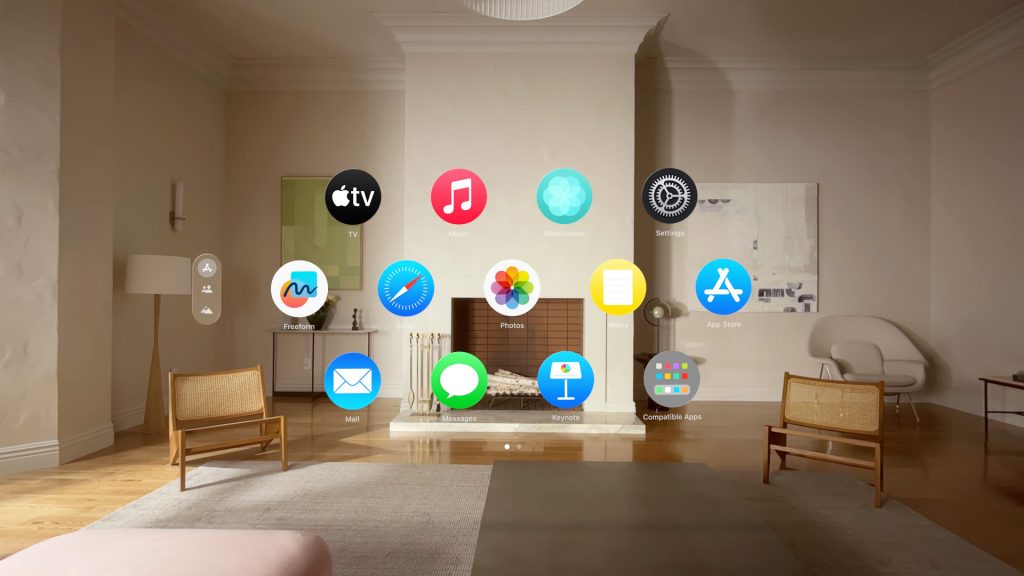
The rumor machine can finally turn itself off — Apple has announced that its spatial computer, Vision Pro, is going on sale on January 19. It will start taking pre-orders for the $3,500 device, which ships on February 2nd. And I am excited. Let me rephrase that — I am super excited. My excitement stems from my hands-on experiences with the device.
Apple touts Vision Pro as a new canvas for productivity and a new way to play games. Maybe, maybe not. Just as the Apple Watch is primarily a health-related device that also does other things, including phone calls, text messages, and making payments. Similarly, the primary function for Vision Pro is ‘media’ — especially how we consume it on the go. Give it a few weeks, and more people will come to the same conclusion.
In 2019, I wrote an essay about the future of television (screen):
With that caveat, I think both, the big (TV) and biggest (movie theater) screens are going to go the way of the DVD. We could replace those with a singular, more personal screen — that will sit on our face. Yes, virtual reality headsets are essentially the television and theaters of the future. They aren’t good enough just yet — but can get better in the years to come as technologies to make the headsets improve.
Apple has made that headset. Apple Vision Pro has ultra-high-resolution displays that deliver more pixels than a 4K TV for each eye. This gives you a screen that feels 100 feet wide with support for HDR content. The audio experience is just spectacular. In time, Apple’s marketing machine will push the simple message — for $3,500, you get a full-blown replacement for a reference-quality home theater, which would typically cost ten times as much and require you to live in a McMansion.
This is basically equivalent quality that you can take on the go. I am not really going out on a limb when I predict that Vision Pro (and its equivalent devices) will redefine movie watching and our relationship with movies.

As I explained in my essay about technology, society, and movie industry:
We went from drive-in theaters to indoor theaters to multiplexes. And that is a good arc to follow to understand where we are going. The driving forces of change in the movie experience have been the human desire for comfort and convenience. And above all, property values — each change in movie viewing maybe be driven by technology, but it has been about deriving maximum value from the land.
Times have changed, and so has our approach to socialization. Now we can’t even have a conversation without looking up from our computer screens. With the rise of social media and digital platforms, our interactions and the movie-watching experience have evolved. On-demand on our screens is the future, no matter how much traditionalists want to fight that.
Hollywood has been dabbling with the idea of giving people the chance to watch new release movies at home. Vision Pro (and equivalent devices) should eventually give people a proper screen to do so.
I gave up traditional television screens when I started my cord-cutting and Internet video website, NewTeeVee in 2007. I believed that video was going to become a primary activity on the “network.” And it did. I have watched “video” since then in on laptops, and iPhones, but mostly on iPads. For me, my iPad is my TV. It goes with me everywhere. I watched an India-Pakistan World Cup game while waiting in an airport lounge. Most of my MLB games stream to the device. I do have a big-screen TV at home — a 75-inch Samsung Frame – but it only exists to showcase my photography. Maybe that is why I see the easy transition to a much more robust on-the-go viewing experience.”
There will be a lot of talk about Vision Pro. There will be obvious commentary about it being a disappointment. In time, we will come to realize that this was Steve Jobs’ parting gift to the company he co-founded. He told his biographer, Walter Isaacson, who then shared this in his book:
….“very much wanted to do for television sets what he had done for computers, music players, and phones: make them simple and elegant. ‘I’d like to create an integrated television set that is completely easy to use,’ he told me. ‘It would be seamlessly synced with all of your devices and with iCloud.” No longer would users have to fiddle with complex remotes for DVD players and cable channels. ‘It will have the simplest user interface you could imagine. I finally cracked it.’”
‘I don’t know about you, but I am excited and will be getting up early to order a unit for myself.’
January 8, 2024. San Francisco
Comments are closed.
I look forward to reading your thoughts once you’ve had the Vision Pro for a couple of months. Certainly looks exciting. However, the price is going to have to drop significantly for it to reach a mass audience.
Indeed they need to bring it down to $1,000 price point. I think most of the cost is in “displays” for now. And that needs volumes to come down. I think the emergence of iPad Pro with new screens in 2024 is going to help push down the costs.
Interesting. It’s hard for me to get a sense of the product with trying it.
Curious to hear your thoughts about how the Vision Pro works for a Shared Viewing experience.
When 3-4 people want to sit down and watch a movie, having 4 devices around is not only costly, but would be a bit anti-social no?
I 100% get it for personal alone viewing though!
Hi, Om.
The problem with the Vision Pro as TV is that it is a solitary device. If you live alone and don’t interact with anyone, it would be an excellent video viewer. But if you live with someone, or have family in your home, it’s isolating.
When I watch TV with my wife, we react together to what’s on the screen, and interact about what we are seeing. That is not possible with the Vision Pro, and I am somewhat astounded that Apple has not provided a way for users to have a shared experience. That said, given the price, having more than one headset in a household would require a lot of available cash, and maybe that’s one reason why. Certainly, future version of the Vision will need to enable a shared experience.
I’d even argue that Apple’s vision for the Vision as spatial computing demands this feature, because in the work environment, collaboration is key. It’s not enough just to have a spreadsheet open in two computing instances (and the Vision Pro can do this), but you need to have a sense of presence of the other person to really make this work to its fullest. From what I’ve seen in demos (I have not yet used it myself), that’s not possible.