

Goodbye Torque. Hello TeraFLOPS!
In this week’s edition of CrazyStupidTech, I wrote about how Chinese domination of “electric vehicles” is going to become a nightmare, not just for car companies, but also for Silicon Valley. More below!
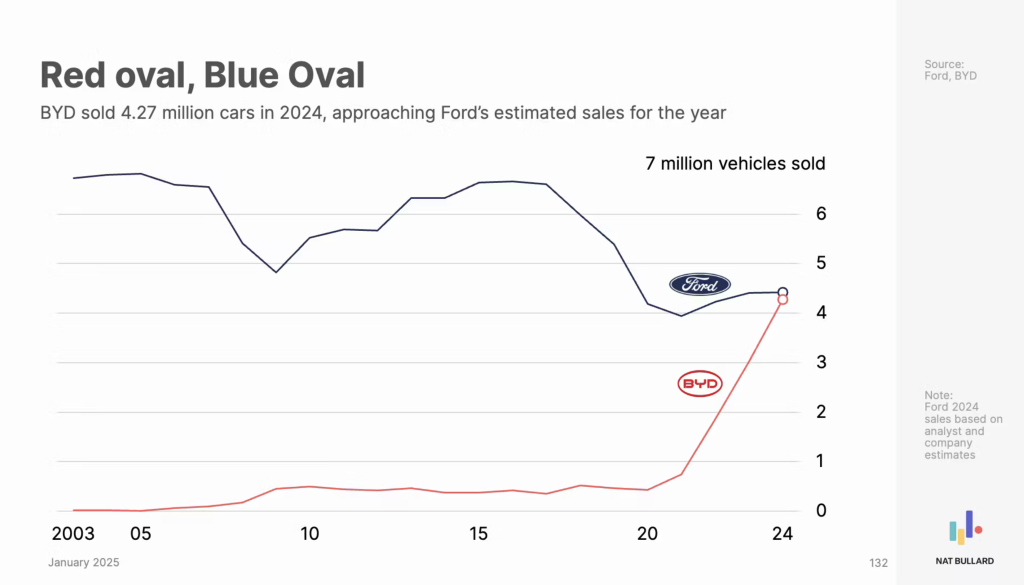
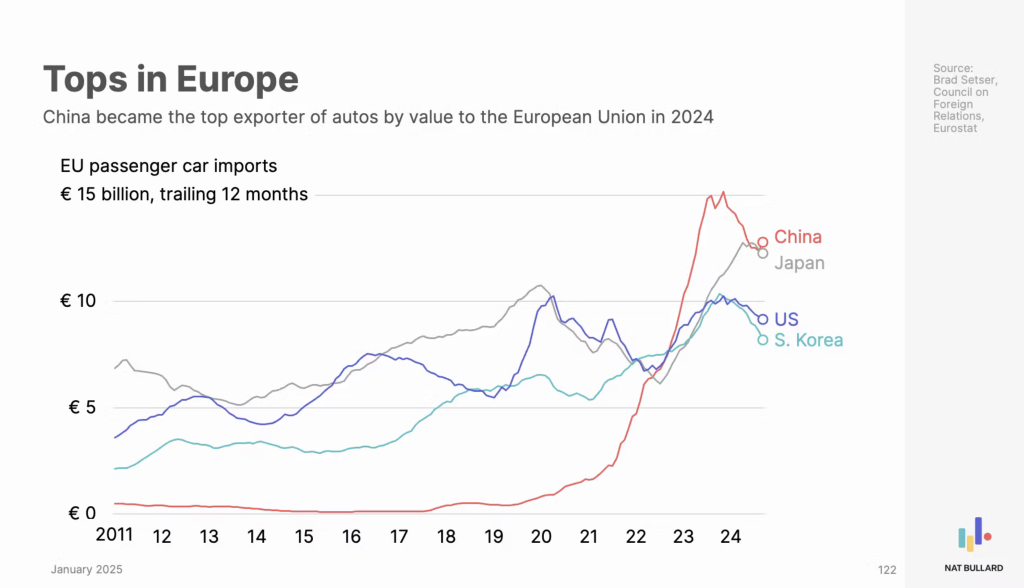
The future of cars is code, not chrome. Volvo’s ES90 is the latest example of computing’s conquest of the automotive industry. Industry insiders might shrug and say “so what.” But Volvo’s announcement serves as a stark reminder: While Tesla may appear to dominate the electric vehicle market, it’s facing intense competition. Chinese automakers aren’t just coming – they’ve already arrived.
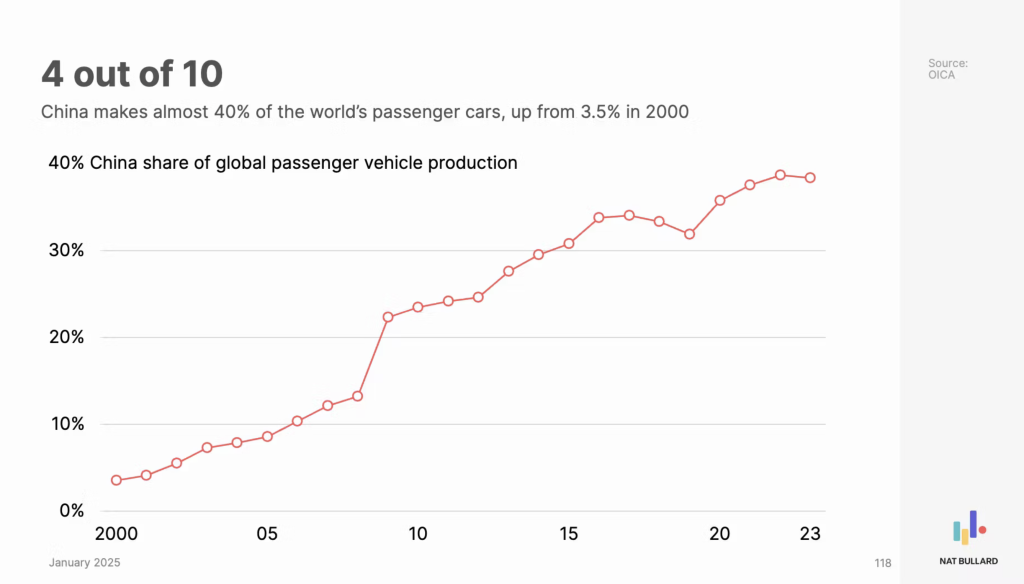
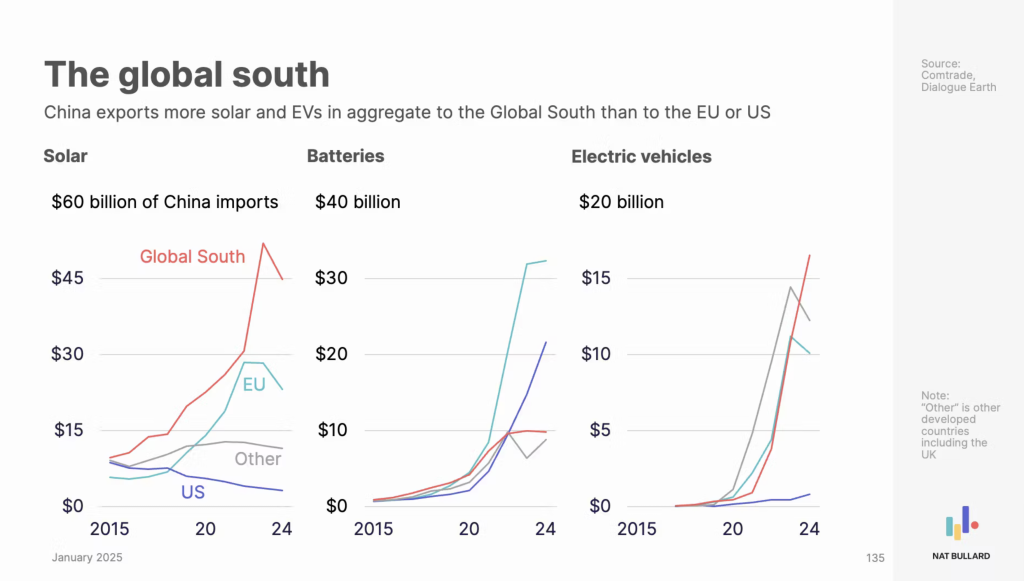
BYD, Geely, and Xiaomi, the latter until recently known only as a smartphone maker, are increasingly dominating global electric vehicle sales. This shift poses challenges not only for Western automakers but also for Silicon Valley, particularly as technology evolves beyond personal computers and phones. The automotive sector has become the spearhead threatening American technological dominance and its ability to shape the industry’s future.
China is the latest nation to embrace the automotive industry’s transformative power — but with a distinct focus on electric vehicles (EVs). This EV-centric “industry of industries” is reshaping everything from core vehicle components to software development, cloud infrastructure, semiconductors, and automation systems. The massive scale of China’s electric vehicle market positions its technological ecosystem, or “China Stack,” as a serious challenger to U.S. dominance in shaping future automotive technology.Technology is fundamentally about setting standards and protocols, and those who establish them control the long-term agenda. Computing has evolved through two major phases: First came productivity computing, which began with mainframes and evolved to today’s smartphones, driven primarily by workplace needs. Second came internet computing, shaped by commerce and information sharing. These two developments allowed the United States to define global technology standards.
Productivity computing gave us relational databases, PowerPoint, and Slack. Because we created personal computers, minicomputers, and servers, we gained the understanding and ability to shape the evolution of corporate computing and productivity tools.
Internet computing spawned everything from search engines to online shopping to ride-hailing services. It enabled America to build web-scale technologies — from data repositories to machine learning chips to massive data centers. Even Silicon Valley’s newest artificial intelligence companies, Anthropic and OpenAI, benefit from that web-scale infrastructure. IBM, Microsoft, Apple, Google, Meta, Qualcomm, Intel, and countless others have prospered from the U.S.’s ability to predict, shape, and control technology’s agenda. This success stemmed largely from America’s extensive domestic market for technology products and services.
Electric vehicles and the emerging ecosystem of robots pose a unique challenge. They represent the point end of the spear. Rather than following America’s blueprint, China has its playbook for technological dominance.
Continue Reading on CrazyStupidTech.
7 thoughts on this post
Comments are closed.
If it brings us reliable e-transport I, for one, welcome our Chinese overlords.
Probably not in the US, but like elsewhere.
I just want a self driving overload.
Just the fact that China manufactures everything means they are accelerating up many learning curves in materials, automation, robotics, and all the related supporting ecosystems. And with EVs they get to ramp up the learning curves that will drive just about everything else, in particular the motors and control systems for robotics.
Sadly we are “asleep at the wheel” despite having done so much work already.
A thought-provoking piece that beautifully captures the shift from raw horsepower to computing power in modern vehicles, blending innovation with a personal perspective.
Sounds like a serious upgrade! From mechanical muscle to computational power—welcome to the era of AI-driven performance.