
Subscribe to discover Om’s fresh perspectives on the present and future.

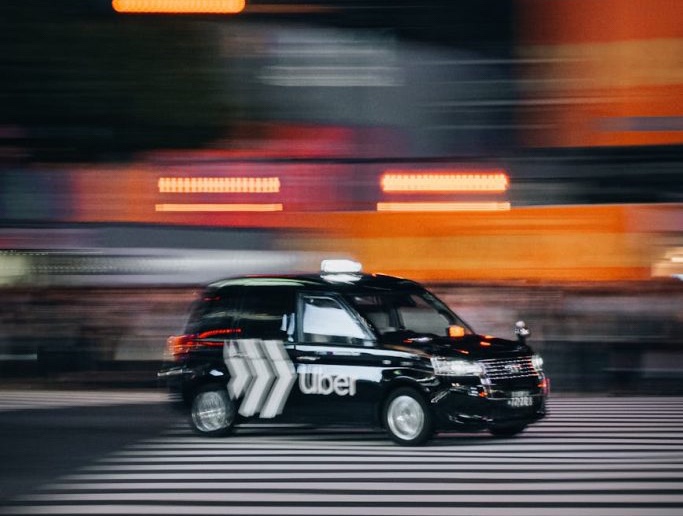
Uber plans to make “multi-hundred-million dollar investments” in both Nuro and Lucid as part of a massive new robotaxi deal that was just announced.
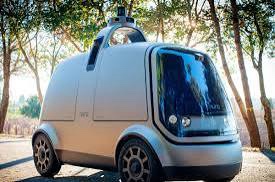
The three companies are linking up to deploy “20,000 or more” robotaxis in the US over the next six years. The vehicles will be Lucid’s new Gravity SUV, equipped with autonomous technology developed by Nuro, and available exclusively on Uber’s app. The fleet will be owned by Uber or a third-party fleet management partner and the first vehicles will launch in as-yet-to-be-determined US city in 2026.
When I was reading the news, it became obvious that there is less than meets the eye. It is unclear when the cars are going to be on the ground and in which city. That means Waymo has another year or so to consolidate itself as a leader or even maybe buy Lyft if it eventually goes out of business.
Secondly, Lucid is an also-ran, and no matter how good their cars are, they don’t have the track record of a Tesla. I am not sure we know as much about Nuro’s self-driving technology and infrastructure. This is a company pivoting from delivery-first approach to selling self-driving software to others. In other words, this response is like the early days of Android when Google, T-Mobile, and HTC launched a competitor to Apple’s iPhone in late 2000s.
I suspect vertically integrated entities such as Waymo are more likely to have a technological and data advantage. They are less reliant on outside components — Nuro depends on Nvidia, for example. I think even Tesla’s chimera-like robotaxi experiment could be ahead.
That’s why if somewhere, Uber co-founder and deposed chief executive Travis Kalanick is smirking with an “I told you so” look, I won’t be surprised.
Feel however you might about Travis, one thing that can’t be denied is that he had a grand, bold ambition for Uber and its place in the world. Over a decade ago, he told me a perfect day for the company would be “when you set an all-time record for trips per hour with zero surges.”
Often, he talked about the need for self-driving cars and reducing reliance on human drivers to achieve that perfect equilibrium between supply and demand. He wanted to build that future, but sadly, complications of reality, laws, and investors’ egos came in the way of his long-term ambition.
It was around the time when we first started to confront the idea of “Data Darwinism,” something I wrote about extensively in the early 2010s. (Read: Uber, Data Darwinism and the Future of Work.) In that piece, I wondered aloud
In the industrial era, labor unrest came when the workers felt that the owners were profitting wrongfully from them. I wonder if in the connected age, we are going to see labor unrest when folks are unceremoniously dropped from the on-demand labor pool.
Well, look around you. That future is almost upon us. A whole swathe of those who are employed, including those by Uber, are going to be gone from the labor pool. Waymo has started to prove more reliable and efficient in San Francisco, pushing Uber’s long-time rival Lyft into the rear view mirror.
The long-term trajectory is pointing to a future of even more automation. It is unclear how a society built on industrial-era inefficiencies will survive the ruthlessness of machine and software automation.
We have not fully contextualized the impact of the gradual automation of our everyday life and how much it reduces economic activity. Waymo’s driverless profits flow mostly to its investors, employees, and eventually Google’s shareholders. The local economic impact is close to zero, barring a few taxes.
Humans buy coffee, gas, and stay in the city. They even pay taxes on their income. They support the local ecosystem. A self-driving car company has none of those inefficiencies. Good for profits, not so much for the local ecosystems. Others see Waymo’s success and want the profits, just as fast-food chains want robots flipping burgers.
The economic theorists will argue that new opportunities will arise. And maybe they will. But if people had opportunities, they would not be flipping burgers or driving Ubers. We don’t quite know what the change is going to be, but more importantly, we don’t quite know how to even think about the change. Politicians see this as an opportunity to win elections. Profiteers see it as a windfall. I am not trying to be dark or pessimistic. However, we as a social collective need to be thinking about the implications of what is unfolding right infront of our eyes.
One thing is for sure, even Uber sees the writing on the wall. No wonder it is willing to bet a few hundred million on that future. Too bad it could have invented that future instead of being a late follower.
July 17, 2025. San Francisco