

The Unseen Joy of Hooligan
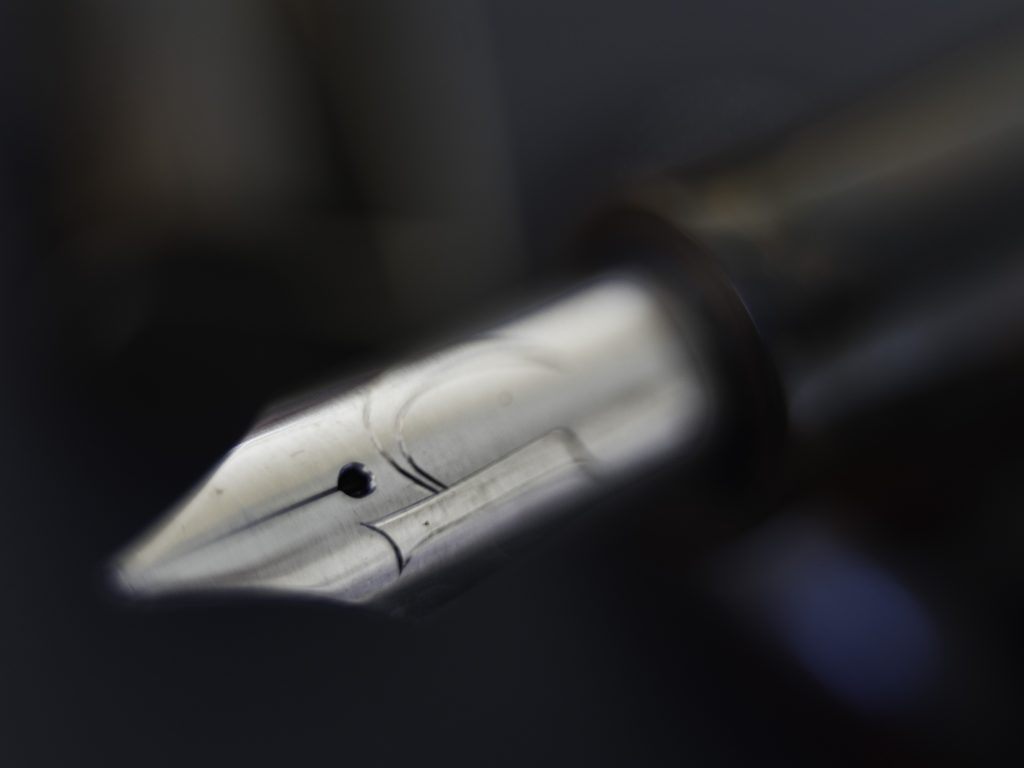
It is the grace of a shadow, the lingering of a sound, the beauty that lies beyond the seeing.” Zeami Motokiyo
In the 14th century, Japanese playwright Zeami Motokiyo reinterpreted the word yūgen as a name for a kind of beauty that hides more than it reveals. Its literal translation is “dim,” deep, or mysterious.” To watch the sun sink behind a flower-clad hill, he wrote, was to feel yūgen: the ache of what you cannot quite grasp. For him, yūgen was the soul of performance, a single, restrained gesture that could suggest an ocean of feeling.
The unsaid, unseen, unexplained are quite common in ancient traditions. In the Indian Vedantic tradition, this reverence for what lies beyond the visible becomes a philosophy of being itself. Where yūgen gestures toward mystery through art, Vedanta hints at mystery as the unseen reality underlying all that is. In more prosaic terms, to perceive beauty (just as truth) is to experience the whole through the part.
In more everyday contexts, objects of everlasting beauty speak in a very low voice. They leave room for interpretation, because they are mysterious. They leave you with that feeling of yūgen, the moment when the visible world opens toward something infinite and unsayable.
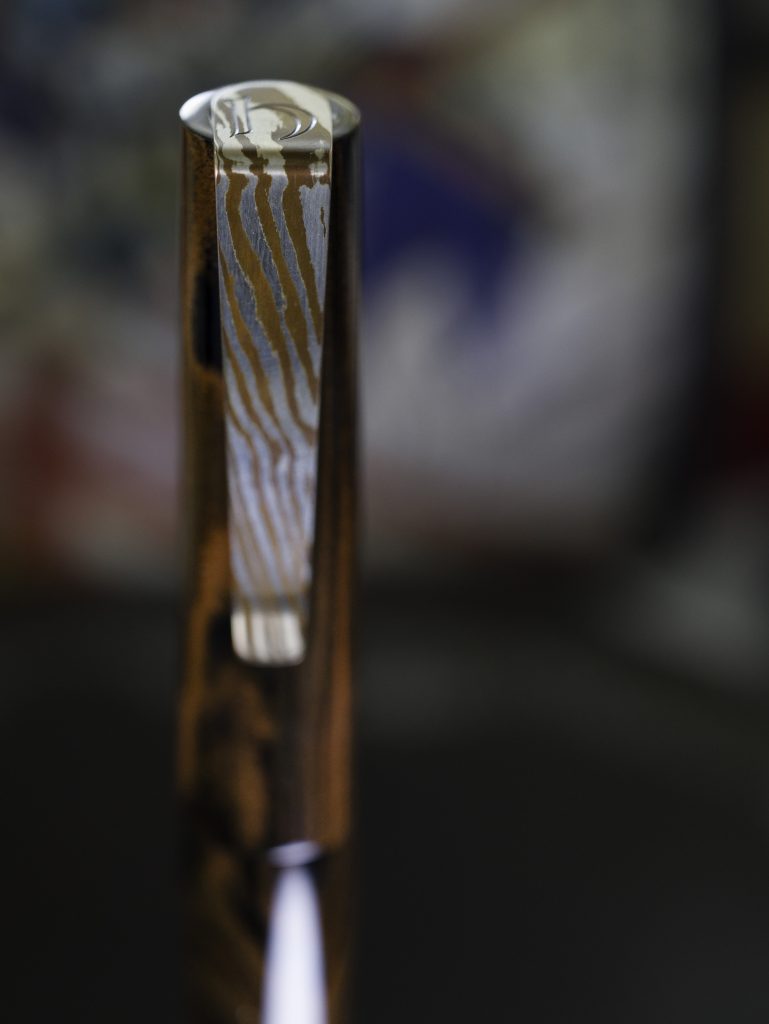
This philosophical underpinning is something that tugs at my soul and often guides my appreciation for all things, natural beauty, art, food, smells, and even everyday objects. I experienced this recently when I held a pen lovingly made by Tim Cullen of Hooligan Pens. It carries this yūgen philosophy into form. Its striated clip and polished ebonite body whisper rather than shout. The pen’s size, large as it is, doesn’t stand in the way of the pen speaking the language of texture and light. A subtle reminder that good design, like truth itself, speaks without screaming.
“Only when you drink from the river of silence shall you indeed sing.” Kahlil Gibran
Until a year ago, I didn’t know about Tim, or his Hooligan Pens. My fountain pen hobby was guided by a handful of concepts: Italian beauty, interesting materials, and the Japanese art of urushi. I had not gone down the path of custom pens, even though I remain an adherent of one-of-one ideology. I was watching a random video recommended by the YouTube algorithm that introduced me to Tim and his work. I went to his Instagram and enjoyed his candid posts about his work—how he makes pens and why he makes certain choices.
I went to his website and paid a small advance to reserve my place in line for a chance to get a pen made by him. I liked that he made everything himself, the pen body, the clips, and even the nib. The only non-Hooligan part was the ebonite feed for the nib, which was made exclusively for him by a local artisan. As a chemistry nerd, I loved that he made his nib from Continuum, an alloy of sterling silver and palladium. Fast forward to October 2025, and I have my first (and not my last) Hooligan.

There’s a certain honesty in a well-resolved object, and my new pen definitely fits the bill. It speaks in the language of restraint and precision, where every curve and surface carries intent. The ebonite might be hard rubber, but it feels like wood with grain. It is nostalgic in the way of pens from a century ago. Cullen allows the ebonite to express itself with a depth that lets light dance, making it less a material than a mood. The pen, for me, is the visual equivalent of a long exhale, sitting under a favorite tree in the woods.
The nib’s tone is different. It doesn’t have gold’s opulence or steel’s rigidity. Instead, it has a restrained elasticity, a feel that allows you to write with intent rather than flourish. And then there is the clip, made in his iconic waterfall design. It is the one lyrical flourish in an otherwise stoic composition. Soft but intentional, with a hint of brutalism, it draws the eye downward. As if echoing gravity, it makes you admire the body, the form, and the whole itself.
This is a big pen, no doubt about it. It will stand out by size. But it stands out by being a dialogue between eras: organic and engineered, tactile and exacting. The pen doesn’t demand attention; it just gets it.
The whole story, already there, within the silence.
Yūgen!
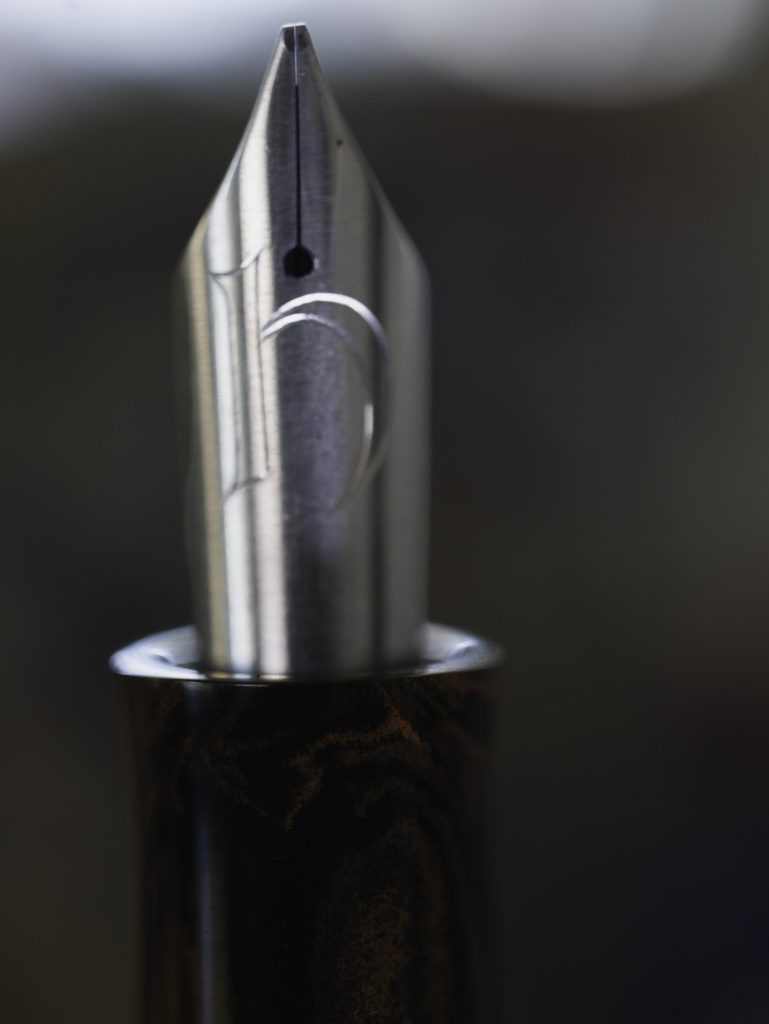
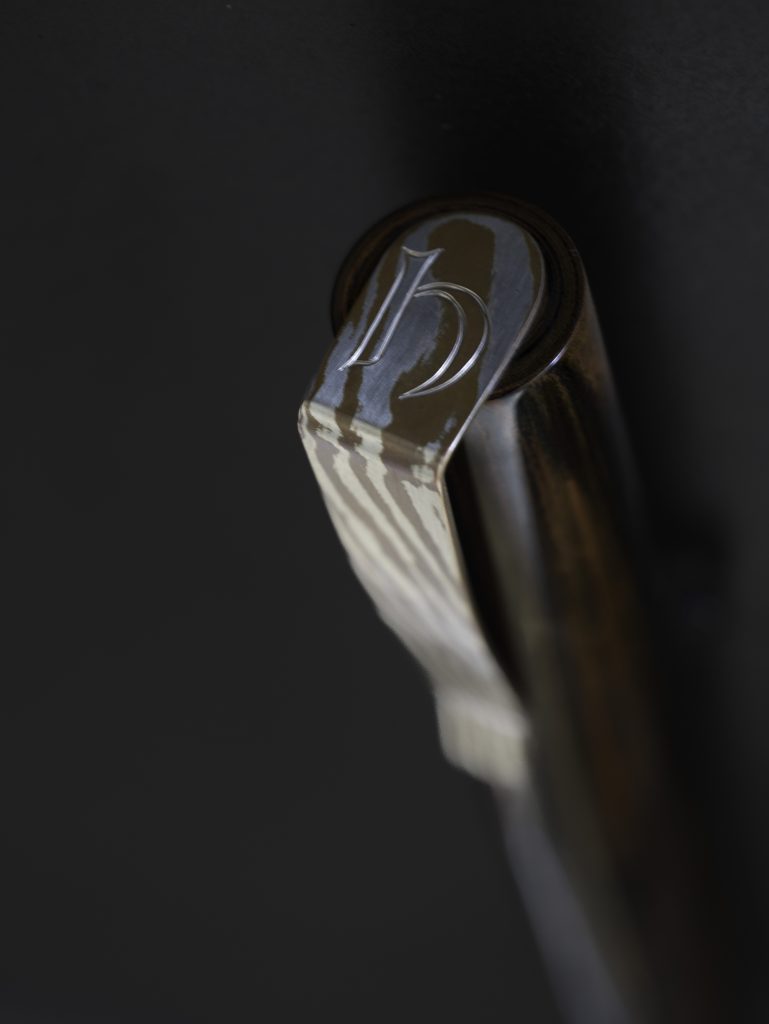
P.S.: This feeling of the unsaid and appreciation for the materials have guided my photographs of this pen.
2 thoughts on this post
Comments are closed.
Lovely writeup! Congregations on your new acquisition.
Thank you Eric.