

What is Instagram’s Adam Mosseri really saying in his year-end memo?
On the last day of 2025, Instagram chief Adam Mosseri posted a 20-slide memo on Instagram. It covered AI, fake content, reality distortion, and how the platform will change. Read it as a press release, and it’s heavy with buzzwords. Read it as a set of clues about what’s next, and it tells a different story. (The text of the 20 slide memo is at the bottom of this piece.)
For a former reporter who covered IG and its parent closely, this isn’t just about the memo. What is it really signaling? This 20-slide IG post portends something bigger, perhaps something more unusual, a first for Meta Platforms.
Until now, everything Mosseri (and Meta more broadly) has said has focused on growth, promising to connect the world and empower creators. His latest memo is different. It is not about expansion; it is about containment and control.
Instagram no longer believes it can beat AI by making more or better content. It wants to be the referee, to decide what is real and what is not, and to build systems that can do it at scale. I am fairly certain Meta reads the trend lines better than outsiders. They know they are fighting a losing battle. This threatens Instagram’s very existence.
Instagram depends on the perception that photos and videos reflect real life. So when Mosseri says that “authenticity is becoming infinitely reproducible,” what he means is that AI can now fake almost anything. If people cannot tell what is real, Instagram’s core premise fails. Credibility erodes, trust diminishes, and the engine of attention and casual consumption sputters.
This is already happening. When Mosseri says “DMs are where people share now,” he admits something basic: people are talking and sharing in private, not in the public feed. That is a big business problem for Instagram. It can’t easily monetize direct messages or group chats, and the shift hurts revenue. The feed is fading, and they know it.
The business reality is this: advertisers do not want fake people or fake stories. TikTok feels more authentic to the brands who want to spend money. Creators do not want tools that copy their style in seconds. Regulators will soon want answers as to how they are planning to police the fake-content problem. Phrases like “authenticity is precious,” “raw content is proof,” and “we will label AI” are a veneer over that truth. Mosseri is fluent in the culture’s language, but beneath it, this is about control and money.
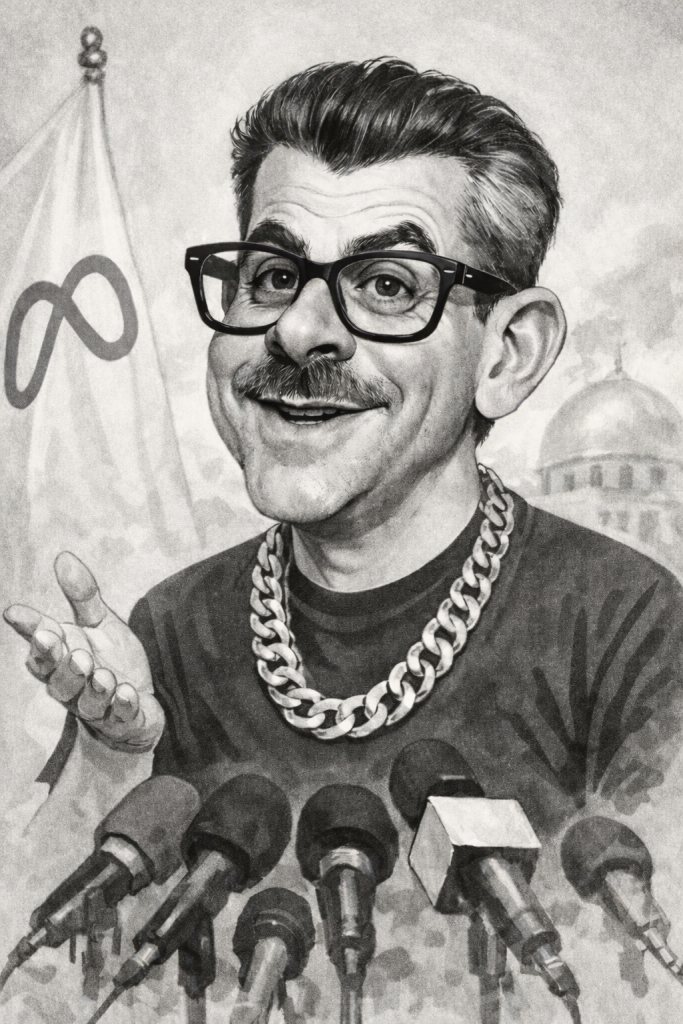
Mosseri is an interesting character. For the past five years, he has served as Instagram’s narrator-in-chief, speaking up during major product changes or looming public-relations trouble. I think of him, lovingly, as Mark Zuckerberg’s Tariq Aziz. To those under 40: Aziz was Iraq’s foreign minister during the First Gulf War. He spun bad news as good news for his master, Saddam Hussein. His press conferences were legendary and hilarious.
Just like Aziz, Mosseri comes across as more human and relatable than his boss. His memos, from “we are no longer a photo app” to “authenticity in the age of AI,” are less about what they say than about what is coming — and why people need not question that it will be necessary and good.
At various points from 2020 to 2025, Mosseri’s commentary, mostly in Instagram videos, has made the following strategic points: We are changing the feed for your benefit; we are an entertainment and shopping platform; we must win teens and compete with TikTok; and, now, AI is destabilizing reality, and we will referee authenticity.
His memos track Meta’s corporate arc. The company has moved from the social graph era, when you saw posts from people you knew, to the interest graph era, when you saw what algorithms though you will like. It is now entering a trust graph era, in which platforms arbitrate authenticity. And it is being dragged into this new era.
These communiqués are not issued lightly, often resulting from early detection of tectonic shifts in the landscape. In 2021, for example, Instagram had to sugarcoat a hard truth: the social photo-sharing app was dead. In its place came TikTok-style Reels and a shift from chronological timelines to algorithms that decide what you engage with. It was Mosseri’s job to deliver the bad news, in his unique charming way.
When he said they were “helping you discover more content you will love,” he meant you’d spend more time on the app, which means more money. Instagram became less about people and more about profits, though his friendly tone softened that reality.
Creators saw the change first: their work was remixed, borrowed, copied. The feed stopped feeling social, and people stopped wanting to be there. Instagram began talking about originality and authenticity, and tuned the system to reward what it defined as both. Then came the crisis over teens and TikTok. Instagram felt less cool. The panic over the losing the younger audience to TikTok still lingers.
Mosseri’s latest memo is about the next chapter in Instagram’s ever-changing story. The platform wants to control not only what you see but what counts as real. It wants creators, teens, advertisers, and regulators to tolerate that arrangement. This fits Mark Zuckerberg’s long pattern of choosing growth over everything. They want to beat TikTok, keep young users engaged, boost watch time, and grow revenue.
AI is flooding the system, and feeds are filling with fakes. Visual cues are no longer reliable. Platforms will verify identities, trace media provenance, and rank by credibility and originality, not just engagement.
It starts by verifying who is behind an account, embedding provenance in media, and rewarding trust signals. Over time, Meta may tighten control and aim to be an identity broker for everyone. Instagrams want you to be prepared for this new era of tighter control over identity, authenticity, and content provenance.
Mosseri says trust will shift from content to the people who post it. This isn’t new. That was Instagram in a nutshell: personal networks carried reputation and credibility, but none of it was easy to monetize.
He is certainly right about one thing: blurry, messy “raw” content isn’t an answer. AI can fake that, too. As AI improves, detection will get worse. A label that says something is AI-generated will be as effective as the warnings on cigarette packs. When you can’t trust what you see, the simplest way to deal with the problem is to tune everything out.
Deep down, Instagram is frightened. In a world of AI fakery, if seeing is no longer believing, can people accept Instagram as a trustworthy guide? Mosseri’s memo aims to recast the platform in this new role. Ultimately, the audience will decide if they choose to follow.
January 1, 2026
Here are some of my past articles to give you more context about evolution of IG, and Facebook Inc.
- Instagram is now an information network
- Decoding Zuck’s Super Intelligence Memo
- The #1 Reason why Facebook won’t ever change
Mosseri’s Memo
The key risk Instagram faces is that, as the world changes more quickly, the platform fails to keep up. Looking forward to 2026, one major shift: authenticity is becoming infinitely reproducible. 1/20
Everything that made creators matter—the ability to be real, to connect, to have a voice that couldn’t be faked—is now accessible to anyone with the right tools. Deepfakes are getting better. AI generates photos and videos indistinguishable from captured media. 2/20
Power has shifted from institutions to individuals because the internet made it so anyone with a compelling idea could find an audience. The cost of distributing information is zero. 3/20
Individuals, not publishers or brands, established that there’s a significant market for content from people. Trust in institutions is at an all-time low. We’ve turned to self-captured content from creators we trust and admire. 4/20
We like to complain about “AI slop,” but there’s a lot of amazing AI content. Even the quality AI content has a look though: too slick, skin too smooth. That will change—we’re going to see more realistic AI content. 5/20
Authenticity is becoming a scarce resource, driving more demand for creator content, not less. The bar is shifting from “can you create?” to “can you make something that only you could create?” 6/20
Unless you are under 25, you probably think of Instagram as feed of square photos: polished makeup, skin smoothing, and beautiful landscapes. That feed is dead. People stopped sharing personal moments to feed years ago.7/20
The primary way people share now is in DMs: blurry photos and shaky videos of daily experiences. Shoe shots and unflattering candids. This raw aesthetic has bled into public content and across artforms. 8/20
The camera companies are betting on the wrong aesthetic. They’re competing to make everyone look like a pro photographer from 2015. But in a world where AI can generate flawless imagery, the professional look becomes the tell. 9/20
Flattering imagery is cheap to produce and boring to consume. People want content that feels real. Savvy creators are leaning into unproduced, unflattering images. In a world where everything can be perfected, imperfection becomes a signal. 10/20
Rawness isn’t just aesthetic preference anymore—it’s proof. It’s defensive. A way of saying: this is real because it’s imperfect. 11/20
Relatively quickly, AI will create any aesthetic you like, including an imperfect one that presents as authentic. At that point we’ll need to shift our focus to who says something instead of what is being said. 12/20
For most of my life I could safely assume photographs or videos were largely accurate captures of moments that happened. This is clearly no longer the case and it’s going to take us years to adapt. 13/20
We’re going to move from assuming what we see is real by default, to starting with skepticism. Paying attention to who is sharing something and why. This will be uncomfortable—we’re genetically predisposed to believing our eyes. 14/20
Platforms like Instagram will do good work identifying AI content, but they’ll get worse at it over time as AI gets better. It will be more practical to fingerprint real media than fake media. 15/20
Camera manufacturers will cryptographically sign images at capture, creating a chain of custody. 16/20
Labeling is only part of the solution. We need to surface much more context about the accounts sharing content so people can make informed decisions. Who is behind the account? 17/20
In a world of infinite abundance and infinite doubt, the creators who can maintain trust and signal authenticity—by being real, transparent, and consistent—will stand out. 18/20
We need to build the best creative tools. Label AI-generated content and verify authentic content. Surface credibility signals about who’s posting. Continue to improve ranking for originality. 19/20
Instagram is going to have to evolve in a number of ways, and fast. 20/20
10 thoughts on this post
Comments are closed.
Thanks for the article. The memo´s content can be seen only partially.
Weird. I will link at the bottom of the piece.
I added the text of the memo at the bottom of my article.
This is trying to put the toothpaste back. The whole point about authenticity is the very word itself. It can’t be faked, it cannot be vouched for, and if Zuckerberg or Mosseri try, they won’t be believed. So the answer isn’t armed guards at the door.
The answer is painfully obvious. Embrace the new technology. Stop promising it’s a genuine picture of Aunt Gladys. Encourage a new creativity, foster a fresh passion for images that use AI. This forms a feedback loop to AI companies pushing them to get better, faster. It also allows users of Instagram to post the way they always have — straight from the camera. Which will be easier to spot. Everyone wins. The trick is to keep Zuckerberg’s clumsy, complicating little paws off the platform and keep it simple. And then even simpler.
Authenticity big buzzword for them now.
Keeping the platform simpler is key, and they missed it in the race of growth somewhere. I agree with Howard B Stein, “The trick is to keep Zuckerberg’s clumsy, complicating little paws off the platform and keep it simple”
The big question is how to keep it simple.
You and Howard nailed it. I think it is a pretty good explanation of what’s happening with them.
Kinda weird to be hating on Zuck for gasp prioritizing growth and profits. The horror!
Aren’t you a VC, OM?
Is this the advice you give founders in the True portfolio? Don’t worry about money boys, just focus on the vibes and virtue signaling!
Growth at any cost is the organizational philosophy at Meta. That is very different from growth. I give advice that grow and don’t break moral, ethical and other rules. Perhaps you have very little understanding of investors and paint all people with same brush. Next time read the whole piece, and previous pieces to get proper context.
Slide 14 really stuck out for me because, recently, a NZ news website posted on Fbk a link to an article about unhoused elderly people in NZ. The image on the post was a photo of an elderly couple in sleeping bags on the ground at a bus terminus. Some commenters immediately responded that the image was fake so that proved there was no such problem in NZ. It was obvious that they were so put off by the image that they didn’t click through to the article, which was supported by statistics and quotes from officials.
We are going to be in this gray zone of reality distortion for so long. It’s kinda scary.