Our Crazy Unhinged Now

A confluence of events prompted me to quip on Twitter:

What amazing times we live in now. A $16 billion funding for @Waymo (congrats team, the product) is an afterthought thanks to the mega deal between @SpaceX & @xai It might be the smartest deal of the year or simply the best value enhancement since the Kardashian Clan discovered Botox. By the way, @Walmart is now a trillion dollar company. Go ahead and laugh now. Seriously, and be grateful for the amazing times we are living in.

I was being very ironic, sardonic even.

Waymo raised $16 billion this week. Sixteen billion dollars. At a $126 billion valuation. Those are some serious numbers. I have covered technology long enough to classify that as a jaw-dropping amount of funding raised by a company. Sixteen billion into a $126 billion valuation is roughly 13% ownership. That is a private equity-sized bite wearing the



Word Boost

You might have noticed an increase in the number of words I am publishing these days. I don’t know why. Or how. Somehow a lot of things have clicked in my head. I quietly switched from consumption to creation mode. It is my process now. I happen to keep reading, lurking, and thinking.

It also gives me an opportunity to use my fountain pens, ink, and paper. I love writing and thinking in longhand. I used to have the opportunity to take notes when I was a working reporter. These days I don’t use the old reporter’s notepad. But old habits still die hard. Plus, drafting in longhand and then typing it out later is a good way to edit your copy. And boy, do I need to edit and need a copy editor. Plus, as they say, too many pens, too little time.

At least for now, I am


The New Announcement Economy

If you want to see my “velocity trumps everything” doctrine at work, you don’t have to look any further than the AI news headlines coming thick and fast about investments, valuations, and all the related hype. As a reminder, my doctrine is that velocity has replaced authority as the organizing principle of information. What and who moves fastest wins. Truth and facts are optional and get lost in the race to dominate attention.

However, you take a moment to scratch beneath the surface, add some numbers, and think for yourself, a lot does not add up. That is a good reason to be pragmatic. Caveats are a great silent gift of Shakespeare’s language. But no one wants to be a party pooper and talk logic and sense when you have the Internet monster to feed. But the reality is very real, and kind of boring.

I bring this up because


The Dark Side of FOMO

A video started circulating across my fountain pen and stationery communities. An octogenarian couple stealing expensive pens at the Hamburg Pen Show. The footage is damning.

Theft at pen shows isn’t common. But it’s not unheard of either. In 2023, someone at the San Francisco Pen Show got caught after vendors followed him for ninety minutes. At the 2025 Madrid Pen Show, over 170 pens were stolen from Andre Mora. Limited-edition Montblancs. Some worth more than a used car.

But a couple of octogenarians? In Hamburg? So brazen. So blatant? And that too in our third eye society?

The more interesting part isn’t the crime. It’s the why. At that age? Was it need? Or was it desire? The kind of desire you can’t afford but can’t shake.

I keep coming back to Instagram. Pen Instagram, specifically, but it is true of every thing .

There’s hardly anything social about


Why Tech (&) Media is complicated

After I published my “velocity is the new authority” essay, a reader and dear friend emailed and asked if my framework explained the fraught relationship between media and the technology ecosystem it covers. My one-word reply was “Absolutely.” And here’s why.

In “comms” across tech, startups, and the larger ecosystem, little seems to matter anymore. It’s hard to pin down anythingconcrete or meaningful. Everything is noise and nothing can be heard.

Most founders (and technology companies) treat comms like a checklist: have something new, draft a story, chase press,issue a release, share it on LinkedIn and X, maybe do a podcast tour. Others skip intermediaries and go straight to their audience. That worked when media was the gatekeeper and friction was high. Building your audience and owning your channels made sense. Today, anyone can go direct, and the noise has exploded. Rising above it gets harder every day.

Velocity is replacing authority as the organizing principle for information. You see it in the broken relationship between media and the technology ecosystem. The YouTube tech review I wrote about earlier highlights the core issue: access.


Access journalism is as old as media itself. These days though, it is table stakes. Not just in tech,


A CEO, Captured. 

I keep thinking about a line Lawrence Sanders wrote: a character asks whether money makes the world go round. The reply: “I do not believe it is money itself. After all, that is just metal and paper. No, it is the power money confers that makes the world go ’round.”

Power. Comfort. A seat at the table. Or, in this case, the crushing weight of a trillion-dollar valuation that demands constant appeasement. MG Siegler puts it plainly: Tim Cook, Apple’s CEO, is captured. And so is the rest of the technology community. This is what happens when valuations trump values.

At a time when the nation is being ripped apart by the brutal shooting of Alex Pretti, a 37-year-old ICU nurse, by ICE agents, Cook is facing criticism for attending the White House premiere of “Melania,” a documentary about the first lady. No one is questioning Jeff Bezos, who attended.


Does Evidence Even Matter?

I was taught never to discuss money, politics, or religion in public. Those childhood lessons are why I avoid political commentary, though I don’t lack beliefs or convictions. With the growing rancor in our social, political, and economic arenas, I turn away from the news and toward longer, more considered writing. 

And for that I look to writers and thinkers who do in-depth reporting and analysis. They see things more clearly. I am comfortable talking about technology and its impact on the present and future. I look for patterns that matter beyond today. Today, though, I had to put all that aside. My heart and my conscience couldn’t ignore the events in Minnesota. I couldn’t ignore Alex Pretti. I felt sad and sickened. I couldn’t look away. There is a deep sadness within me.

Pretti was a 37-year old ICU nurse at the VA hospital. On January 24th, federal agents shot him multiple times. The videos show him holding a phone. Filming. And then helping a woman. The Department of Homeland Security called him a “domestic terrorist” who arrived to “massacre


The Joy of Neo-noir

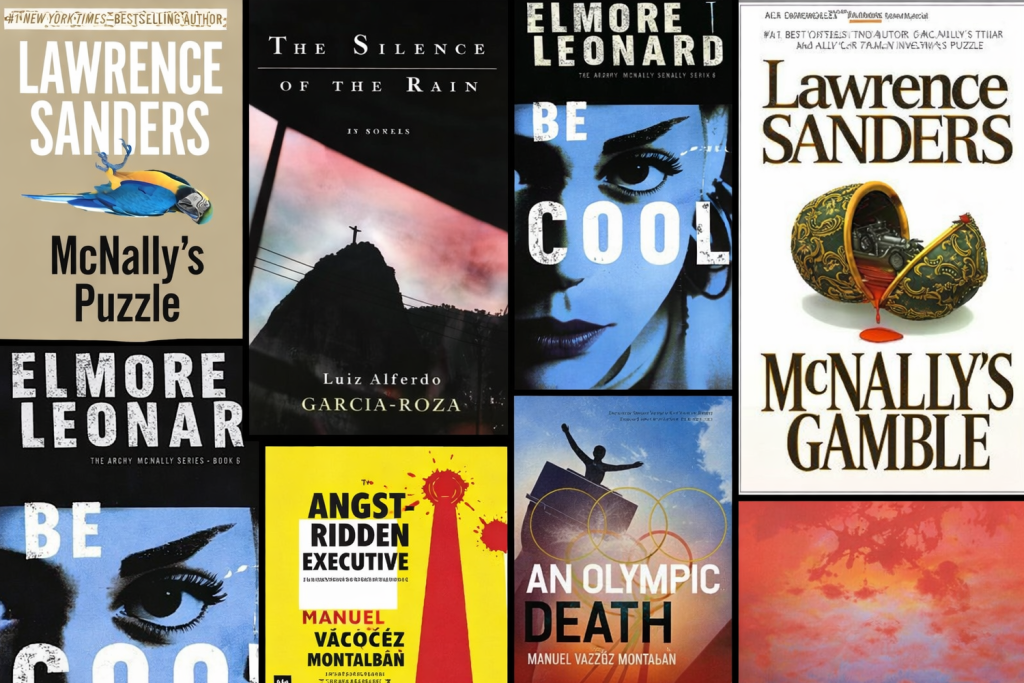
I’ve been enjoying Lawrence Sanders again. Specifically, the Archy McNally series: those breezy Palm Beach mysteries from the ‘90s and early 2000s, starring a trustafarian investigator who solves crimes among the wealthy, catalogs his consumption of calorific food and vodka gimlets, drives a red Miata, and moves around town in clothes befitting a peacock. This is the Palm Beach of Mar-a-Lago before the Mar-a-Lago of now. I’m a fast reader, and I’m already running through the series.

The recent reading spree raised an obvious question: why do I feel so comfortable rereading books from decades ago? Why do crime novels, whether by Sanders or by my other favorite writer, Manuel Vázquez Montalbán (and his Pepe Carvalho series), offer something that new books don’t?

A simple explanation could be nostalgia. But I hate nostalgia. My approach to life is what I call “present future”: feetfirmly in the present, eyes on the


Velocity Is the New Authority. Here’s Why

Why does everyone feel overwhelmed by information? Why does it feel impossible to trust what passes through our streams? We tend to blame individual publications, specific platforms, or bad actors. The real answer has less to do with any single media entity and more with structural changes in the information ecosystem.

I started my “information” life typing copy on an ill-tempered Remington. As a teenage reporter, I saw newspapers being typeset, one letter at a time. It was a messy, slow, and laborious process. So I don’t carry romantic notions about the old days. I’ve been quick to embrace any technology that, in Stephen Covey’s words, helps me keep “the main thing the main thing.” The main thing is telling a thoroughly reported, well-written story.

The early 1990s Internet, followed by blogging at the turn of the century, and social media a decade later all helped me do that main thing. In the mid-2000s I embraced Dave Winer’s mantra of “sources going direct.” As far back as 2009, I outlined the coming changes in my essays “How Internet Content Distribution and Discovery Are Changing” and “Amplification and the Changing Role of Media.”

For the past decade and a half, the whole