Sam “Claws” Attention Back OpenAI

Sam Altman got his man. Not only to compete with Anthropic’s Claude Code, but also to show the world what is possible with Codex. And at the same time, he got a brand-new story to tell about invisible autonomous agents and to raise ever more money. And the extra olive in this vodka gimlet: he kept OpenClaw from the hands of rival Meta.

This weekend, OpenAI’s CEO announced that Peter Steinberger, the Austrian developer behind the viral open-source AI agent OpenClaw, was joining the company to “drive the next generation of personal agents.” Steinberger, who built OpenClaw as a side project that exploded to over 180,000 GitHub stars in a matter of weeks, had been courted by every major lab in Silicon Valley, including Zuckerberg’s Meta, which came very close to landing him. I first reported that Peter was talking to Zuck, Sam, and that everyone else was chasing him


YouTube on Vision Pro! Finally!

Some days are just good for one thing—lying in bed and doing absolutely nothing. Today happens to be one of those days! I am just lazing here. I have a Vision Pro (version two) strapped to my face, and I am watching some of my favorite shows on YouTube in all their glory on the official YouTube app for Vision Pro.

For the past two years, I have been waiting for the official app to arrive. Can you believe it has been two years since Apple launched this “headphone for the eyes”? Watching YouTube videos via the browser was fine, but it was nothing like getting a 4K (or higher bitrate) stream. The app allows you to access standard videos, 180° videos, 360° videos, and YouTube Shorts. The M5 chip version allows you to watch YouTube videos in 8K.

This release has made me so happy. I use Vision Pro


Mad Money & The Big AI Race

an artificial intelligence illustration on the wall

There isn’t that much of a difference between OpenAI and Anthropic. Both are big foundational AI companies. Both have changed how we think about information, code, and work. Both have very similar valuation metrics. Heck, both even have the same investors. One is chasing growth, margins, and building a real business. The other is chasing astronomical destiny. One is a consumer company with 800 million daily users. The other is an enterprise-focused company selling to businesses. The key difference is that one is focused and the other is doing way too many things.

The real story is that Anthropic, despite its woo-woo ideas about the future, AI ethics, and post-AI morality, is on its way to building up a real money machine. So what can we learn from Anthropic’s recently announced funding? The company raised a whopping $30 billion at a self-disclosed valuation of $380 billion. If you look at


Living in the Petri Dish of the Future

If you missed the brouhaha around a 5,000-word blog post about AI, let me bring you up to speed. But before I do, I want to remind you that sometimes a blog post is not just a blog post. It is really about the spectacle of it all.

Let me rewind. HyperWriteAI CEO Matt Shumer’s post on Twitter, “Something Big Is Happening,” went viral this week. Last check, it had over 75 million views, though I can guarantee you very few people read the whole thing. I bet not as many read the summary. Still, no stopping the chattering classes.

It showed up so often in my feed that I decided to read it. I started and stopped a dozen times. I don’t know why I persevered. Glutton for punishment? My efforts should tell you something about the quality of writing.

His thesis is that coding is the canary in


Is Waymo Worth $126 Billion?

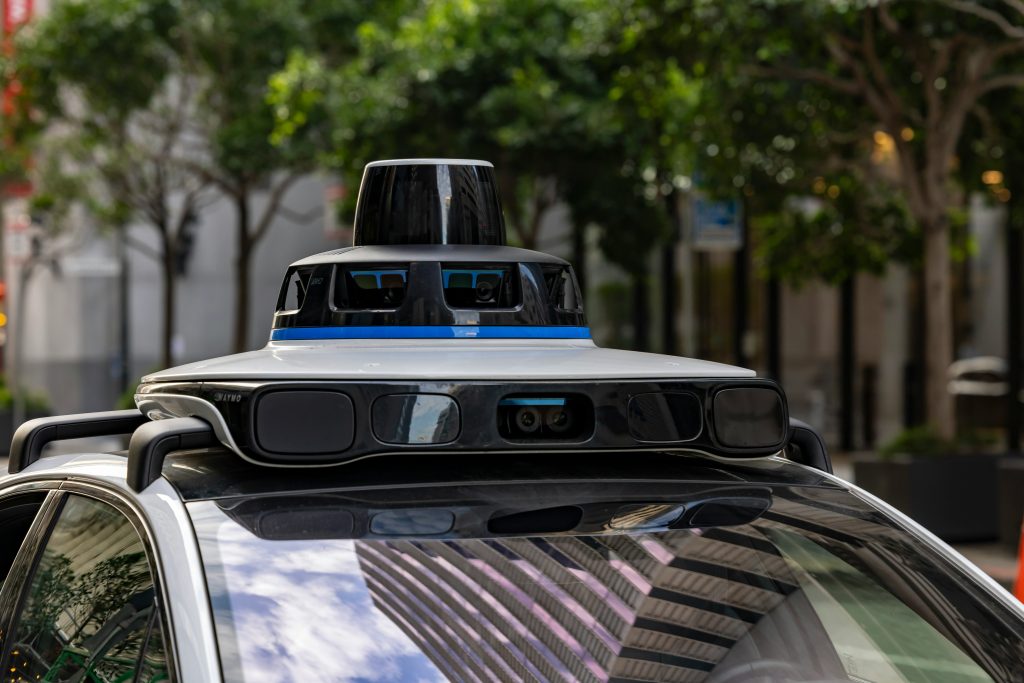
Photo by Leo_Visions on  Unsplash

Over the past three years, I have embraced three technologies almost completely. Generative AI, Apple’s Vision Pro, and Waymo. They are all part of my daily routine. And while I can skip Vision Pro occasionally, I don’t leave home without Waymo. I am probably one of their earliest adopters, willing to wait an extra ten minutes for the Waymo versus Uber. Yes, it drops me off a few hundred feet from where I need to be. Yes, it takes a bit longer. Yes, it can’t go everywhere. Yes to all the problems. And yes to the fact that I am okay using a human as a backup to this robot. And yet I am confounded by its valuation, especially given the challenges of growth.

When I started reading an interview with co-CEO Tekedra Mawakana in Bloomberg, I was hoping for some clarity. I didn’t get any. My editors would have


Conveniencing Ourselves to Irrelevance

My recent rumination about “The Greatest Invention Is…” triggered some thinking around my long-held beliefs about the duality of technology. It left me brooding over the weekend about the present and the future. I started going through my notes and came across two separate entries with my thoughts on “stuff” I had accumulated during my research and reading adventures. They helped connect a few dots.

“Optimism is a strategy for making a better future. Because unless you believe that the future can be better, you are unlikely to step up and take responsibility for making it so.” — Noam Chomsky

I think I flagged that quote because Chomsky is the last person I would have labeled as someone who leaned into future and progress. Under his quote, I had these questions spurred by his words:

  • What is dystopia?
  • What is technology?
  • What is progress?
  • What is society?
  • What is civilization?


The Greatest Invention is….

Day One is a great journaling service. And every so often it has a good prompt (via the JetPack app) to help you get started. I have no problem with journaling. But sometimes, the prompts are good enough for me to noodle on. Today was one of those very interesting prompts:

The most important invention in your lifetime is….

I had to think about this all day. Why?

Before I could answer, I had to remind myself: what exactly is an invention? An invention is defined as something that didn’t exist before. It could be a device, a method, or a process that solves a problem in a way no one had quite thought of. It doesn’t have to be flashy. It just has to change what’s possible. So it can be a collection of many technologies, woven together.

There have been quite a few. And it made me realize how


How AI Goes to Work

scrabble tiles spelling gemini and chatgpt
Photo by Markus Winkler on Pexels.com

Sometimes it takes a single piece in a jigsaw puzzle for the whole picture to come into shape. And that happened earlier this weekend. I was able to crystallize a lot of what I have been thinking about technologies colloquially known as “Artificial Intelligence.” And it happened because of a 40-year-old piece of software that is used by tens of millions of people every day.

I’ve been writing about artificial intelligence for nearly a decade. In 2016, I argued in The New Yorker that we should think of it as augmented intelligence. Software that helps us deal with a world outpacing our capacity to process it. In 2022, I made the same case in The Spectator. The argument never changed. The world just took a while to catch up.

This week, I downloaded Claude for Excel and started working on a spreadsheet tracking my


OpenClaw is Hawt

I posted this on Twitter. An old fashioned scoop let. Peter Steinberger the creator of product formally known as Clawdbot is one hot commodity in Silly Over AI Valley.

The word around Silicon Valley is that everyone from Meta to OpenAI to xAI wants a piece of OpenClaw and its creator. Zuck and Sam might even have met with him. Ideally given its open source ethos he should take a cue from WordPress and build this one for the future for everyone, and go work with/at a company that would believe in that open source ideology.

via Twitter

There were lines outside the door and people were clamoring to get into the 1st ClawCon. OpenClaw has caught the imagination of those who tinker, build and experiment.

Feb 4, 2026. San Francisco