‘Astound’ed. Google Flips Its Fiber To PE.

I have been a WebPass customer for years. Fast, reliable, founder-run. When there was a problem, you could reach someone who gave a damn. It was the kind of internet service that made you forget you were dealing with a utility.

Then Google bought it.

That should have been the warning sign. Google buys things it should have no business touching. It launches products without a plan. Its decisions to get into new markets are a map of some mediocre executive’s ambition.
I watched the service slowly get worse. More outages, stagnant speeds, the kind of indifference that sets in when a product becomes a line item rather than a mission. Like it was for Charles Barr, founder of WebPass. When Barr was running the show, the speeds went from 50 Mbps to 100 Mbps to 200 Mbps. All for less than $50 a month. Eventually the speed went to


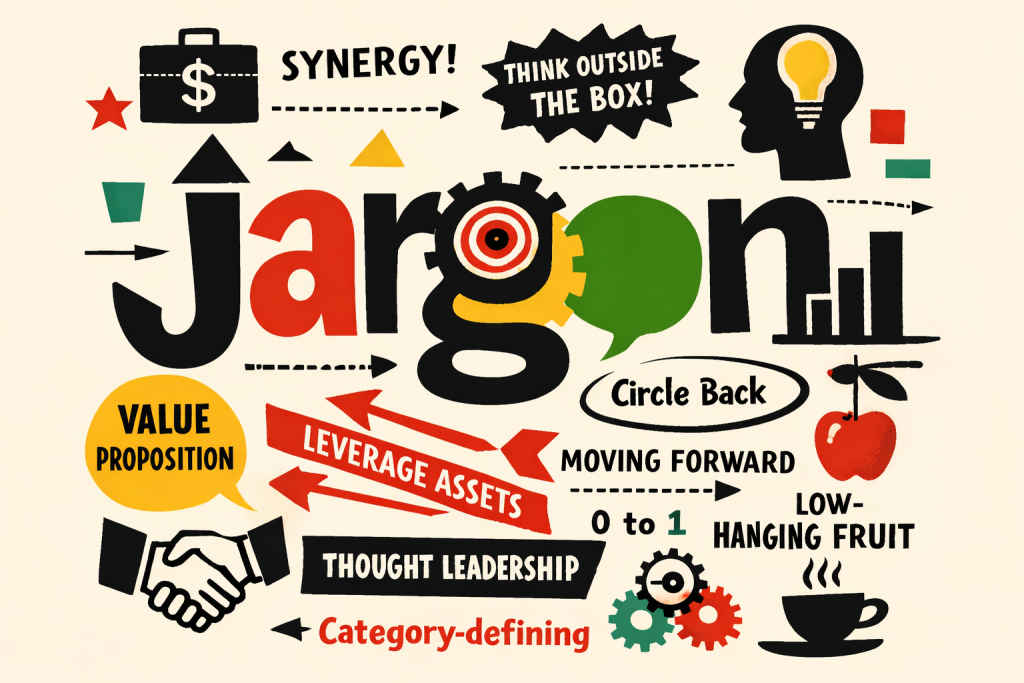
Jargon Sucks

I have been a writer long enough to know this in my bones: jargon sucks. It is a crime against writing. It abuses your readers and your listeners. And it is a sure sign you do not know what the heck you are talking about. If you cannot explain something in plain terms to your mom, you do not have a clue. You are reading from a script, pretending to be master of the universe.

And yet.

Listen to any podcast. Scroll any LinkedIn post. Skim any Twitter thread. You are drowning in it. The calling card of the clueless and the pretentious. Jargon!

And it is the lingua franca of corporate America, as new research shows.

Shane Littrell, a cognitive psychologist at Cornell, has created the Corporate Bullshit Receptivity Scale (CBSR) to measure how susceptible people are to what he defines as “a semantically empty and often confusing style


Meta’s Moment of Reckoning

Pop some popcorn. Put some butter. Add some salt. Because opportunists (politicians) are pointing their muskets at villains (tech bros), using children’s welfare as the ammunition. In case you were wondering, I am talking about the battle between New Mexico AG and Silicon Valley’s villain in chief.

The next bout is on May 4. So mark your calendars. Why?


This week two verdicts came in quick succession. First, a New Mexico jury ordered Meta to pay $375 million for knowingly enabling child predators on Instagram and Facebook. Then, a Los Angeles jury found Meta and YouTube negligent for designing platforms that addicted a young woman who first used YouTube at age six and Instagram at nine.

On the surface this is big win for ambulance chasers. However it could be much bigger if politicians actually have the best intentions that go beyond winning the next elections. History tells me, they


We Are Now An Upload (Broadband) Nation

For thirty-odd years, broadband has been sold as a one-way pipe. The download speed was all that mattered. Bigger the number, better. No one cared about the upload speeds, because the internet was mostly something you consumed. Streaming video, loading pages, pulling files from the cloud. Upload was an afterthought.

All that changed when the pandemic came around, and with it came how we used and interacted on the network.

And if you use upload as a core part of the internet experience, cable broadband is losing again. Not only to some of the fiber providers, but to the upstart, tiny rivals, those pesky municipal broadband providers. They certainly have come a long way since I went to Truckee in 2004 to write about their nascent muni-broadband network being put in place by the local utility.

A new report from Ookla, studying 13 months of Speedtest data from 14 of


23 years!


Rudyard Kipling was right!


“San Francisco has only one drawback — ’tis hard to leave.”

I thought I would be here for two years, maybe. And then go back to New York. And here I am, still here. The city has given me more than I have given it. The rush of a modern gold rush. Friendships. Little chance meetings that transformed who I am as a person. People have come, people have gone.

Booms. Busts. Booms. Busts. Booms.

Still here!

Charles Moore, School of Architecture, UCLA, said that “one of the basic human requirements is the need to dwell, and one of the central human acts is the act of inhabiting, of connecting ourselves, however temporarily, with a place on the planet which belongs to us and to which we belong.”

23 years later, it looks like I have found that place. I don’t yearn to leave.

23 years ago


More Magic Math from OpenAI?

When it comes to OpenAI, smart money is starting to do the math out loud. And something doesn’t add up. On surface, today’s news that OpenAI is offering 17.5% guaranteed returns to private equity firms looks like a shot at the Anthropic threat. Scratch the surface, and you start to see the story behind the story.

The PE deal is the kind of deal you do when you’ve borrowed against the future and the future is taking longer than expected.

Remember a few weeks ago when Nvidia CEO Jensen Huang (one of the backers of OpenAI) said that OpenAI was not a well-run business. Now Thoma Bravo founder Orlando Bravo is saying it out loud. Bravo walked away from the JV idea after questioning the long-term profit profile. It is not a coincidence that two smart money operators are arriving at the same conclusion. Just different words.

As I wrote


What To Read This Weekend

It has been a week of inference. I started the week writing about OpenClaw and its growing popularity. And I end the week with a recap of Nvidia’s GTC event. A lot has been written about the event, especially about Nvidia CEO Jensen Huang’s big claims of quadrupling his revenues to above a trillion dollars, the question that wasn’t asked, why?

Sure, we can dismiss this as a bluster of a bull-market darling, but in reality, if we believe that AI is going to be the new way of interacting with information (as I do) and will impact all sorts of industries, then you have to give his claim some thought.

As I explain in my breakdown of Nvidia GTC, Jensen’s Trillion Dollar Token Factory, for CrazyStupidTech, his boast makes sense for two reasons. First, this is indeed an inference inflection. What that means is that AI goes from being


Why Fraud Is The Boring Problem

Michael Smith used AI to create music, and then used AI to create bots to get the “plays” and took the smartest technology companies, including Spotify and Amazon, who should know better, for about $8 million. He is going to jail for his crimes. It is easy to dismiss this as one-and-done fraud. It is anything but. It is an early warning of how AI will disrupt the systems that power our digital society: how culture gets discovered, how commerce gets directed, and how conversations get shaped.

At present, most of our digital society is powered by tech that is, generically speaking, recommendation algorithms. Spotify’s Discover Weekly, YouTube’s suggestion engine, TikTok’s For You page, Amazon’s product feed, Facebook’s news feed. All of it runs on signals of human behavior. Stream counts, completion rates, saves, shares, playlist adds, clicks, purchases. These represent people making choices. The only way to fake that


How Not to Interview (Interesting People)

As a photographer who is primarily a writer, I like reading about photography so I can learn from those who create. I do that by reading photo magazines and listening to podcasts. One such magazine is Aperture. They take me out of the noise and bring me right into the core of the work. Photographers I don’t follow, or don’t know. Always a pleasant surprise.

In a recent issue they ran an interview with Christophe Lemaire and Sarah-Linh Tran. I have followed Lemaire since his time at Hermès, so I was genuinely excited to read about how he and Tran think about creating. Lemaire is one of the few fashion brands that earns the word “philosophy.” These are people who think in multiple planes: fabric, cinema, sociology, memory.

The initial excitement soon turned into disappointment. Not with the subjects but with the actual interview, and more specifically with the person