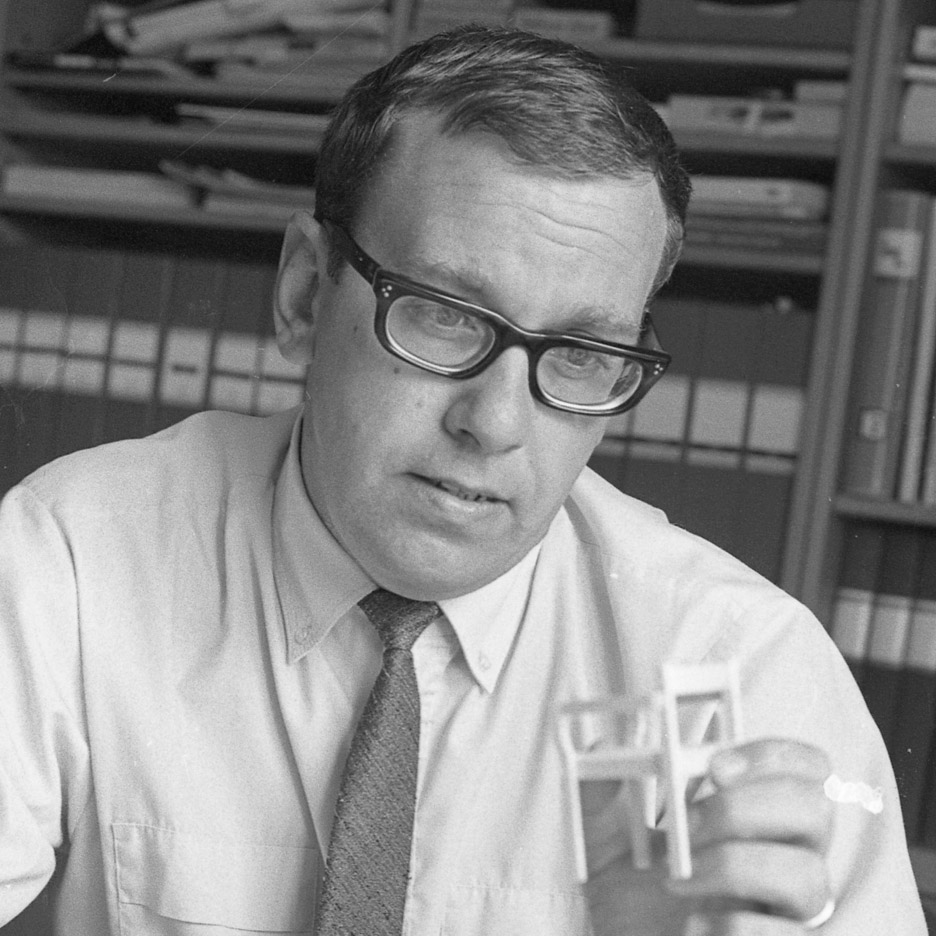
10 Rules of Good Design by Dieter Rams


My friend, Hiten Shah tweeted a link to one my older pieces about design. I thought why not share with folks here at well.

10 Rules of Good Design by Dieter Rams

1. Good design should be innovative
2. Good design should make a product useful
3. Good design is aesthetic design
4. Good design will make a product understandable
5. Good design is honest
6. Good design is unobtrusive
7. Good design is long lived
8. Good design is consistent in every details
9. Good design should be environmentally friendly
10. Good design is as little design as possible

Steve Jobs’ legacy & The iPhone X

If you total up the energy spent debating the merits and demerits of the Apple iPhone X event and various devices announced today, odds are that you could actually power another keynote, one where the basic question is why: why does the iPhone X matter? Why it’s even possible and where it could lead us – and why Apple is best positioned to lead us there. 


A reflection on our speedier times

This stood out in this weak & meandering piece about designers and fashion. It is the reality of our world beyond just fashion. There is nothing that has a permanent impact and we are always looking for the next fix:

For better or worse, we live in an age of constant content. It feels like every week, new prestige TV shows premiere, breaking news exposés are published, award-worthy movies hit the theaters, anticipated albums appear out of nowhere and hyped-up clothing drops. Even if you do your best to avoid the incessant news cycle, you’re bound to get hooked at some point. One devastating byproduct our new, always-on world is that the time for true, considered digestion has been whittled down to roughly zero…Meanwhile, the echo chamber around everything moves the needle from classic to trash with seemingly nothing in between….Lately, the fight for relevance—even for luxury brands with decades


Blossom, a beautifully designed bluetooth speaker

Say what you may about the trend of portable smartphone-to-bluetooth-to-speaker trend, it has managed to unleash a wave of creativity when it comes to speaker designs. I have been blown away by this concept Blossom speaker, designed by the Bebop Designers from Seoul, South Korea. On the webpage dedicated to the speaker, BeBop notes that “the form of a beautifully blossomed flower that’s been simplified into geometric shapes of a cone and a cylinder.” 


What is Design

Apple has received (I think unwarranted) criticism for its iPhone 7 design from technology reviewers. I disagree with them and in my latest piece for The New Yorker, I explain what is good iconic design, what matters and how should we think about design in the connected age.


K.K. Barrett

Oklahoma native K.K Barrett is an Academy Award–nominated production designer known for his collaborations with Spike Jonze and Sofia Coppola. He has worked on movies such as Her, Lost in Translation and Where the Wild Things Are.


Introduction


In Nov. 2014, I hosted a design conference in San Francisco, and one of our keynote speakers was K.K. Barrett, the production designer for the Spike Jonze movie Her. Deeply unsettling and yet so believable, the movie pointed to a compute-intensive future with an invisible interface. Her was a peek into a world where invisible computing machines and artificial intelligence act as surrogates for some of our human connections.

K.K. and I were hanging out backstage and started talking about a whole bunch of things, many of them too abstract to remember. Fortunately I recorded some of our conversation on my iPhone. Here we are talking about Her, design, dating and the


Erik Spiekermann

Erik Spiekermann is one of the most well-known and creative thinkers in design. A type, information and graphic designer by trade, he began his career teaching at the London College of Printing in the 1970s. In 1979, Spiekermann co-founded MetaDesign in Berlin, and in the 1980s, at the cusp of the PC revolution, he co-founded FontShop, a distributor of electronic fonts. He has designed fonts such as Berliner Grotesk, ITC Officina, Nokia Sans and FF Meta. He is also the co-founder of design house Edenspiekermann. He divides his time between Berlin and the Bay Area.


Introduction


Erik Spiekermann has forgotten more things than most successful and creative people know in their lifetime. Now in his sixties (68), the German-born designer and typography guru remains as excited about the future as ever.

A few years ago a friend invited me to have dim sum at Hakkasan in San Francisco. The high-end