What Twitter Can Learn From Spotify
Ever since Twitter unveiled its new Fleets, I’ve been mulling over the company’s future. What can they do that’s uniquely their own? How can they take advantage of their past and present in a way that builds a better future? Needless to say, Fleets — a watered-down version of a content-sharing format introduced by Snap and already copied by Instagram, Facebook, and others — is not the answer.

Instead of being the latest in a growing line of companies that have pinned their hopes on Stories, Twitter could improve their prospects by exploring another model —one that could also help them lead the way in improving the entire media ecosystem.

But before delving into how they should move forward, let’s look back at some of Twitter’s history, which just happens to intersect with my own.

***

In July 2006, I attended a party at Ruby Red Labs in the SOMA


Thinking About Apple One

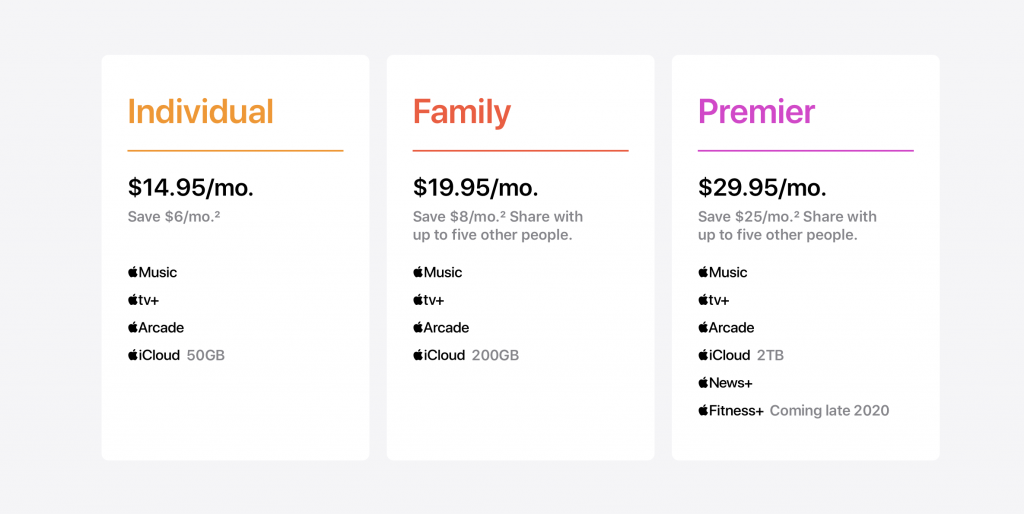
Apple One, a single subscription that bundles up to six different Apple subscription products, became available this weekend in three flavors: Individual ($15 a month), Family ($20 a month), and Premier ($30 a month.) 

If you were to buy everything unbundled, you would pay about $6 more for the individual plan, $8 for the Family plan, and a whopping $25 a month for the Premier plan. On paper, it sounds like such a great deal, especially if you buy the premier package. I mean, it has everything. Especially if you have kids who like to play games on their devices. It is also a smart, sneaky way to keep the entire family on the Apple hardware for a long time. 

The fly in the ointment is storage. A measly 50 GB storage in 2020 or 200 GB shared among (up to) five family members is a bit of a joke.


Podcast Reality Check (by the numbers)

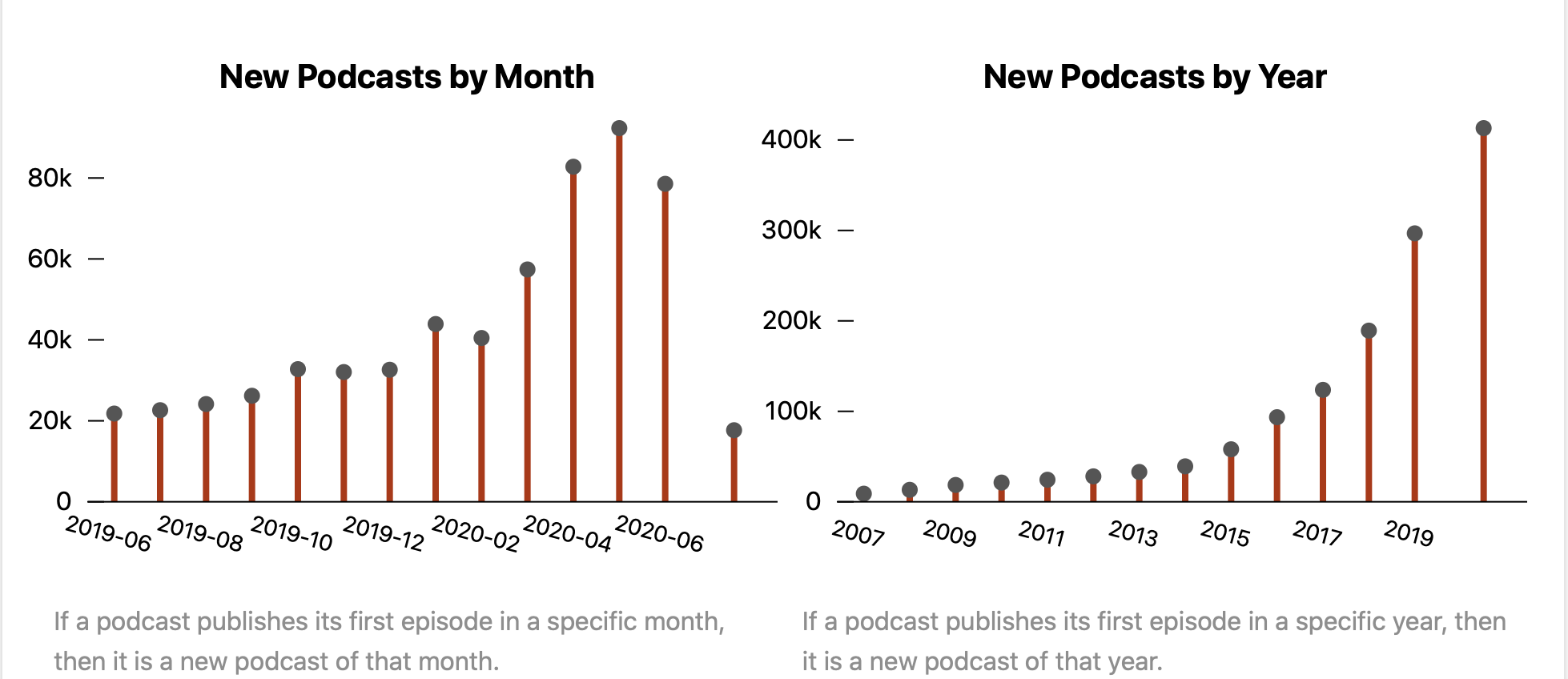
In case you hadn’t noticed, but there is a podcast boom of sorts going around these days. I came across some statistics about podcasts. According to a podcast search engine, ListenNotes, there are at least 1.38 million podcasts (with 75.1 million episodes.)

The pandemic lockdown has been a big boost for podcast creation — from March to June 2020, 308,000 new podcasts were created. So far there are 413,000 new podcasts that came to the market so far in 2020. It is not even July, and there are over 14 million episodes, much higher than the total number of episodes in 2018. Yeah, there is a podcast creation boom.

How about the listening side of the equation?

According to Podtrac, a podcast focused market research group, at the end of May 2020, the downloads of podcasts are up almost 31 percent since January 2020, while the audience is up by


The antithesis of streaming music

lighted red text signage
Photo by Mohammad Metri on Unsplash


While I don’t deny the convenience of streaming music and video, I often am left wondering what these services are really doing to help the artists. Streaming, like most of the internet so far, is a winner take all better. It is good for Drake, Beyonce, and Post-Malone. Not so much if you are an experimental pianist from Argentina or Iceland. You don’t make much money. You don’t get as many plays as the superstars. And whatever money you get, it cut many different ways. Sure, some independent artists are delighted with what they get from Spotify. But not everyone is jumping for joy. 

As I wrote earlier, we need to reward the musicians differently. I currently pay for Spotify and Apple, and yet I feel compelled to support the artists by buying their music. Over the past few months, instead of spending money


Napster’s long-arm & the unbundling of content

Especially as post-pandemic problems pile up, many media companies blame the Internet giants as the cause of all their troubles. Of course, almost nobody blames their own short-sightedness in ignoring the foreseeable opportunities and threats of the network.

At the turn of the century, I witnessed the birth of the Napster revolution. It was magical, and the energy behind it merged two trends that would dominate the Internet in the future: network effects and the insurgency of the people against the established order.

Thus began a two-decades-long erosion of the biggest barriers to entry in the media business — distribution and excessive pricing power of the media companies. In everything from music, video, news, and magazines, people and their networks have upended the entrenched interests.

Many of us confuse media companies as creators of media and content. In reality, their barrier to entry was ownership of distribution platforms. Just as


Algorithmic discovery of music lacks emotional appeal

“Tears, idle tears, I know not what they mean, 
Tears from the depths of some divine despair
Rise in the heart, and gather to the eyes, 
In looking on the happy autumn fields, 
And thinking of the days that are no more.” 
― Alfred Lord Tennyson

Tennyson perfectly captured my state of mind last night. After the events of the past few days, compounded by more than three months of isolation, I was feeling a bit overwhelmed. And then a friend recommended watching Other Music, a documentary about a record store in New York City.

Other Music was located on 4th Street, just off Lafayette Street and east of Broadway. It was right across from the largest record store in the world, Tower Records. It was only a few blocks from my East Village apartment and just around the corner from my bestie’s apartment. And it was my portal to


Spotify and the fight for attention

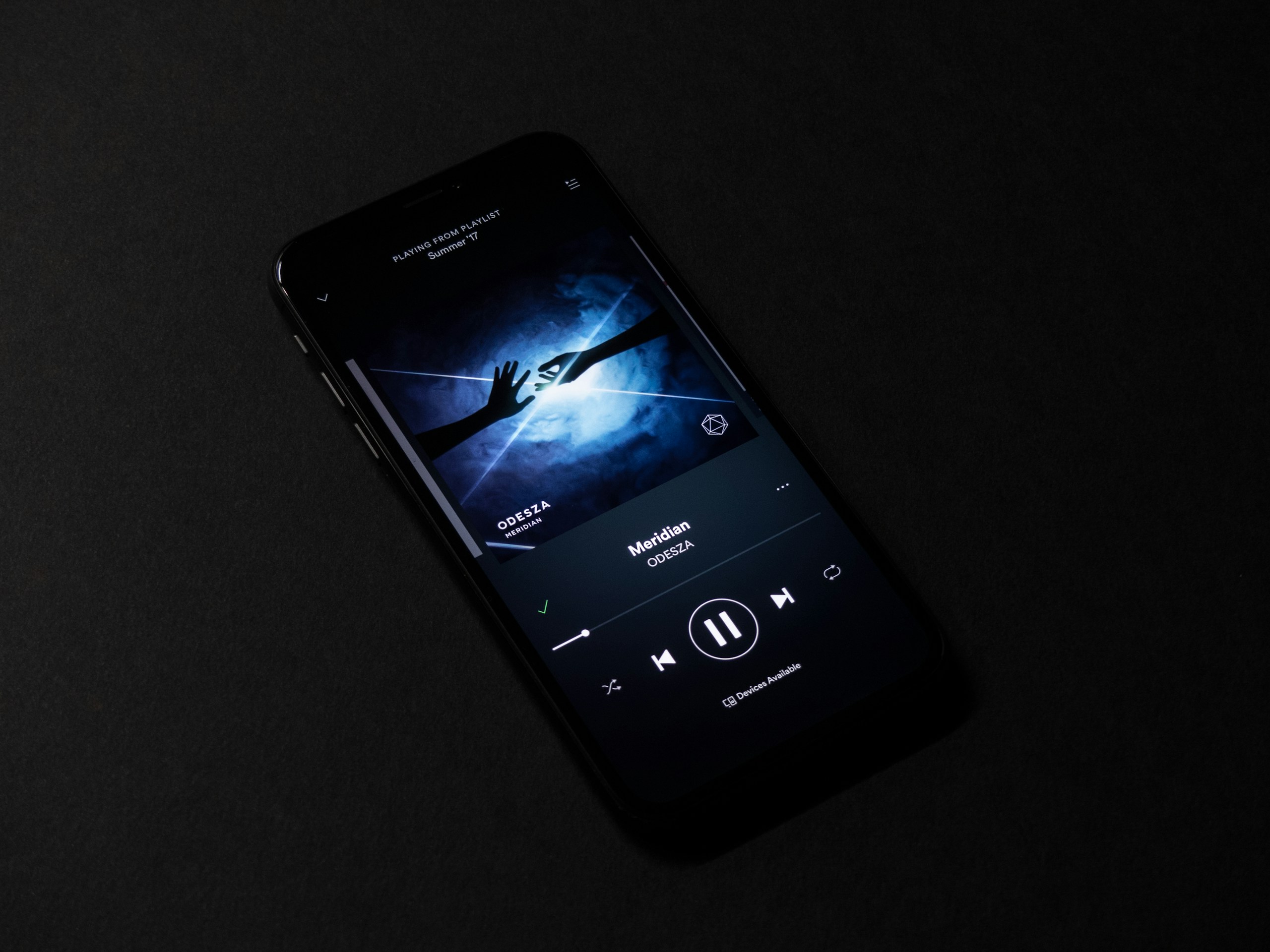
turned-on smartphone with music display
Photo by Tyler Lastovich on Unsplash

By now you are likely sick and tired of all the news around Joe Rogan signing a megadeal with Spotify. Me too! I mean, I liked Spotify for what it was: a great music streaming service. But now, I am not too sure. Recently, whenever I experience Spotify, I come away thinking, “Man, it has really become like radio.” This is not meant as a compliment. 

Its imposition of algorithmic playlists is increasingly oppressive. As I wrote earlier, “It auto-plays the music it thinks I want just because I listened to one track. And it forces its choices down my throat.” It pushes talk radio (sorry, they call them podcasts now) and generally devotes most of its real estate and algorithms to the “top of the pops.”  Sure, it does all that in the guise of personalization, but with much less personality.

All technology companies


[05.20.20] Signals

My daily reading and work spark some thoughts. I jot down these musings in a daily document, I maintain in the Bear App. I have been doing this since my earliest days as a report. Have a look my today’s blotter – Om.

Spotify is signing on Joe Rogan to be a marquee talent on its platform. This is the continued transformation of the platform from being a place for music to be an all-out replacement for “radio,” albeit, on-demand radio. With shifting priorities, it might be time to start scouting for music-only streaming options with very high-fidelity. I like it when Marco Arment gets salty.


Blogs “would be the one thing I’d bring back to the internet if I could bring one thing back.” Amen. Read


Khoi Vinh’s review of the Google Classroom app points to a reality that online experiences are a reflection of how we value offline


Spotify is really the new radio

For the past few months, whenever I experience Spotify, I come away thinking, “Man, Spotify has really become like radio.” If you don’t pay for Spotify’s premium service, it is truly hard to tell the difference. This is not meant as a compliment. It imposes algorithmic playlists. It pushes talk radio (sorry, they call them podcasts now) and generally devotes most of its real estate and algorithms to the “top of the pops.”  Sure, it does all that in the guise of personalization, but with much less personality. 

You know, all technology companies say that they never want to become the very thing they despised. Microsoft didn’t want to be IBM. Google didn’t want to be Microsoft. Spotify didn’t want to be radio. And nothing captures that more elegantly than this conceptual design for a notional Braun Audio product called 07. It takes its cues from old transistor radios, except it