What I am reading today


Reply All

We all have done it — received an email, hit reply all and continued a conversation oblivious that we are all essentially creating a kind of spam in everyone’s inbox, reducing people’s productivity and abusing their attention. Problem gets infinitely worse when folks put 50+ people on “CC.” It is 2014, and by now we should know better. Like someone said, Reply All is Evil.

Why can’t email clients — Apple Mail, Mailbox, Outlook, AirMail and Gmail — have a built in feature where when sending an email to more than a preset number of people (set by sender) those being copied are defaulted to “BCC” unless specified. It is a good way to reducing the mass-mail-reply-all clutter. Of course, someone can build a Chrome extension to add this functionality to Gmail. Together with Mute-button, it would go a long way towards a sane inbox.

PS: I tweeted about this


On Streaming: Apple, Beats & Spotify

In response to the rumors that Apple was buying Beats Audio for $3.2 billion, I sent out these three tweets.

  • Someone wrote that Apple will get design help from Beats Audio. LOL. Beats design is done by an outside agency, started by ex-Apple peeps. (#) [Outside agency is Robert Brunner’s Ammunition Group and Brunner hired Jony Ive.]
  • Google spends $3.2 billion to buy the future & data. Apple buys bad headphones & a junk-service from music promoters. Worse use of corp $$$s. (#)
  • Buying BeatsAudio (aka a Baboon’sAss) is a good sign that Apple is pretty much out of ideas & unable to come up w/an anti-Spotify strategy. (#)

In response to these tweets, many fine folks responded and made different arguments. Some said  that it was about buying a cooler (younger) brand, buying high margin hardware revenue and/or buying into a new category. (Some say, the deal is cheap — apparently Beats Audio was on track to do over a billion dollars in revenues in 2013.)


Reinventing iTunes

Tyler Hayes, a music/music-tech writer pinged me to find out what I thought about iTunes and how it could be re-made. Since I was traveling overseas, I replied via email and today some portion of that email appeared in How Apple can turn iTunes into an industry dominating streaming service for The Week.  With 800 million customers and $5.2 billion in digital sales, the company clearly has an opportunity to find success, as long as it figures out a way to reinvent iTunes and once again becomes a leader, not a follower. Here was my response to Tyler. 
 

When I see iTunes today, I see a static and archaic piece of software that is bloated and old. It needs to feel like it lives on the internet and not on the desktop. It needs to have a throbbing pulse that comes from a place where music lives, soars, soothes


This is what’s wrong with (cable) tv

NielsenTVwatched

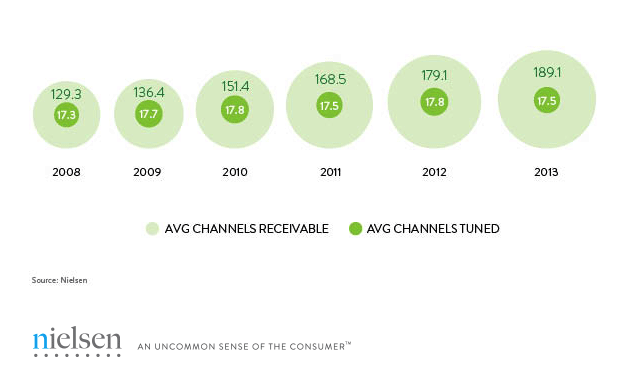
“Half the money I spend on advertising is wasted; the trouble is I don’t know which half” quipped John Wanamaker, US department store merchant. Perhaps we should recast that adage to, “most of my cable TV bill is wasted, the trouble is I don’t know how much.” This data from Nielsen shows that it is pretty much most of it. According to them average US TV households watch less than 10 percent of channels they receive from cable and satellite providers on an average. That’s a lot of television channels that no one wants, except cable companies who can charge carriage monies and also the consumers. Now they want to do the same with broadband. It makes me sick. Why don’t we have a la carte buying options — because it is not suitable for cable companies, which are nothing but a government sanctioned monopoly. For me, more is just


Structure & the amazing rise of Cloud Computing

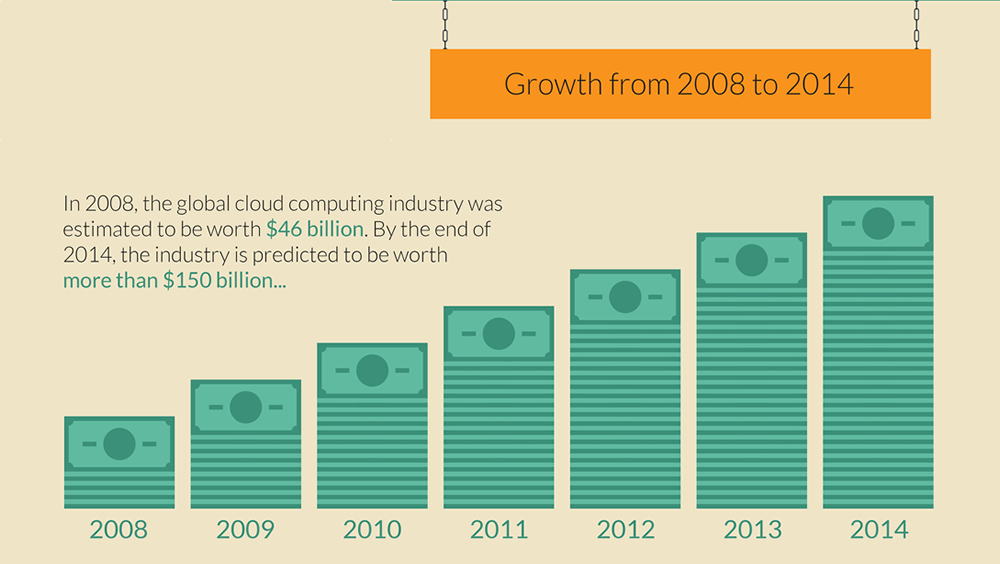
In mid-2007, it was clear as day to me that like iPhone, the Amazon Web Services was in the process of upending our idea of technologies. In 2008, we launched the Structure conference and very soon will host the 2014 edition, which has a stellar and an amazing line up of speakers. The growth of cloud as shown by this infographic from Eclipse shows that we were right on betting early on cloud and the disruption it is bringing about across industries.

cloudcomputinggrowth